
Most diets have an end date. You follow the plan, reach a goal, and then try to figure out what comes next, usually meaning you slowly return to old habits and watch the results reverse. Long-term volume eating is designed to be different. It is not a temporary protocol with a finish line. It is a way of eating that becomes more natural over time, requires less effort as habits form, and produces results that hold because the approach itself is genuinely sustainable rather than temporarily tolerated.
This guide covers everything you need to turn volume eating from a structured approach into a permanent lifestyle—how to build the right meals, how to handle real-world eating situations, how to stay consistent without being perfect, and how to make high-volume, low-calorie eating feel like the default rather than a deliberate choice.

What a Long-Term Volume Eating Lifestyle Actually Looks Like
A long-term volume-eating lifestyle is characterized by one consistent principle applied across every meal: choosing foods that provide maximum physical fullness and nutritional completeness per calorie spent. Over time, this principle becomes intuitive rather than effortful; the plate naturally fills with non-starchy vegetables, lean protein, and fiber-rich whole foods because that is what feels satisfying, not because it is being forced.
In practical terms, a volume-eating lifestyle looks like consistent daily meals built around generous vegetable portions, protein anchors at every eating occasion, whole grain or legume carbohydrate bases, and the habitual use of broth-based soups and salads as meal starters. It also looks like flexibility, restaurant meals, social occasions, and deliberate indulgences that fit within a sustainable overall eating pattern without derailing it.
The difference between a volume-eating diet and a volume-eating lifestyle is the time horizon and the psychological frame. A diet is something you are on, with an implied end. A lifestyle is how you eat permanently, flexibly, and without the restriction mindset that makes temporary diets feel like they need to end. Building a lifestyle rather than following a diet produces weight-loss results that stay rather than reverse.
What makes long-term volume eating genuinely achievable is that it addresses the core reason most diets fail: hunger. When meals are physically large, nutritionally complete, and protein-rich, the approach itself manages hunger rather than willpower. The absence of persistent hunger is what makes indefinite maintenance possible in a way that calorie restriction without volume cannot achieve.

Why Volume Eating Is Uniquely Suited to the Long Term
Most dietary approaches lose effectiveness over time because they rely on two resources that deplete: restriction and motivation. Restriction creates mounting psychological pressure that eventually produces rebound eating. Motivation fades as the novelty wears off and daily life demands take priority. Any approach dependent on sustained restriction or sustained motivation has a built-in expiry date.
Volume eating relies on neither. The calorie deficit is achieved through food composition, the inherent low calorie density of the chosen foods, rather than through eating less food overall. There is nothing to be motivated to resist because the meals are genuinely satisfying. The restriction pressure does not accumulate because no foods are permanently forbidden and portions of the foundational foods are generous rather than measured small.
Sustainable adoption of a volume-eating lifestyle is also supported by the progressive changes it produces in food preference. After four to six weeks of consistent whole-food, high-volume eating, many people genuinely begin to prefer these foods over calorie-dense processed alternatives, not as a moral choice but as an appetite reality; the gut microbiome shifts. Taste preferences recalibrate. The ultra-processed foods that previous when the approach becomes what you actually want rather than what you are making yourself do.
You might like this: https://volueat.com/volume-eating-success-stories-and-lessons/

How to Build Every Meal Around High-Volume Foods
The practical foundation of a long-term volume-eating lifestyle is consistent meal structure. Having a clear template for every eating occasion removes daily decision-making and makes the right choices automatic rather than deliberate.
Every main meal follows the same framework: half the plate covered in non-starchy vegetables before adding anything else, a quarter for a clear lean protein source, and the remaining quarter for a fiber-rich carbohydrate or legume. A bowl of broth-based soup or a simple salad started before the main plate pre-activates fullness signals before the higher-calorie components begin.
This structure, broccoli, cauliflower, zucchini, spinach, mushrooms, bell peppers, cabbage, and asparagus, provides variety within the consistent framework. The protein rotates white fish, chicken breast, eggs, Greek yogurt, cottage cheese, legumes, and shrimp, providing different flavor profiles without changing the satiety architecture. The carbohydrate rotation includes brown rice, quinoa, sweet potato, barley, and whole-grain bread, maintaining fiber content while preventing repetition fatigue.
Building meals around high-volume foods becomes faster and easier each week as the habit forms. The first week requires conscious effort. The second week is familiar. By the fourth week, the plate structure feels as natural as any other habitual daily behavior and requires approximately as much conscious thought as deciding what to have for breakfast has always required.

The Best Low-Calorie Foods to Make Everyday Staples
Certain foods earn permanent status in a long-term volume-eating lifestyle because of their consistent, reliable contribution to physical fullness, nutritional completeness, and practical versatility. These are the ingredients worth buying every week.
At 23 calories per 100 grams, spinach is the most nutrient-dense everyday staple available. It works raw in salads, wilted into scrambles, stirred into soups, blended invisibly into sauces, and added to stir-fries. Buying both fresh and frozen ensures it is always available, even if the fridge hasn’t been stocked recently. Broccoli and cauliflower roasted in large batches at the start of each week provide the main vegetable volume for multiple dinners and lunches with minimal daily prep.
Nonfat Greek yogurt and low-fat cottage cheese are the everyday dairy proteins that anchor breakfast and snack occasions with minimal calorie cost. Both provide exceptional protein-to-calorie ratios and adapt to sweet and savory applications across every meal. Canned tuna in water, eggs, and dried red lentils are the protein staples that require zero preparation and provide complete meal anchors at minimal cost and effort.
Oats are the breakfast carbohydrate that provides the strongest and most sustained morning satiety of any common food. Brown rice and quinoa provide the dinner and lunch carbohydrate bases that support the vegetable and protein components. Canned chickpeas and black beans provide ready-to-use legume protein that requires no cooking. Vegetable broth in cartons provides the base for soups and the cooking liquid for broth-based preparation. These ten staples form the skeleton of a complete, long-term volume-eating grocery list.

How to Balance Protein, Fibre, and Healthy Fats for Lasting Results
Long-term volume eating sustainability depends on the nutritional completeness of meals that provide adequate protein, fiber, and healthy fat alongside the physical volume that makes them filling. Missing any of these three creates a gap that can eventually lead to cravings, fatigue, or hormonal disruption that undermines both results and adherence.
Protein at 25 to 35 grams per main meal and 15 to 20 grams at snack occasions provides the hormonal fullness through peptide YY, cholecystokinin, and ghrelin suppression that physical volume alone cannot produce. Every eating occasion should include a clearly identifiable protein source. This is non-negotiable for long-term satisfaction.
Fiber at 25 to 40 grams per day from vegetables, fruits, legumes, and whole grains stabilizes blood sugar; feeds gut bacteria that produce additional fullness signals; and maintains digestive health that supports overall well-being and appetite regulation. Consistently reaching this intake is straightforward on a volume-eating approach; the foods naturally carry high fiber but require conscious attention in the early weeks until fiber-rich eating becomes habitual.
Healthy fats in measured quantities are the most commonly underemphasised component of long-term volume eating. Fat slows gastric emptying, contributes to hormonal function, and provides fat-soluble vitamin absorption, all of which support satiety and health. The key word is measured. A teaspoon of olive oil in a dressing, a quarter of an avocado, a tablespoon of hummus, and a small handful of walnuts, these measured additions provide fat’s benefits without the calorie density that makes unmeasured fat the most common hidden calorie problem in volume eating.

How to Create Filling Meals That Never Feel Restrictive
The experience of restriction, feeling like important foods are forbidden, like portions are too small, like the eating plan imposes on enjoyment, is the psychological death knell of any long-term dietary approach. Volume eating is specifically designed to produce the opposite experience: abundance, generosity, and satisfaction rather than restriction and deprivation.
Creating filling meals that feel generous rather than restrictive, roasted rather than steamed, well-seasoned, and varied across the week, the overall plate feels abundant. When protein is clearly present and satisfying, meals feel complete. When a warm, flavorful broth or soup starts the meal, the eating experience feels more substantial than the calorie count suggests.
Cooking technique matters significantly for long-term enjoyment. Discovering that roasted broccoli tastes completely different from steamed broccoli, that zucchini absorbs flavors beautifully in a stir-fry, and that cauliflower becomes almost creamy when pureed with herbs and a small amount of Greek yogurt, these culinary discoveries transform the vegetable component from a reluctant obligation into a genuinely preferred element of meals.
Allowing genuine flexibility within the framework prevents the restriction mindset from forming. Favorite foods are not forbidden; they are integrated thoughtfully. A higher-calorie dinner once a week does not break the approach. A restaurant meal where the volume eating structure is applied imperfectly does not derail the lifestyle. The framework is the foundation, not a cage.
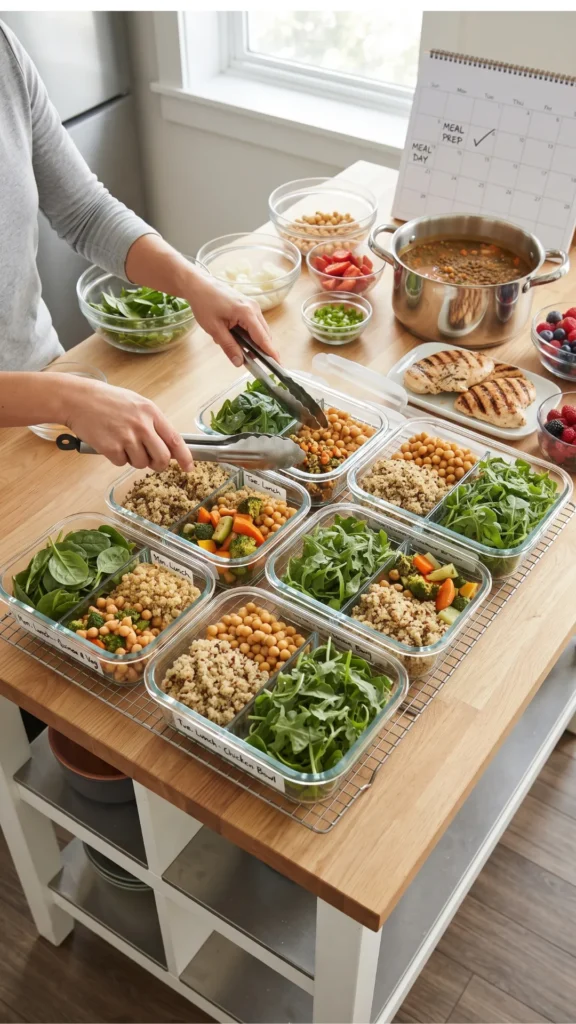
How to Plan Your Weekly Volume-Eating Meals Efficiently
A weekly meal plan is the structural tool that turns volume eating from a daily decision into a system. Knowing what will be eaten across the week, not meal by meal with military precision, but in terms of which proteins, vegetables, and grains are available and how they will be combined, removes the daily decision fatigue that most commonly leads to off-plan choices.
The simplest approach is to plan three or four dinners and prepare enough for lunch the following day from each one. This reduces the total number of distinct meal planning decisions from twenty-one per week to eight or nine, which is manageable. Breakfast rotates between three or four consistent options: overnight oats, egg scrambles, and Greek yogurt bowls, which require almost no planning once the habit is established.
Grocery shopping from the plan, buying exactly the proteins, vegetables, grains, and staples needed for the specific week’s meals, reduces food waste, reduces cost, and ensures that the right ingredients are always available. Shopping from a list for a planned week consistently outperforms ad hoc shopping followed by improvised meals in both nutritional quality and calorie management.
The weekly plan doesn’t need to be rigid. A flexible framework, Monday and Tuesday are fish-based dinners, Wednesday is lentil soup, Thursday is chicken stir-fry, and Friday is flexible, providing enough structure to support shopping and prep without the rigidity that produces frustration when plans change.

Easy Volume Eating Meal Prep Strategies for Busy Weeks
Meal prep is the infrastructure of a long-term volume-eating lifestyle, the difference between healthy eating being easy and healthy eating being effortful. When the right food is already prepared and immediately accessible, every meal becomes an assembly task rather than a cooking project.
The most efficient prep session focuses on five components: batch-cooking one or two proteins, cooking a large batch of a whole grain, roasting two trays of vegetables, preparing five overnight oat jars, and washing and chopping raw vegetables for salads and snacking. This session takes approximately ninety minutes and provides the building blocks for every main meal and snack across the week.
Proteins that prep most efficiently include batch-baked chicken breast, hard-boiled eggs, and a large pot of red lentil soup. White fish fillets baked in batches of four to six provide dinner and lunch protein for the first half of the week. Canned tuna and chickpeas require no preparation and serve as ready-to-use protein additions at any point.
The most impactful single prep habit for long-term adherence is preparing overnight oats on Sunday evening in five jars, covering every weekday breakfast with a nutritious, protein-rich meal that requires no morning effort. This removes the most commonly skipped meal from the daily decision stack and ensures the day begins with adequate protein and fiber that sets a better hunger trajectory for the hours that follow.

How to Handle Cravings and Hunger Without Derailing Progress
Long-term sustainability requires a practical, flexible strategy for the inevitable moments when cravings arrive, or hunger exceeds what the volume-eating meals have managed. A clear response keeps these moments from becoming derailments.
The first response to any hunger or craving signal is a glass of water and a ten-minute wait. Mild dehydration frequently produces hunger-like signals. A full glass of water quickly resolves dehydration-driven hunger and reduces the apparent urgency of genuine hunger, allowing a considered response.
If hunger persists, reach for a high-volume, low-calorie option, like a bowl of cucumber and cherry tomatoes, a cup of miso soup, a large bowl of mixed berries, or a small serving of Greek yogurt to address physical hunger with minimal calorie impact. These options provide real food in sufficient quantity to satisfy without meaningful calorie damage.
For sweet cravings specifically, frozen grapes eaten slowly, a small piece of high-percentage dark chocolate with a piece of fruit, or a bowl of cold watermelon provides genuine sweet satisfaction in a format that does not trigger continued eating in the way processed sweet foods typically do. The key is choosing and portioning the response in advance rather than improvising at the moment of maximum craving intensity.

How to Eat Out While Maintaining a Volume Eating Lifestyle
Restaurant eating is the most common real-world challenge for long-term dietary sustainability, and it is one that volume eating handles more gracefully than most approaches. The principles translate to restaurant contexts without requiring special menu items or visible restrictions.
Applying the volume-eating structure at a restaurant means requesting large vegetable portions alongside any protein-based main, choosing grilled or baked preparations over fried or cream-based ones, requesting sauces and dressings on the side, and starting with a broth soup or simple salad when available. These are adjustments that any restaurant can accommodate without making the meal feel like a dietary compliance exercise.
The pre-restaurant strategies that support long-term volume eating are equally important. Reviewing the menu in advance and identifying two or three good options removes decision-making from the table. Arriving at the restaurant having eaten normally rather than skipping meals to save calories prevents the extreme hunger that drives overconsumption. Ordering sparkling water immediately and throughout the meal provides hydration and reduces the space available for alcohol or sugary drink calories.
Restaurant meals within a long-term volume-eating lifestyle are enjoyable, flexible, and nutritionally reasonable, not perfect, but consistent with the overall pattern that produces results over time.

How to Stay Consistent Without the Pressure of Perfection
Consistency, not perfection, is the variable that produces long-term weight loss results. A person who eats well eighty-five percent of the time for twelve months achieves more than a person who eats perfectly for four weeks and then abandons the approach. This understanding changes how you handle off-plan moments.
When a meal goes off-plan, when a restaurant dinner is higher calorie than intended, when a social occasion disrupts the structure, or when a difficult week means meals are improvised rather than planned, the productive response is an immediate return to normal at the next meal. Not guilt, not compensation, not waiting for Monday to start fresh. The next meal.
Long-term consistency is also supported by building deliberate flexibility into the approach, rather than leaving it to accidental failure. A planned higher-calorie meal once a week; a designated flexible day during social-heavy periods; and the explicit understanding that the volume eating framework accommodates real life rather than demanding submission to it, these built-in flexibilities prevent the all-or-nothing thinking that turns temporary deviation into permanent abandonment.

Turn Volume Eating Into a Habit That Runs on Autopilot
The final stage of long-term volume eating is habit consolidation, the point at which the approach requires minimal conscious effort because the behaviors have become automatic. This typically happens at the eight to twelve-week mark for people who have applied the approach consistently, and it represents the transition from following a plan to simply eating.
Habits are consolidated through repetition of specific behaviors in consistent contexts. Eating the same breakfast structure every weekday, using the same plate template for every dinner, shopping from the same category-based grocery list each week, and starting main meals with broth at home. these consistent repetitions build the neural pathways that eventually make volume eating automatic rather than deliberate.
When volume eating runs on autopilot, the daily effort required to eat well is minimal. The right food is in the house because the shopping list is consistent. The meals assemble quickly because the prep was done at the start of the week. The plate fills correctly because the structure is habitual. The results keep accumulating because the system keeps running even during weeks when active attention to the approach is low.

This Is Not a Diet—It Is Just How You Eat Now
The most profound long-term volume-eating result is the moment when the approach stops being something you do and becomes simply how you eat. No tracking, no start dates, no end dates. Just a consistent, satisfying, abundant way of nourishing the body that happens to support healthy weight indefinitely.
That point is reachable, and for most people who stay consistent through the first six to eight weeks, it arrives naturally. The meals become familiar. The grocery list becomes automatic; the fullness after eating becomes expected. And the results, better energy, stable weight, manageable hunger, and improved health, become the new normal rather than the goal.
Save this to your Pinterest board so your complete long-term volume-eating lifestyle guide is always within reach when you need a reference or a reset. And for meal plans, food lists, grocery guides, and all the practical tools that support this approach from day one through year five and beyond, everything you need is waiting at Volueat.com
Disclaimer
This article is for informational purposes only and is not medical or nutritional advice. Always consult a healthcare professional before making significant changes to your diet, especially if you have existing health conditions
Table of contents
Volume Eating Lifestyle Plan
What a Long-Term Volume Eating Lifestyle Actually Looks Like
Why Volume Eating Is Uniquely Suited to the Long Term
How to Build Every Meal Around High-Volume Foods
Everyday Staples
How to Balance Protein, Fibre, and Healthy Fats for Lasting Results
How to Create Filling Meals That Never Feel Restrictive
How to Plan Your Weekly Volume-Eating Meals Efficiently
Easy Volume Eating Meal Prep Strategies for Busy Weeks
How to Handle Cravings and Hunger Without Derailing Progress
How to Eat Out While Maintaining a Volume Eating Lifestyle
How to Stay Consistent Without the Pressure of Perfection
Turn Volume Eating Into a Habit That Runs on Autopilot
This Is Not a diet; it is just how you eat now.

