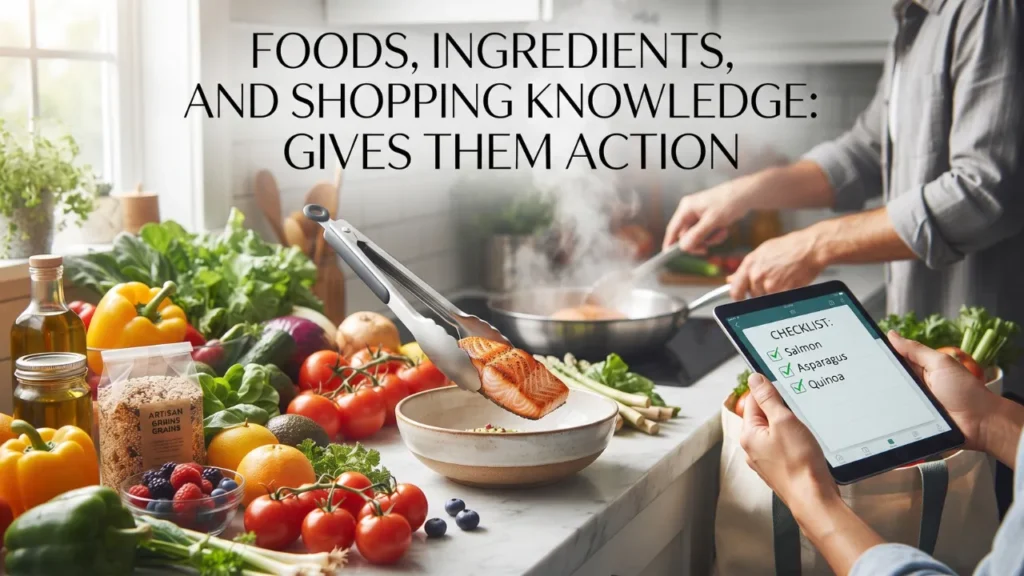
Knowing what to eat is one thing. Knowing exactly which foods to buy, what to look for on labels, and how to build a grocery list that sets you up for a genuinely satisfying, low-calorie week is what actually moves things forward. Foods for volume eating are not exotic or expensive; they are ingredients available in any supermarket that work harder than most people realize when you know how to choose and combine them.
This guide turns grocery shopping into a confident, purposeful activity rather than a vague hopeful wander through the aisles. By the end, you will know which foods to reach for first, how to read labels for what actually matters, and exactly how to put a shopping list together that supports every volume-eating meal across the week.
You might like this: https://volueat.com/wp-admin/post.php?post=1134&action=edit
What Foods Actually Work Best for Volume Eating
The best foods for volume eating share a specific combination of characteristics: they are physically large relative to their calorie count, high in water content, rich in fiber, and capable of providing genuine satiety through either physical bulk or nutritional completeness. Understanding these characteristics makes every food choice clearer and more confident.
Calorie density is the primary measure. Foods at 0.1 to 0.6 calories per gram, most non-starchy vegetables and water-rich fruits, are the lowest-density options and can be eaten in generous quantities for minimal calorie cost. Foods at 0.7 to 1.5 calories per gram, lean proteins, and whole grains provide satiety through protein and fiber at a moderate calorie investment. Foods above 3 calories per gram, oils, processed snacks, cheese, and nuts are used sparingly rather than as the meal foundation.
Water content is the second key variable. Foods that are predominantly water by weight, vegetables like cucumber and spinach and fruits like watermelon and strawberries, add significant physical bulk to meals without meaningful calorie contribution. This water weight is what fills the stomach and activates the stretch receptors that send fullness signals to the brain.
Fiber and protein complete the picture. Fiber slows digestion and stabilizes blood sugar. Protein triggers satiety hormones. Together they extend the fullness window beyond the immediate post-meal period, which is what makes volume-eating meals keep you full for two to four hours rather than one.
High-Volume, Low-Calorie Foods That Form the Foundation
Certain foods stand out across the full spectrum of volume-eating ingredients for their exceptional combination of physical bulk and low calorie density. These are the foods worth building every meal around as a default.
Broth-based soups are the most effective single-volume eating food category. A large bowl provides physical liquid volume, warmth, and flavor for 40 to 80 calories, activating stomach stretch receptors and creating a pre-meal fullness effect that reduces total meal calorie intake without reducing satisfaction, and Having broth or miso soup available before every main meal is the simplest high-impact volume-eating habit available.
Cauliflower deserves its own mention as perhaps the most versatile high-volume ingredient in the entire food spectrum. Riced cauliflower at 25 calories per 100 grams replaces white rice at 130 calories per 100 grams with identical physical volume. Cauliflower mash replaces potato mash. Cauliflower florets roasted or steamed replace heavier grain components. A single head of cauliflower purchased weekly provides a foundation for multiple genuinely large, genuinely low-calorie meal components.
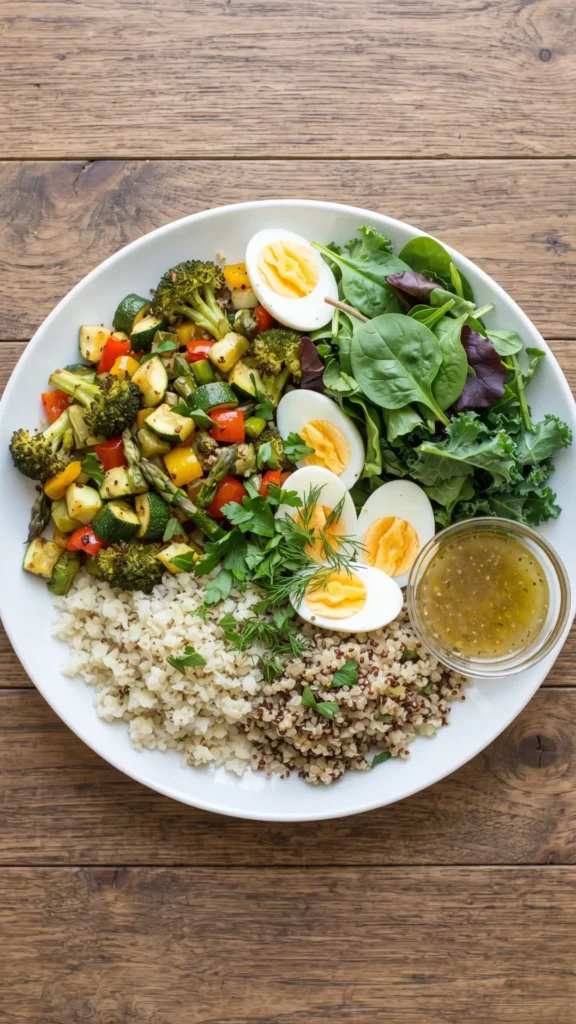
Eggs and egg whites deserve recognition as the most calorie-efficient complete protein available for volume eating. A single egg white contains 17 calories and 3.6 grams of protein. Four egg whites scrambled with a very large pile of vegetables, cooked in vegetable broth, produces a meal that looks and feels substantial for under 200 calories total. This format, very low-calorie protein plus enormous vegetable volume, is the most efficient volume-eating breakfast structure available.
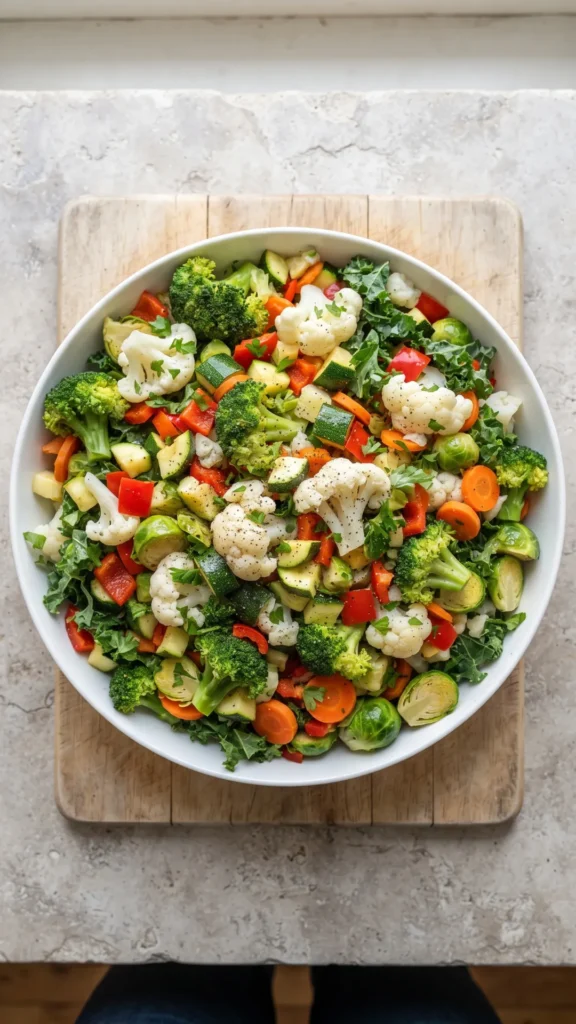
Vegetables That Add the Most Volume to Every Meal
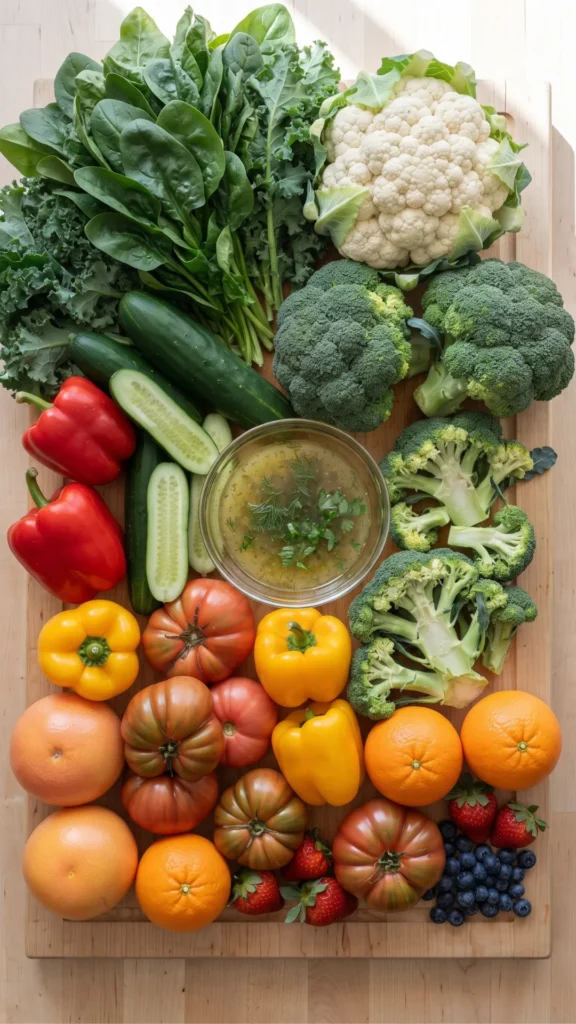
Non-starchy vegetables are the backbone of every volume-eating grocery shop. They provide the physical bulk that activates stretch receptors, the fiber that extends satiety, and the micronutrients that make the overall diet nutritionally complete, all at the lowest calorie density of any food category.
Cucumber, at 15 calories per 100 grams, is pure volume food. Over 96 percent water by weight, a large cucumber sliced into a salad or eaten raw as a snack adds enormous physical mass for almost zero calorie cost. Zucchini, at 17 calories per 100 grams, works similarly raw, roasted, spiralized, or added to stir-fries; it provides significant volume in a mild-flavored, endlessly versatile package.
Spinach at 23 calories per 100 grams and broccoli at 34 calories per 100 grams are the everyday leafy green and cruciferous staples. Spinach washed and stored in the fridge is immediately usable in scrambles, salads, soups, and stir-fries without any preparation. Broccoli roasted in large batches at the start of the week provides a ready-made volume-eating component for multiple meals throughout the week.
Mushrooms at 22 calories per 100 grams, cabbage at 25, celery at 16, bell peppers at 31, cherry tomatoes at 18, and asparagus at 20 complete the essential weekly vegetable selection. Buying five or six different vegetables each week rather than the same two or three provides the nutritional variety and flavor rotation that keeps volume eating enjoyable rather than monotonous.
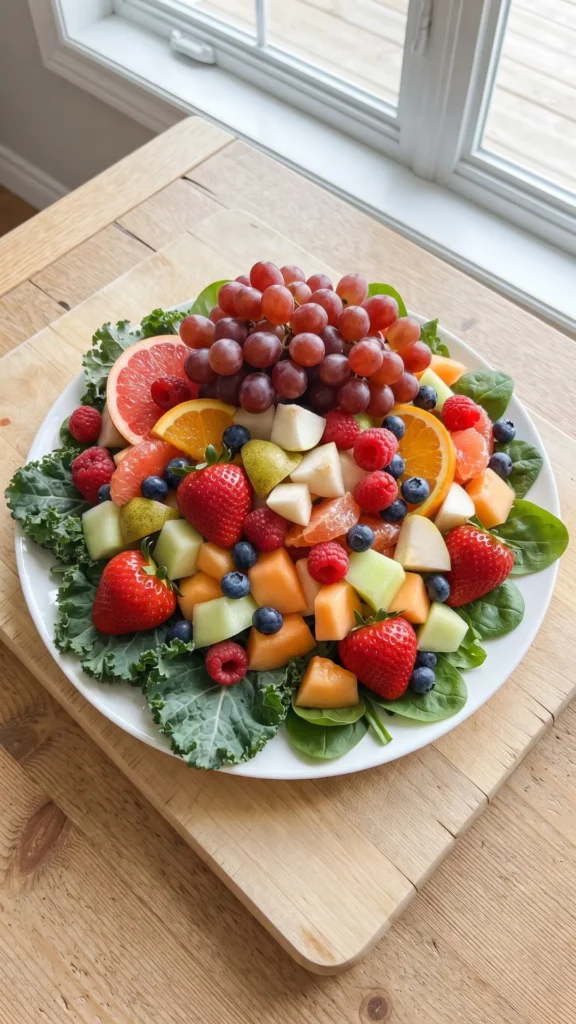
Fruits That Bring Natural Volume and Sweetness
Fruits are the volume-eating ingredients most effective for managing sweet cravings, providing natural sweetness, significant water content, and meaningful fiber in a format that satisfies without driving blood sugar instability.
Watermelon, at 30 calories per 100 grams, costs 90 to 120 calories and is approximately 92 percent water by weight. It is the most efficient sweet food for physical stomach filling available at any calorie count.
Berries are the fruit category with the most impressive fiber-to-calorie ratio. Raspberries, at 52 calories per 100 grams, provide 6.5 grams of fiber, more than a slice of whole-grain bread, a sweet, flavorful format that works as a snack, a yogurt topping, a breakfast addition, and a dessert replacement. Frozen berries bought in large bags provide the same nutritional value as fresh at a fraction of the cost and with months of availability in the freezer.
Strawberries, blueberries, grapefruit, cantaloupe, and kiwi round out the practical fruit selection. Grapefruit specifically has documented effects on appetite suppression before meals; eating half a grapefruit before lunch or dinner provides a volume-eating benefit alongside its well-studied satiety contribution. A kiwi, at 61 calories, provides 4 grams of fiber and more vitamin C than an orange, making it one of the most nutritionally efficient snack fruits available.
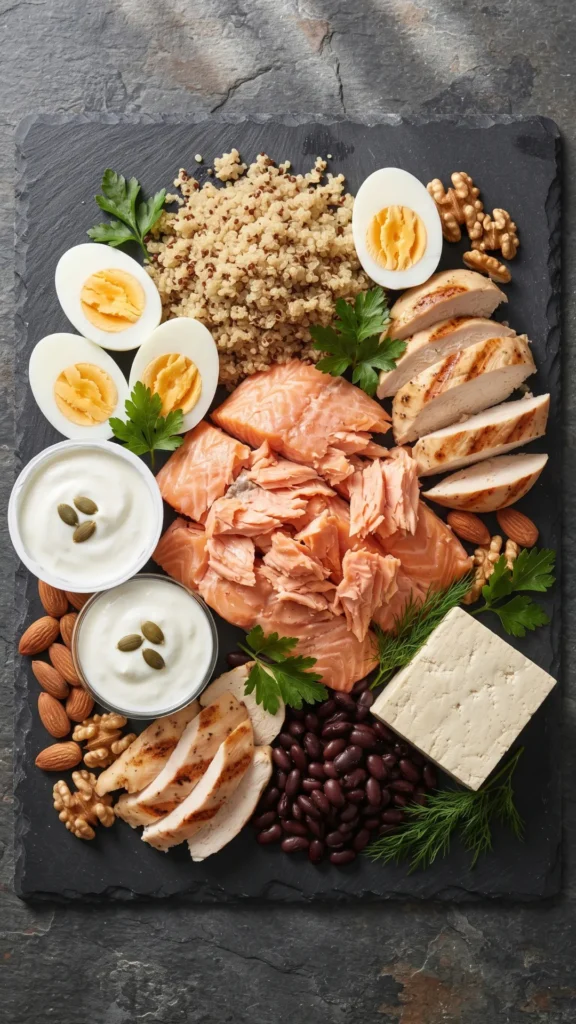
Protein-Rich Ingredients That Anchor Satiety
Protein is the macronutrient most directly responsible for the extended fullness that separates a genuinely satisfying volume-eating meal from one that leaves hunger returning too quickly. Every shopping list for volume eating needs clear protein sources across multiple categories to provide variety and flexibility across the week.
White fish, cod, tilapia, pollock, and haddock are the leanest and most calorie-efficient animal proteins available. At 70 to 96 calories per 100 grams with 18 to 22 grams of protein, a large fillet provides over 35 grams of protein for under 200 calories. Frozen white fish fillets are significantly cheaper than fresh and nutritionally identical; a bag of six frozen fillets provides multiple dinner and lunch protein portions at a very low cost per serving.
Non-fat Greek yogurt at 59 calories per 100 grams with 10 grams of protein is the most practical dairy protein for breakfast and snack occasions. A large tub purchased weekly provides multiple servings at a cost-per-gram-of-protein that rivals almost any other food. Low-fat cottage cheese at 72 calories per 100 grams with 11 grams of protein works alongside or instead of Greek yogurt for variety.
Canned tuna in water, canned salmon, and hard-boiled eggs are the zero-preparation protein ingredients that fill gaps across the week without requiring any cooking. Dried red lentils, at 116 calories per 100 grams cooked with 9 grams of protein, are the most affordable and most fiber-rich plant protein available; a bag of dried red lentils costs a fraction of equivalent animal protein. It produces multiple large, filling soup portions from a single cooking session.
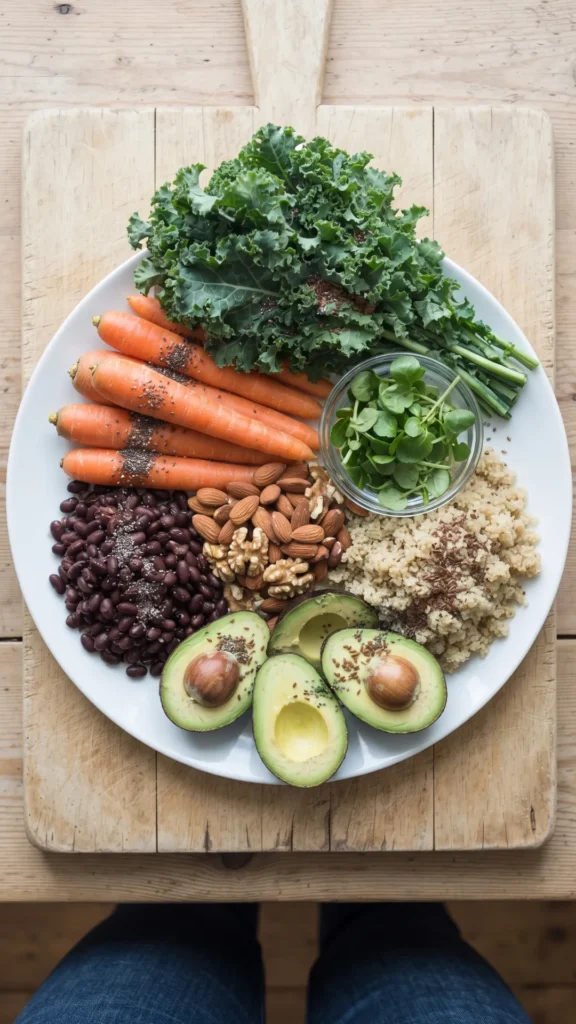
Fibre-Rich Foods That Keep Hunger Away Longer
Dietary fiber is the satiety extender that volume eating relies on alongside protein and physical bulk. The fiber-rich ingredients worth keeping consistently stocked represent some of the most affordable and most nutritionally complete foods in any supermarket.
Rolled oats are the most important breakfast fiber ingredient. The beta-glucan soluble fiber in oats forms a gel in the digestive tract that dramatically slows glucose absorption and keeps appetite suppressed for three to four hours after eating. A large container of oats purchased at the start of the month provides weeks of high-fiber, protein-supplementable breakfasts at a very low cost per serving.
Chia seeds and ground flaxseed are concentrated fiber additions that can be stirred invisibly into oats, yogurt, and salads. Two tablespoons of chia seeds provide nearly 10 grams of fiber for 140 calories. One tablespoon of ground flaxseed provides 2 grams of fiber for 37 calories. Both can be added to any breakfast bowl in seconds and significantly increase the meal’s satiety contribution.
Legumes, dried red lentils, canned chickpeas, canned black beans, and canned kidney beans are the most fiber-dense staple ingredients per serving. A cup of cooked black beans provides nearly 15 grams of fiber alongside 15 grams of protein, among the most powerful satiety combinations available from any single ingredient. Keeping four to six cans of different legumes in the pantry at all times provides an instantly available protein and fiber addition to any meal without any preparation.
How to Read Ingredients and Food Labels for Volume Eating
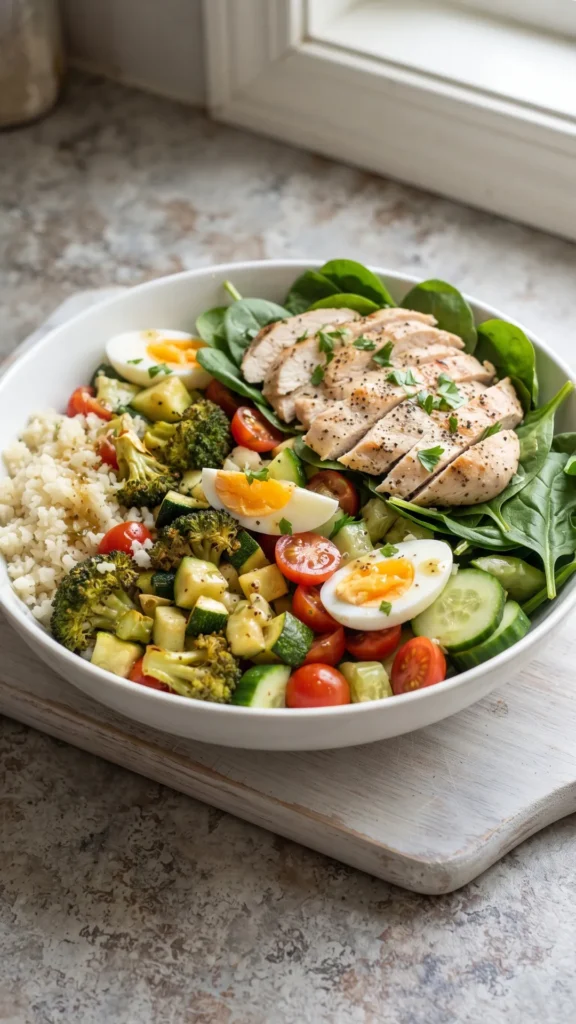
Reading food labels with volume eating in mind requires focusing on a small number of specific figures rather than trying to evaluate everything simultaneously. Knowing what to look for makes label reading fast and genuinely informative rather than overwhelming.
Calorie density is the first figure to check. Look at the calories per 100 grams rather than the calories per serving; serving sizes are often unrealistically small and make products appear lower in calories than they are in practice. A food at under 150 calories per 100 grams is reasonably low in calorie density. Above 300 calories per 100 grams, it should be used in measured rather than generous quantities.
Protein per 100 grams is the second figure. Aim for foods that provide at least 10 grams of protein per 100 grams for protein-focused purchases like yogurt, cottage cheese, and prepared protein products. This ensures the satiety hormonal benefit is meaningful rather than incidental.
The ingredients list reveals what is actually in a product. The first three ingredients make up the majority of the product by weight. If refined flour, sugar, or oil appears in the first three ingredients, the product is calorie-dense; with oats, spinach, tomatoes, and fish, the product is more likely to support volume eating goals.
Fiber per 100 grams is the final priority figure. A food with 5 or more grams of fiber per 100 grams is genuinely high in fiber and will contribute meaningfully to the daily fiber target. Most processed foods provide 1 to 2 grams, which is why whole foods consistently outperform packaged alternatives for volume-eating satiety.
How to Build a Smart Volume-Eating Grocery List
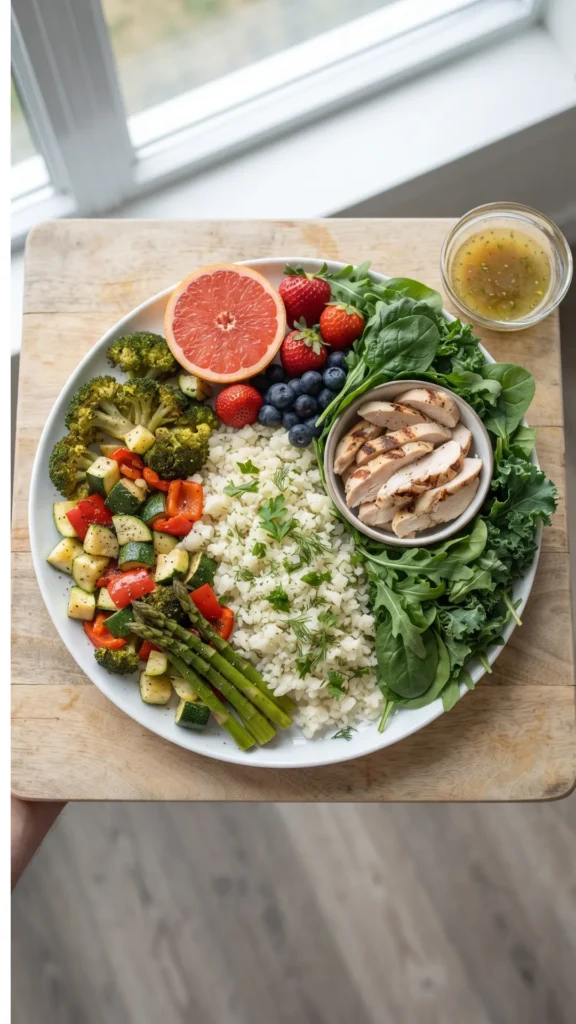
A voluminous grocery list is organized by category: proteins, vegetables, fruits, whole grains, pantry staples, and snacks and covers two to three options within each category to provide variety without overcomplication.
Proteins to include every week: skinless chicken breast or frozen white fish fillets, canned tuna in water, eggs, non-fat Greek yogurt, low-fat cottage cheese, dried red lentils, and two cans of legumes such as chickpeas and black beans.
Vegetables to include every week: spinach fresh and frozen, broccoli, cauliflower, zucchini, cucumber, celery, cherry tomatoes, mushrooms, and one or two additional seasonal or preferred options to provide variety.
Fruits to include every week: a large bag of frozen mixed berries, fresh strawberries or blueberries, watermelon or cantaloupe in season, and four to six apples and kiwis for portable snacking.
Whole grains and pantry staples: rolled oats in a large container, brown rice, quinoa, canned chopped tomatoes in quantities of four to six cans, vegetable broth in cartons, miso paste, chia seeds, ground flaxseed, lemon juice, apple cider vinegar, and a selection of dried herbs and spices.
This list covers the building blocks of every volume-eating meal across a full week, breakfast, lunch, dinner, and snacks, for most adults and costs considerably less per meal than equivalent convenience food or takeaway alternatives.
Simple Shopping Swaps That Make Meals More Satisfying
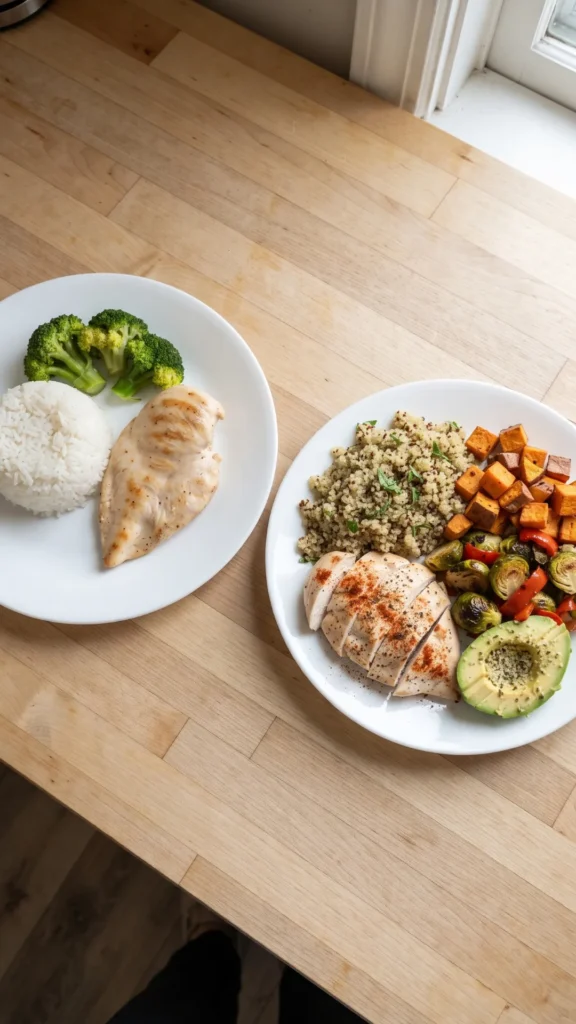
The most impactful volume eating changes at the grocery store are not radical overhauls. They are specific swaps—replacing one ingredient with an alternative that provides more physical volume, more protein, more fiber, or less calorie density for the same role in the meal.
Swapping white rice for cauliflower rice saves approximately 100 calories per serving with identical physical volume. Swapping regular pasta for a smaller pasta portion supplemented with a generous addition of courgette noodles reduces calorie density while maintaining the overall meal volume. Swapping a flavored full-fat yogurt for non-fat Greek yogurt with fresh fruit reduces calories, increases protein, and eliminates added sugar in a single product swap.
Swapping cooking oil for vegetable broth when sautéing vegetables saves 100 to 200 calories per cooking instance invisibly—the vegetables taste equally good, seasoned well, with the broth providing moisture and flavor. Swapping store-bought salad dressing for a homemade lemon juice, apple cider vinegar, and herb dressing reduces calorie density by 60 to 80 percent while improving flavor and freshness.
Swapping dried fruit in snacks and breakfast additions for fresh or frozen whole fruit provides significantly more water content, more physical volume, and less concentrated sugar per serving. Swapping flavored packaged snacks for a combination of raw vegetable sticks and hummus or Greek yogurt provides protein, fiber, and crunch for approximately 100 to 130 calories rather than the 200 to 300 that most packaged snacks represent.
Turn Your Shopping Knowledge Into Action Today
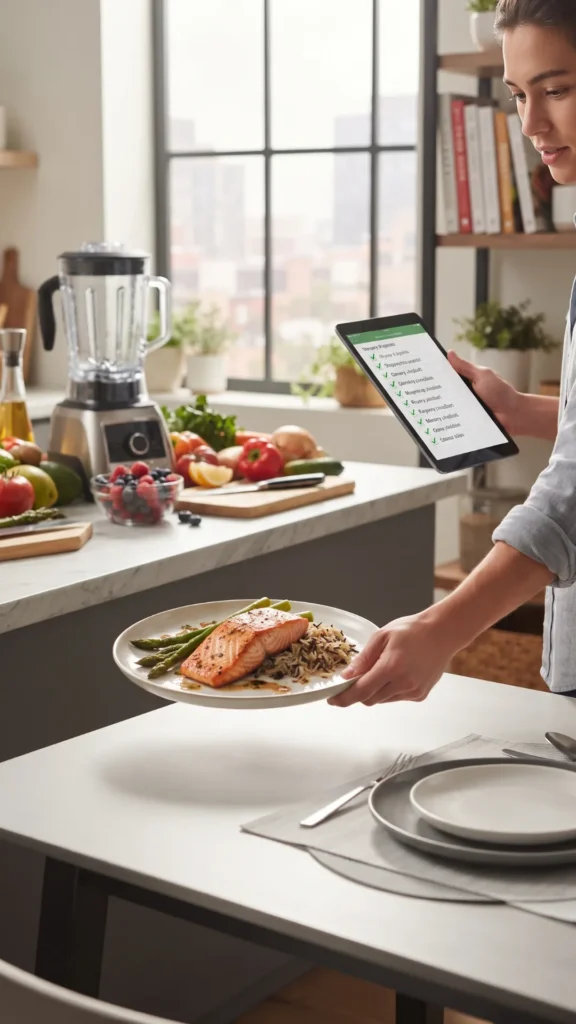
Knowledge becomes a result only when it changes what ends up in the shopping basket. Every concept in this guide connects directly to a specific food choice at the store, and making those choices consistently is what transforms volume eating from a concept into a daily reality.
The most important single action from this guide is building a weekly grocery list based on the categories above and shopping from it rather than making decisions in the aisles. A list prepared calmly at home produces a completely different shopping outcome than an improvised walk through the supermarket while hungry. Everything else follows from that list.
Save this to your Pinterest board so your complete volume-eating shopping guide is always within reach when you are heading to the store or planning the week’s meals. And for the full meal plans, food lists, prep guides, and daily eating frameworks that bring these ingredients together into genuinely satisfying weeks of eating, everything you need is waiting at Volueat.com.
Disclaimer
This article is for informational purposes only and is not medical or nutritional advice. Always consult a healthcare professional before making significant changes to your diet, especially if you have existing health conditions
Table of Contents
and Shopping Knowledge: Gives Them Action
What Foods Actually Work Best for Volume Eating
High-Volume, Low-Calorie Foods That Form the Foundation
Fruits That Bring Natural Volume and Sweetness
Protein-Rich Ingredients That Anchor Satiety
Fibre-Rich Foods That Keep Hunger Away Longer
How to Read Ingredients and Food Labels for Volume Eating
Simple Shopping Swaps That Make Meals More Satisfying
Turn Your Shopping Knowledge Into Action Today