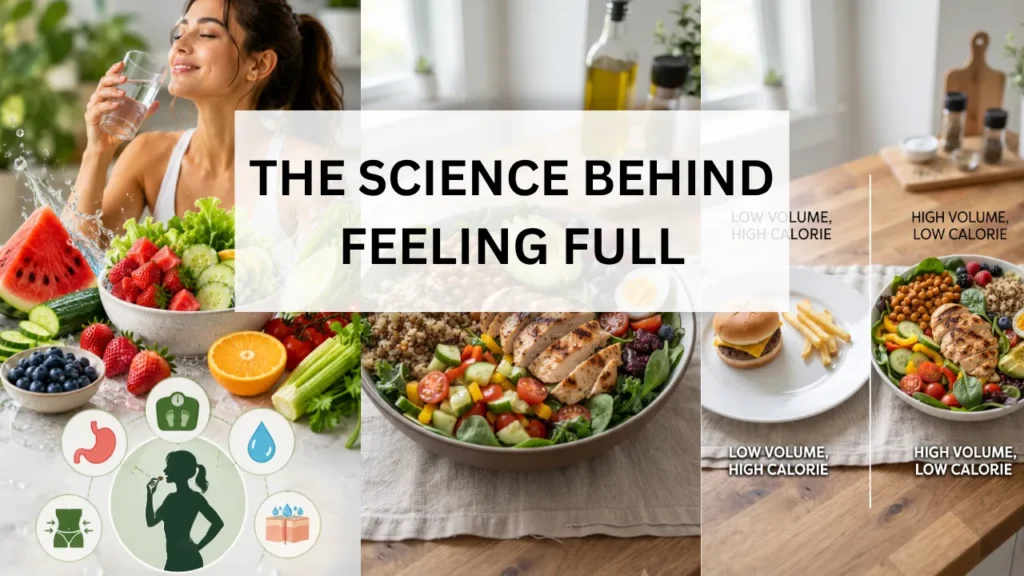
Have you ever finished a full meal and felt hungry again within an hour, while on other days a smaller portion keeps you satisfied well until dinner? This is not random; it’s rooted in the science of satiety, which explains why some foods make you feel genuinely full and others leave you reaching for more. Understanding how your body regulates fullness empowers you to eat less, feel satisfied, and lose weight without the constant hunger that often sabotages diets.
In this comprehensive guide, we break down the biology behind satiety, the difference between hunger and appetite, and practical strategies for designing meals that keep hunger at bay. Whether you’re aiming to lose weight, improve energy, or simply eat smarter, mastering satiety science can transform your approach to food.
What Does Feeling Full Really Mean?
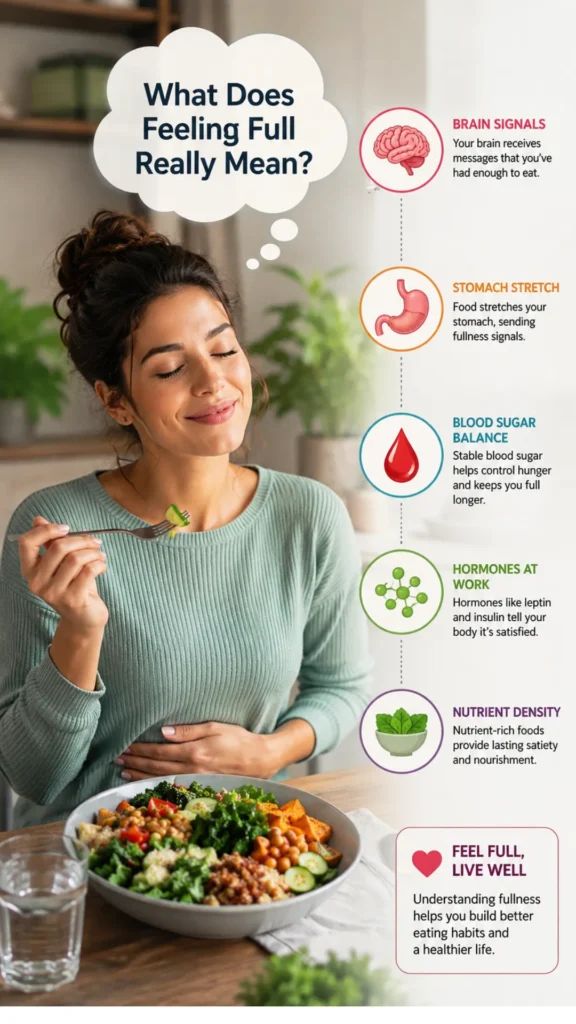
Feeling full is not a single sensation but the result of multiple overlapping signals your brain receives from your body. These signals arrive at different times and from different sources, creating both immediate and long-lasting fullness.
- Physical fullness: This is the sensation you get during and just after eating. It comes from your stomach stretching, the digestive system activating, and the texture and volume of the food you eat. This fullness typically kicks in within 15-20 minutes of starting a meal.
- Hormonal fullness: This longer-lasting feeling is driven by hormones released as nutrients are digested and absorbed. These hormones travel through the bloodstream and communicate with the brain, helping keep hunger away for 2 to 4 hours after eating.
For effective appetite control, both physical and hormonal signals need to work together. Meals that trigger both simultaneously tend to be more satisfying, even if the calorie content is the same as less fulfilling options.
You might like:https://volueat.com/what-traditional-dieting-actually-looks-like/
Hunger vs. Appetite: Understanding the Difference
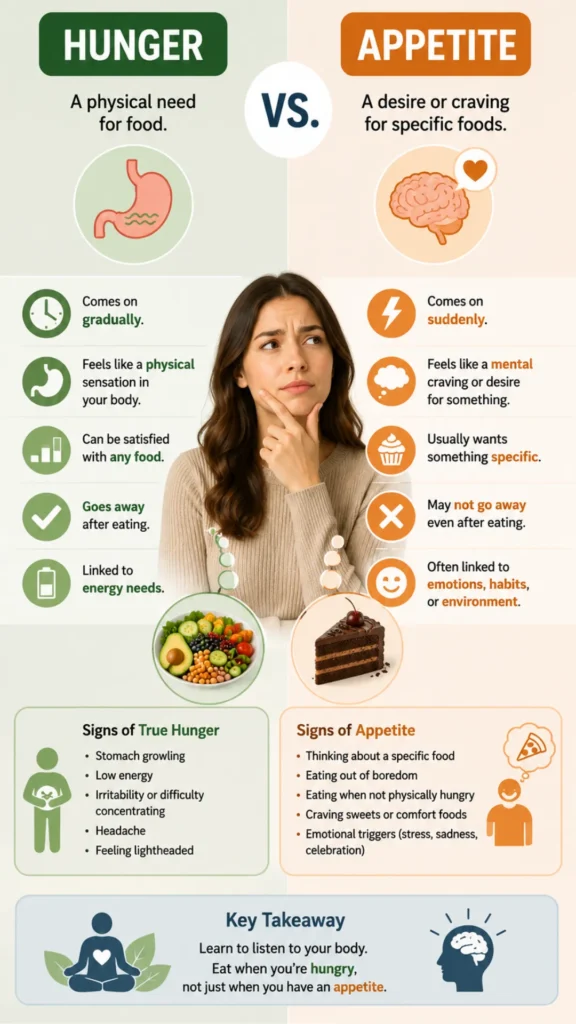
Many people confuse hunger with appetite, but they are distinct processes:
- Hunger is a biological need for food. It builds gradually and is accompanied by physical signs like a growling stomach, low energy, and difficulty concentrating. It signals your body’s need for energy or nutrients and is not picky about food type.
- Appetite is driven by psychological and environmental cues like the smell of food, stress, boredom, or seeing others eat. It often fixates on specific tastes, usually sweet, salty, or fatty foods, and pops up suddenly without the gradual build-up of hunger.
Most overeating happens due to appetite, not genuine hunger. Our modern environment is designed to constantly stimulate appetite through food marketing and the widespread availability of highly palatable processed foods. Learning to distinguish between hunger and appetite is crucial for effective eating control use before eating and ask yourself which one you’re experiencing.
How Your Brain Regulates Fullness Signals
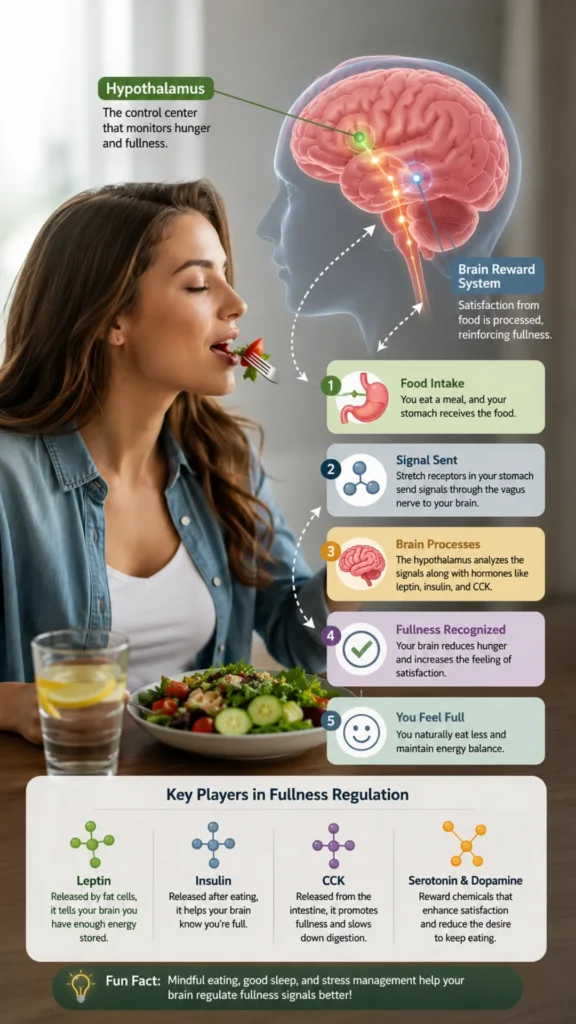
The hypothalamus in your brain acts as the control center for hunger and fullness. It receives inputs from:
- Hormones circulating in your blood
- Stretch receptors in your stomach and intestines
- Nutrient sensors in your digestive tract
- Fat tissue signals
The vagus nerve serves as the communication highway between your gut and brain, transmitting fullness signals from stretch receptors and hormone-releasing cells.
A key detail is timing: it takes about 15-20 minutes for hormonal fullness signals to reach your brain after you start eating. Eating too fast often leads to overeating because your brain hasn’t yet received the fullness message. Slowing your eating pace, chewing thoroughly, and eating mindfully helps your brain register fullness before you overconsume.
The Role of Stomach Stretch Receptors in Satiety
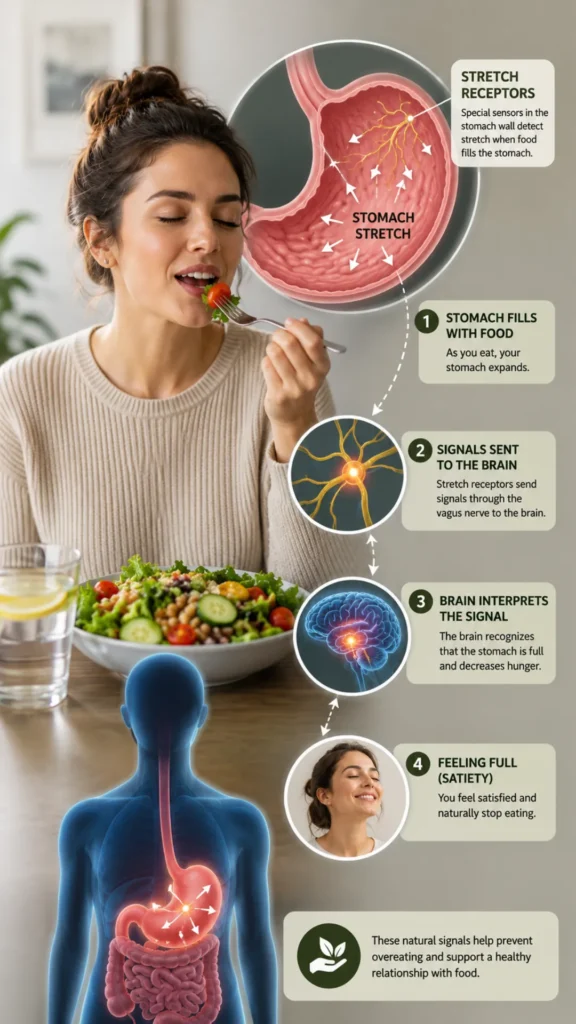
Your stomach walls contain mechanoreceptors, nerve endings sensitive to stretch. When you eat, your stomach expands and activates these receptors, sending fullness signals to the brain via the vagus nerve.
This is the foundation of volume eating: by eating foods that fill your stomach physically but are low in calories, such as water-rich vegetables and broth-based soups, you can trigger fullness signals without consuming excess calories.
For example, a 400-calorie meal with a large volume of vegetables and lean protein will feel more filling than a 400-calorie meal of processed snacks because it activates stretch receptors more effectively.
Starting your meal with a large serving of low-calorie, high-volume foods can reduce your total calorie intake while keeping you satisfied.
Hormones That Control Hunger: Ghrelin and Leptin
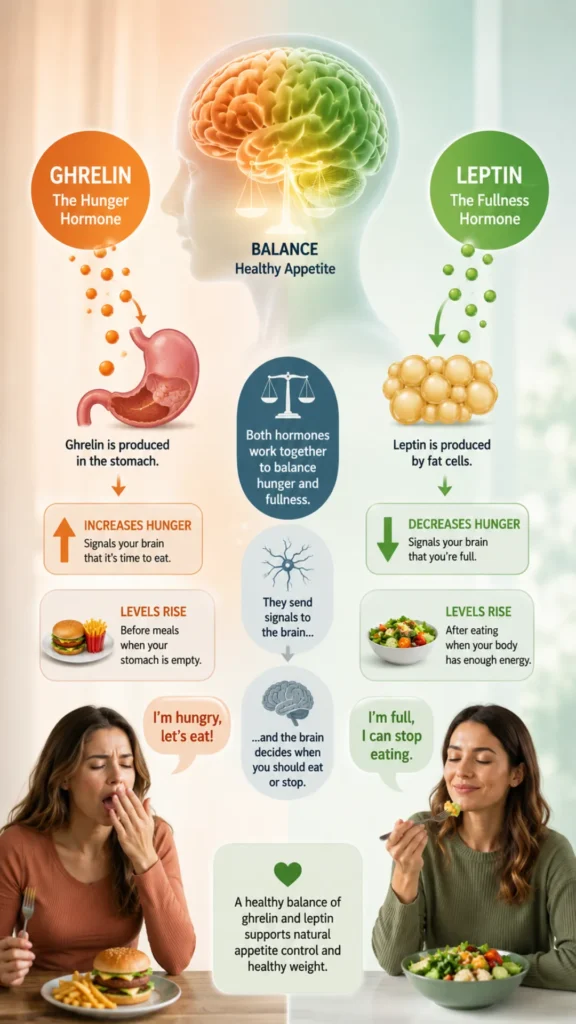
Two key hormones regulate hunger and fullness over time:
- Ghrelin is the “hunger hormone,” produced mainly in the stomach. Ghrelin levels rise before meals and drop after eating, signaling your brain to stimulate appetite. When you eat less than your body needs, ghrelin increases, which is why dieting often makes you feel hungrier.
- Leptin is produced by fat cells and signals the brain to suppress appetite when energy stores are sufficient. However, many overweight individuals develop leptin resistance, meaning their brains don’t respond well to leptin, leading to persistent hunger despite high leptin levels.
Both sleep deprivation and chronic stress disrupt these hormones, raising ghrelin and lowering leptin, resulting in increased appetite and weight gain. Managing sleep quality and stress levels is therefore essential for healthy hunger regulation.
Why Protein Is the Most Filling Macronutrient
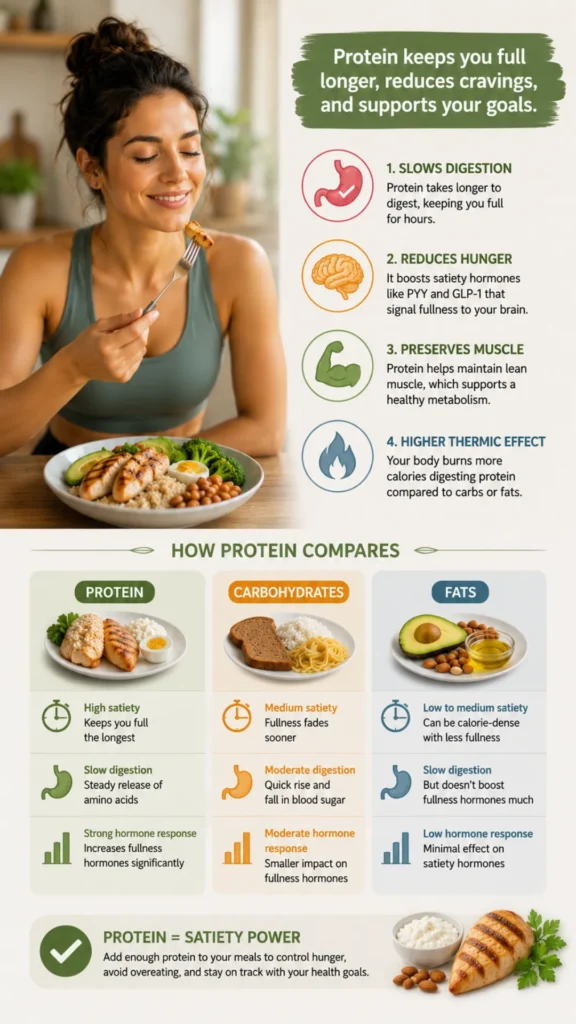
Among macronutrients, protein, carbohydrates, and fat, protein is the most effective at promoting satiety. This is due to several reasons:
- Protein stimulates gut hormones like peptide YY and cholecystokinin that signal fullness to the brain.
- It suppresses ghrelin more than carbs or fats.
- Protein has a high thermic effect, meaning your body uses 20-30% of protein calories just to digest and process it, compared to lower percentages for carbs and fats.
High-protein foods that promote fullness include egg whites, skinless chicken, white fish, shrimp, non-fat Greek yogurt, cottage cheese, lentils, and chickpeas.
Eating a protein-rich breakfast is especially beneficial; it reduces hunger and calorie intake throughout the day, making it a powerful habit for weight loss.
How Fiber Helps You Stay Full Longer
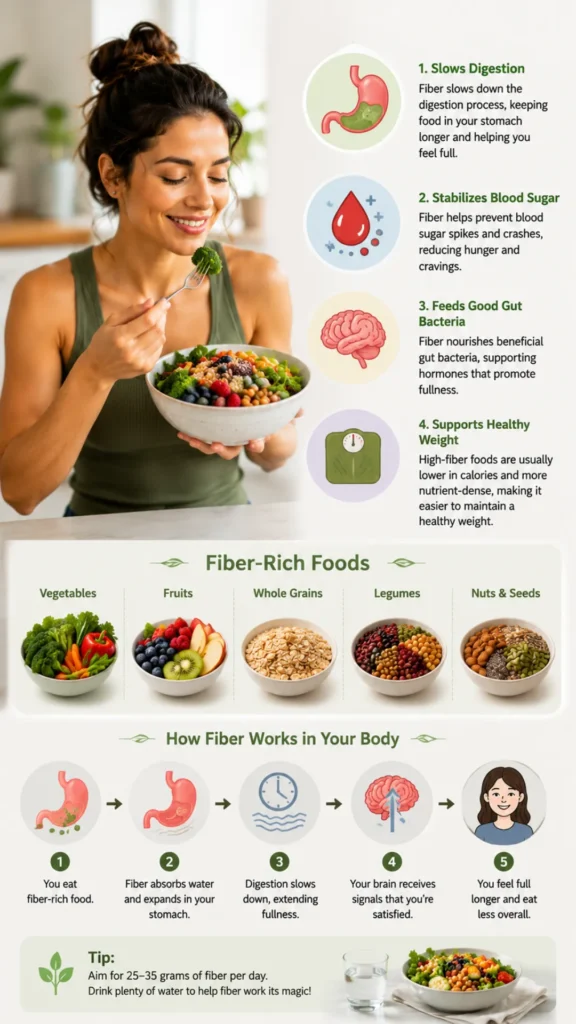
Fiber is another critical factor for prolonged fullness, working through multiple mechanisms:
- Soluble fiber (found in oats, legumes, and apples) absorbs water and forms a gel that slows digestion and nutrient absorption, helping maintain stable blood sugar and fullness.
- It also feeds beneficial gut bacteria, which produce fatty acids signaling satiety to the brain.
- Insoluble fiber (found in vegetables and whole grains) adds bulk and supports gut health while contributing to the feeling of a full stomach.
Most people consume less fiber than recommended—targeting 25-38 grams daily can significantly improve hunger control within weeks. Increasing fiber can be as simple as adding more vegetables, swapping refined grains for whole grains, or including legumes regularly.

Why Water-Rich Foods Are Satiety Superstars
Water content is an often overlooked but powerful satiety factor. Foods with high water content take up more space in your stomach and activate stretch receptors efficiently for very few calories.
Examples include:
- Non-starchy vegetables like cucumber, zucchini, spinach, celery, broccoli, and bell peppers (90-96% water)
- Fruits like watermelon, strawberries, grapefruit, and cantaloupe (above 85% water)
- Broth-based soups, which add volume and warmth, slowing eating pace and enhancing fullness signals
Interestingly, water inside solid foods contributes more to satiety than drinking water alongside meals, because it stays in the stomach longer.
Calorie Density: The Key to Filling Meals on a Budget
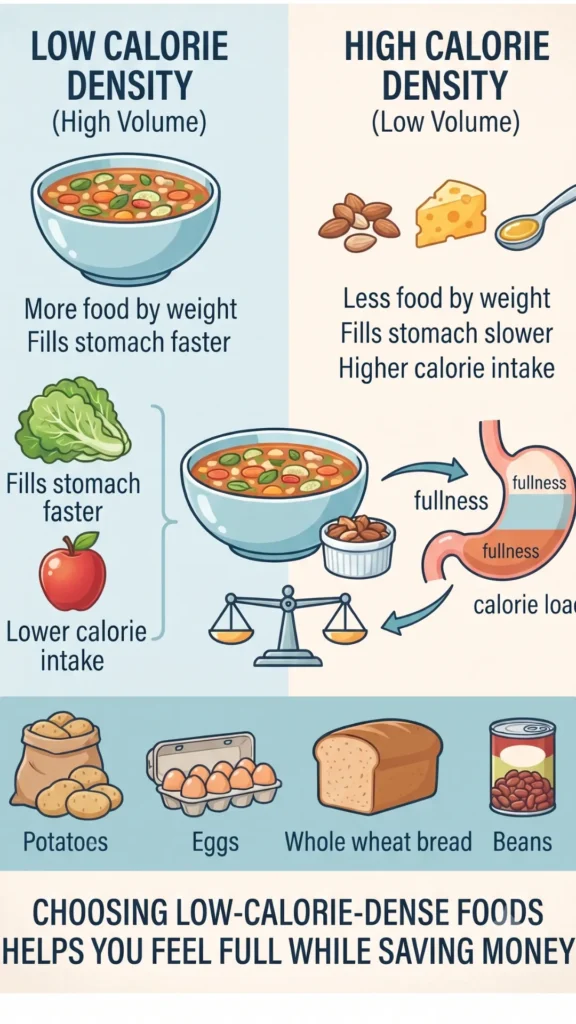
Calorie density refers to the number of calories per gram of food. Foods low in calorie density provide more volume and fullness per calorie, helping reduce overall calorie intake while keeping you satisfied.
Calorie density ranges:
- Non-starchy vegetables: 0.1–0.5 calories/gram
- Fruits: 0.3–0.6 calories/gram
- Lean protein: 0.7–1.2 calories/gram
- Whole grains: 1.0–1.5 calories/gram
- Nuts, oils, processed snacks: 5–9 calories/gram
Designing meals around low-calorie-density foods means you can eat larger portions with fewer calories, creating a calorie deficit without hunger.
Research on the Satiety Index confirms foods like boiled potatoes, oatmeal, apples, and whole-grain bread are highly satisfying, while cakes, doughnuts, and chocolates rank low.
How Ultra-Processed Foods Undermine Fullness
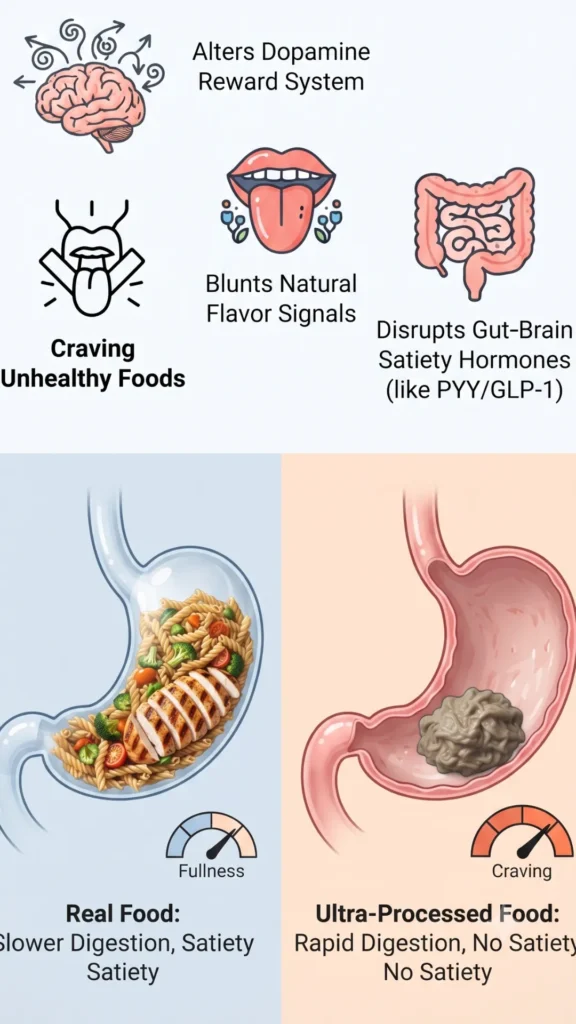
Ultra-processed foods are engineered to override natural fullness signals by combining refined carbs, unhealthy fats, salt, and sugar with textures that encourage overeating.
They are:
- Low in water and fiber, offering little physical volume per calorie
- Rapidly digested, causing blood sugar spikes and crashes that trigger hunger soon after
- High in calorie density, allowing you to consume many calories before feeling full
- Hyper-palatable, activating brain reward systems to encourage continued eating beyond physical need
Shifting from ultra-processed foods to whole, minimally processed foods improves hormonal balance, gut health, and fullness within weeks.
Volume Eating: Applying Satiety Science for Weight Loss
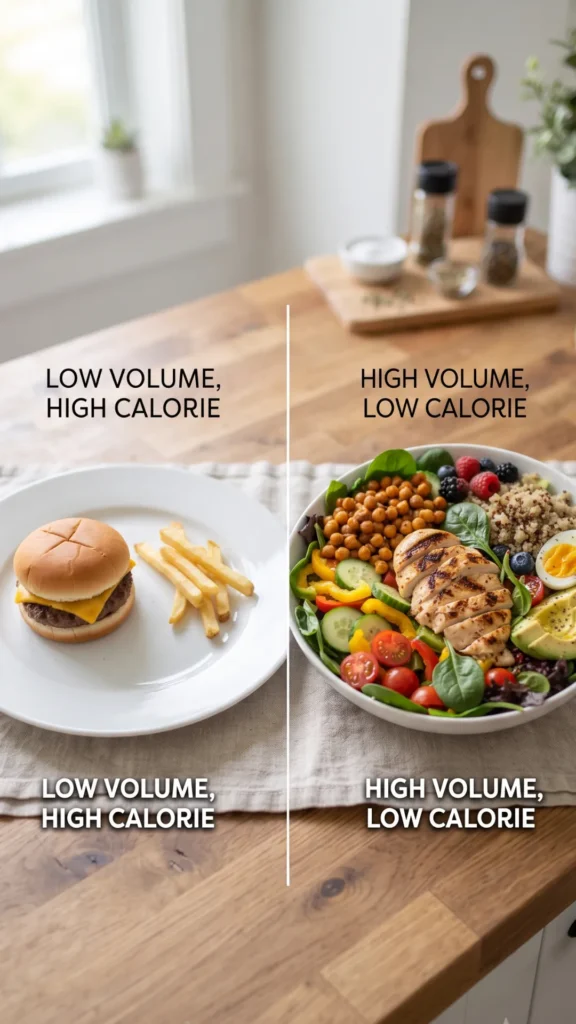
Volume eating brings all these satiety principles together. A well-constructed meal includes the following:
- A large portion of non-starchy vegetables (water-rich, low-calorie)
- A solid serving of lean protein (triggers satiety hormones)
- Fiber-rich foods (slow digestion, feed gut microbiome)
- Low calorie density, allowing for a large, filling plate within a calorie deficit
Volume eating reduces hunger and the hormonal disruptions caused by aggressive calorie restriction (like rising ghrelin and falling leptin), making sustainable weight loss without hunger achievable.
Simple starting tips:
- Begin meals with a broth-based soup or salad
- Fill half your plate with vegetables
- Include lean protein at every meal
These small changes cumulatively reduce hunger, boost satisfaction, and help control weight over time.
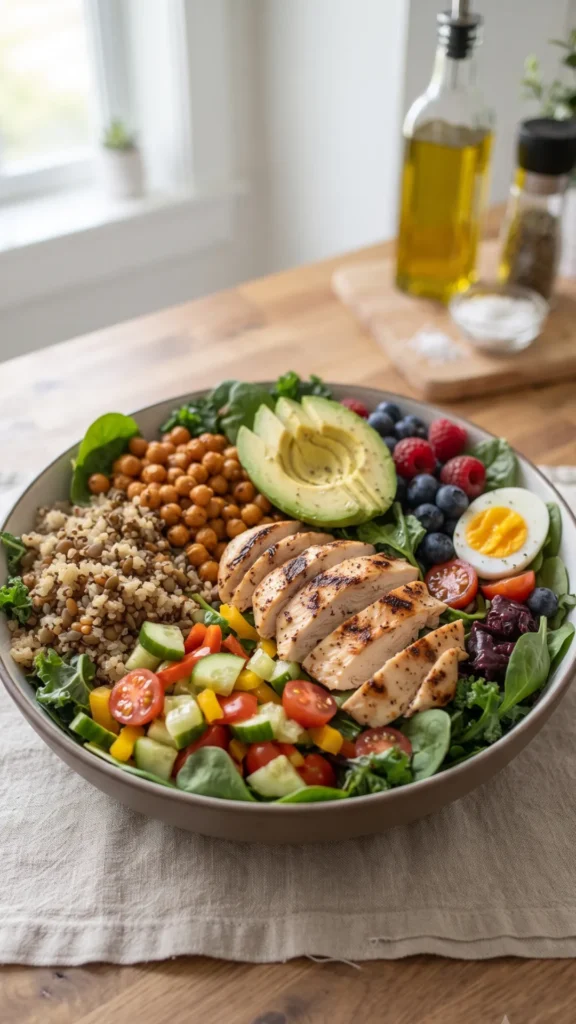
Practical Takeaways: Put the Science of Satiety on Your Plate Today
Understanding satiety science equips you with a practical toolkit for creating satisfying meals that naturally reduce hunger and support weight management.
Before your next meal, ask yourself:
- Does it have enough volume?
- Is there a good protein source?
- Does it include fiber-rich foods?
- Are water-rich foods present?
Consistently hitting these four markers helps your body’s fullness system work effectively, making hunger less of an obstacle to your goals. Save this guide and refer to it when planning meals. When you’re ready to take action, resources like Volueat.com can help you build plates that keep you full, happy, and on track
Table of contents
What Does Feeling Full Really Mean?
Hunger vs. Appetite: Understanding the Difference
How Your Brain Regulates Fullness Signals
The Role of Stomach Stretch Receptors in Satiety
Hormones That Control Hunger: Ghrelin and Leptin
Why Protein Is the Most Filling Macronutrient
How Fiber Helps You Stay Full Longer
Why Water-Rich Foods Are Satiety Superstars
Calorie Density: The Key to Filling Meals on a Budget
How Ultra-Processed Foods Undermine Fullness
Volume Eating: Applying Satiety Science for Weight Loss
Practical Takeaways: Put the Science of Satiety on Your Plate Today
Disclaimer
This article is for informational purposes only and is not medical or nutritional advice. Always consult a healthcare professional before making significant changes to your diet, especially if you have existing health conditions