Why You Often Feel Hungry Soon After Eating and How to Stop It
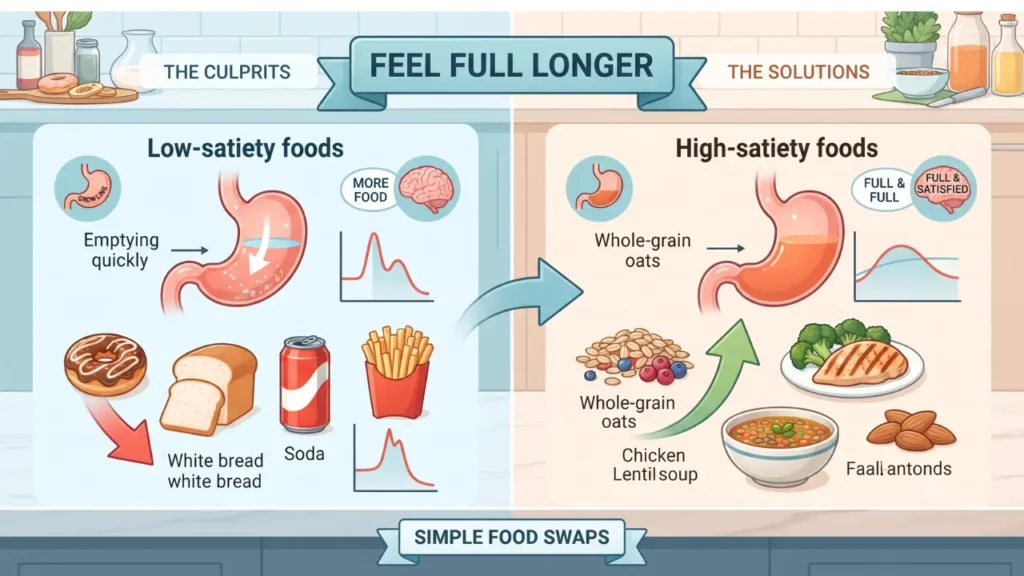
Have you ever finished what seemed like a full meal, only to find yourself hungry again within an hour? This isn’t a sign of weak willpower; it’s a problem caused by the types of foods you’re eating. Certain foods are either specifically designed or naturally structured to bypass your body’s natural fullness signals, cause rapid blood sugar spikes, and prompt hunger to return quickly, often before you’ve even finished your meal.
Understanding which foods cause these effects and why they do so is one of the most practical skills you can develop for effective weight management and healthier eating habits. This comprehensive guide explains the science behind hunger, identifies the worst offenders, and provides easy swaps and meal-building strategies that help you feel genuinely satisfied without complicated diets or restrictive rules.
Why Do Some Foods Leave You Hungry Again Quickly?
Not all foods provide the same feeling of fullness, nor do they keep you satisfied for the same length of time. This difference largely depends on how the food interacts with your digestive system, blood sugar levels, and appetite-regulating hormones.
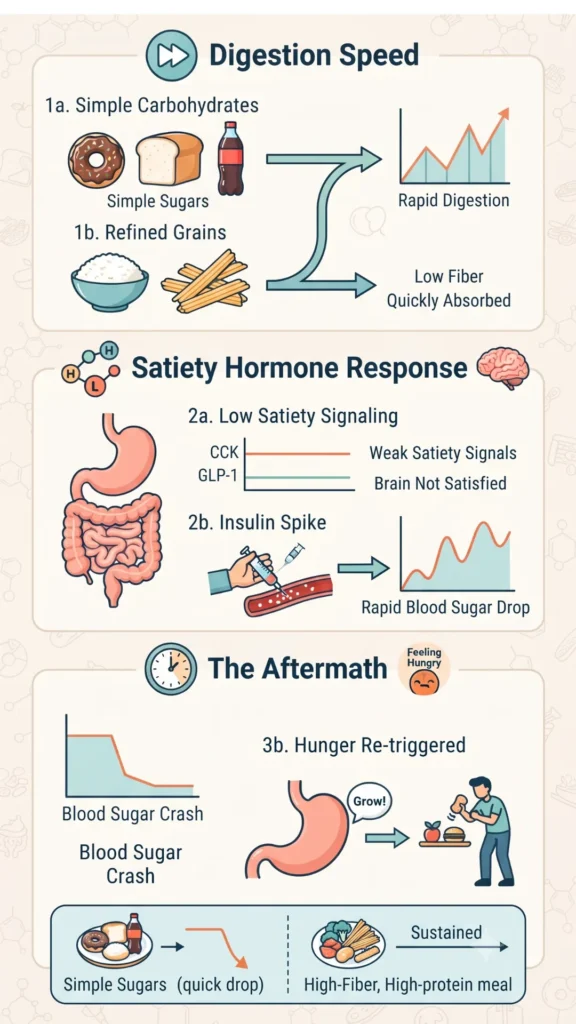
Foods that digest quickly pass through the stomach without activating the stretch receptors or satiety hormones that create a lasting sense of fullness. When digestion is rapid, blood sugar rises sharply, then crashes, which sends urgent hunger signals to the brain even if you’ve consumed plenty of calories just minutes before.
Additionally, the physical volume of food plays a significant role. A small, calorie-dense meal may supply enough energy but fails to fill the stomach adequately. Since the stomach’s stretch receptors are not fully engaged, the brain receives weak or no signals of fullness despite the calorie intake. For example, 500 calories of processed snacks feels very different from 500 calories of vegetables because the volume and fiber content influence how full you feel.
Protein and fiber are the two most critical nutrients for fullness relative to calories. Foods low in both tend to trigger hunger soon after eating, while those high in protein and fiber promote satiety that lasts for hours. Recognizing this makes it easier to identify which foods might be sabotaging your hunger management.
The Science of Blood Sugar Spikes and Hunger Signals
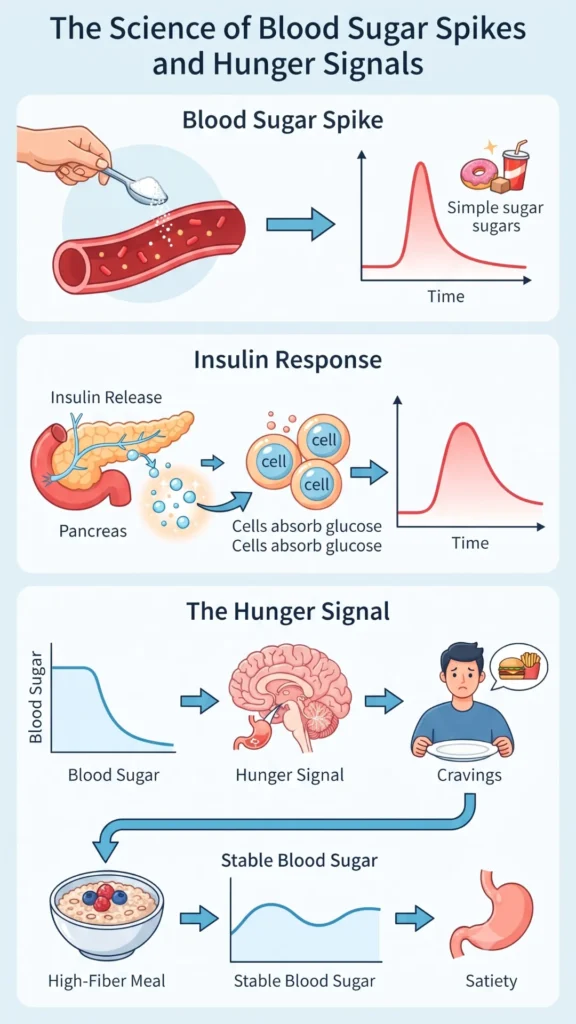
Blood sugar control is central to understanding why certain foods cause rapid return of hunger. When you consume foods high in rapidly digestible carbohydrates such as white bread, sugary cereals, soft drinks, or many processed snacks, glucose floods the bloodstream quickly. In response, the pancreas releases insulin to move glucose into cells.
Sometimes, this insulin response overshoots, causing blood sugar to drop below pre-meal levels, a condition called “reactive hypoglycemia” or a “blood sugar crash.” This crash triggers the hypothalamus to increase production of ghrelin, the primary hunger hormone, sending urgent signals to eat again. These cravings often focus on sugary or high-carb foods and typically occur within 1-2 hours of eating.
The glycemic index (GI) measures how quickly a food raises blood sugar and predicts how soon hunger will return. High-GI foods cause sharp spikes and crashes, while low-GI foods, rich in fiber and protein, result in a slower, steadier rise in blood sugar and more manageable hunger.

Refined Carbohydrates: The Biggest Culprits in Quick Hunger Return
Refined carbs are the main dietary factor behind rapid hunger. Refining grains removes fiber-rich bran and nutrient-dense germ, leaving a starch that digests very quickly and spikes blood sugar.
White bread is a prime example. Two slices of white bread digest almost as fast as pure glucose, causing blood sugar to peak within 30-45 minutes and start dropping within an hour. Without fiber to slow digestion, fullness diminishes quickly, and most people feel hungry again within 90 minutes regardless of portion size.
Other refined carbs with the same effect include white rice, pasta made from refined flour, instant noodles, and many breakfast cereals. Cornflakes, particularly, have one of the highest glycemic indices, higher even than table sugar, leading to early mid-morning hunger after breakfast.
While refined carbs aren’t inherently bad, their impact on hunger hormones makes it difficult to control intake without feeling deprived, often leading to overeating over time. Simply swapping refined carbs for whole food alternatives at meals can significantly reduce hunger levels.
Sugary Foods and Drinks That Fuel Cravings
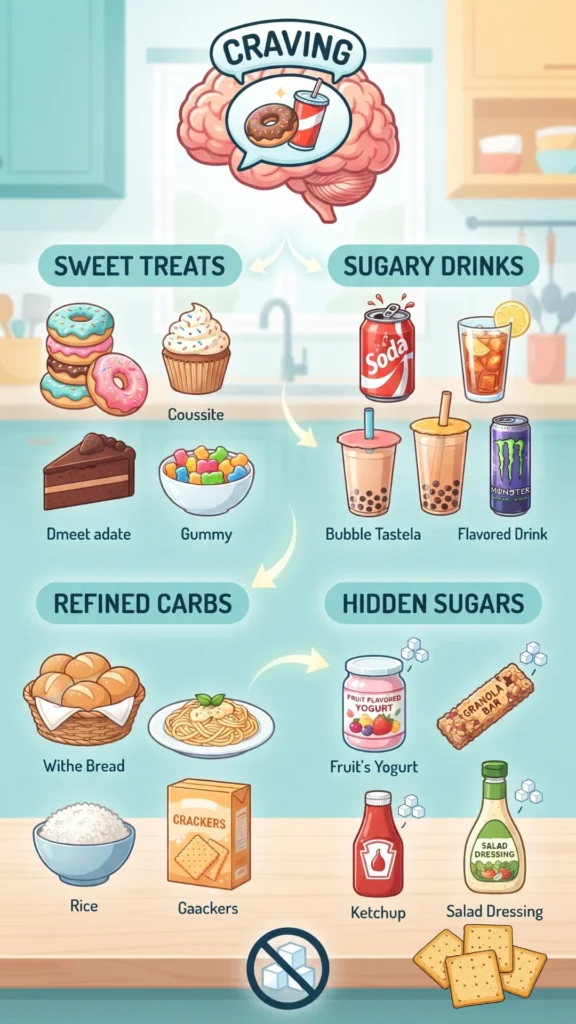
Sugar is the most powerful disruptor of blood sugar balance. Sugary foods and drinks combine rapid glucose absorption with activation of the brain’s reward system, creating both physiological and psychological urges to keep eating.
Soft drinks and fruit juices are especially problematic because they deliver large amounts of sugar directly into the bloodstream, with no fiber, protein, or physical bulk to slow absorption or create fullness. A large glass of fruit juice can have 25-35 grams of sugar, causing a sharp insulin surge, blood sugar crash, and intense hunger often stronger than before drinking.
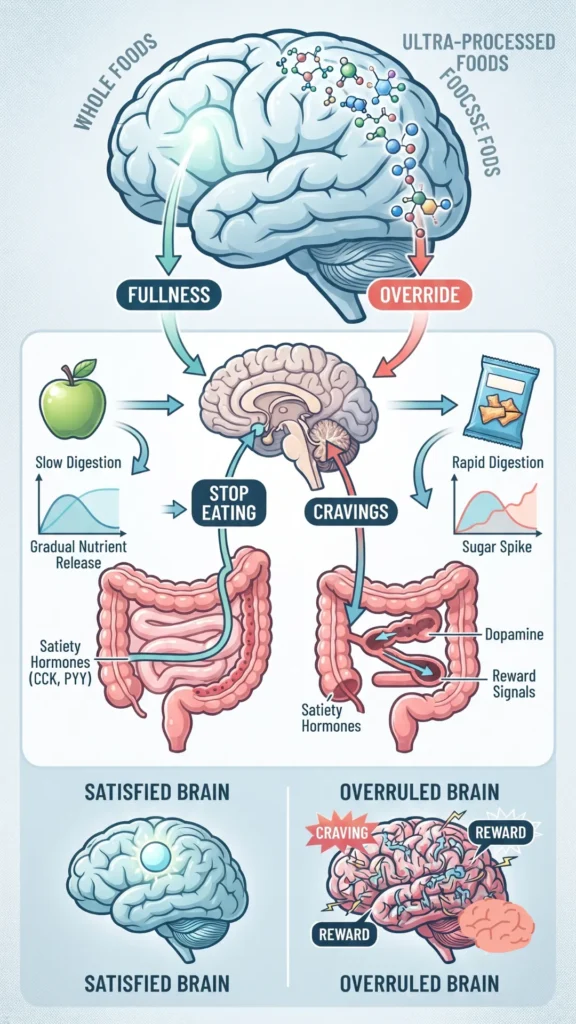
Sweet treats like chocolate bars, pastries, doughnuts, and packaged desserts combine sugar, refined carbs, and often fat, creating a hyper-palatable mix that overrides satiety signals. The brain’s reward pathways get strongly activated, pushing you to eat beyond physical need.
A key issue with sugary snacks is that the blood sugar crash they cause triggers cravings for more fast-acting carbs, perpetuating a cycle where eating one biscuit can lead to eating several. Breaking this cycle requires replacing sugary snacks with foods that stabilize blood sugar instead of spiking it.
Ultra-Processed Foods: Engineered to Override Fullness
Ultra-processed foods deserve special attention because their hunger-amplifying effects go beyond blood sugar spikes. These foods are deliberately engineered with precise combinations of salt, sugar, fat, and texture—the “bliss point” to maximize palatability and make stopping eating very difficult.
Examples include crisps, flavored popcorn, fast food, packaged cookies, many breakfast bars, and flavored yogurts with fruit compote. They tend to be low in fiber and protein, very calorie-dense, and lacking in water content, so they fail to trigger meaningful fullness signals.
Moreover, ultra-processed foods often lack essential vitamins, minerals, and phytonutrients. Some researchers suggest that until the body’s micronutrient needs are met, hunger signals persist, prompting continued eating even beyond calorie needs.
Low-Protein Meals: A Hidden Hunger Trigger
Protein is the most satiating macronutrient. Meals low in protein, regardless of calorie content, tend to result in quicker hunger return compared to protein-rich meals with the same or fewer calories.
Typical low-protein meals include cereal with skim milk, white toast with jam, or pasta with tomato sauce but no added protein. These provide energy mainly from refined carbs and don’t sufficiently activate satiety hormones or suppress hunger signals.
Adding protein to these meals changes the experience dramatically. For example, pasta with lean mince or chicken, toast with eggs instead of jam, or cereal replaced by Greek yogurt and oats extend fullness by at least one to two hours.
Low-protein breakfasts are particularly problematic because they influence hunger throughout the day. Research shows that a high-protein breakfast lowers calorie intake not only at that meal but at subsequent meals by stabilizing appetite hormones.
Low-Fiber Foods That Don’t Keep You Full
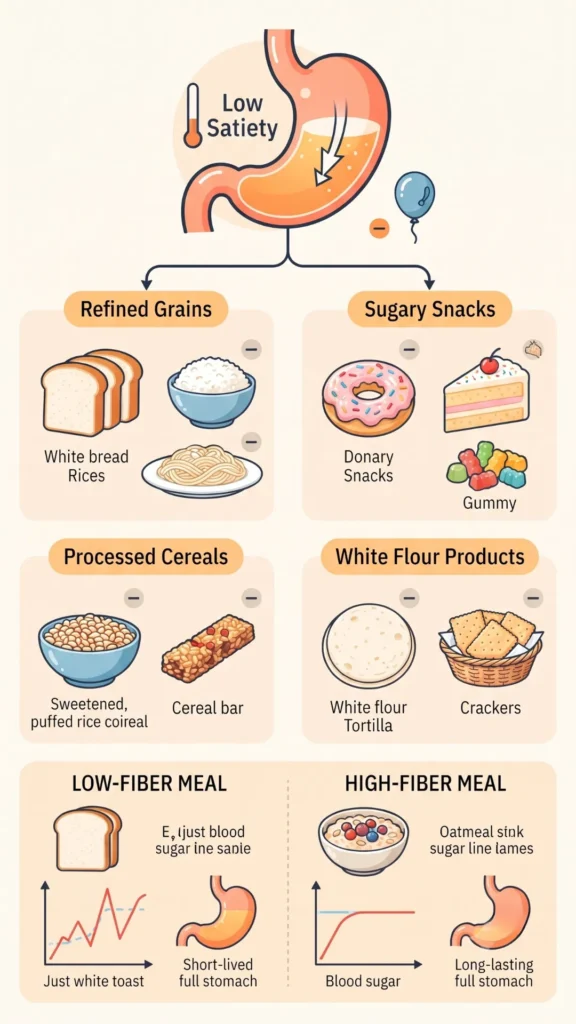
Fiber is the second key nutrient for satiety. Foods low in fiber digest quickly, empty from the stomach rapidly, and provide fleeting fullness regardless of calorie content.
White rice is a clear example; cooked white rice contains only about 0.4 grams of fiber per 100 grams, leaving little resistance to digestion. People often feel hungry again within 90 minutes after a rice-based meal without protein.
Peeling fruit removes much of its fiber content. For instance, an apple with skin has about 2.4 grams of fiber, but peeled apples have less. Fruit juices remove fiber entirely, delivering sugar without fullness benefits. The difference between eating a whole orange and drinking orange juice can translate to 30-60 minutes more fullness from the whole fruit.
Most packaged snacks are designed to be low in fiber, such as crackers, rice cakes, and pretzels. While they may feel filling initially, the sensation fades quickly, and hunger returns faster than after whole food alternatives.
The Top 20 Foods That Make You Hungry Again Quickly
- White bread: High glycemic, almost no fiber, rapid blood sugar spike, and crash.
- White rice: Low fiber, quick digestion, minimal fullness.
- Sugary breakfast cereals: High glycemic index, low protein, and low fiber.
- Soft drinks and fruit juices: Pure sugar, no fiber or volume.
- Potato crisps and chips: High calorie density, engineered taste, and low fiber and protein.
- White pasta without protein: Fast-digesting carbs, minimal satiety.
- Doughnuts and pastries: Refined carbs, sugar, fat, no fiber.
- Flavored rice cakes: Low calorie but also low protein and fiber.
- Packaged breakfast bars: Often high in sugar and low in fiber and protein.
- Candy and sweets: Pure sugar, no satiety nutrients.
- Instant noodles: Refined carbs, very low fiber and protein.
- Flavored yogurts with fruit compote: High sugar, less protein than plain Greek yogurt.
- Fruit smoothies: Fiber removed, sugar concentrated.
- Pretzels: Low fat, low protein, low fiber.
- Crackers and cheese biscuits: Refined flour, high-calorie density.
- White bagels: High glycemic, low fiber, and low protein.
- Sweetened coffee drinks: Liquid sugar calories, minimal satiety.
- Cornflakes and puffed cereals: Very high glycemic index.
- Packaged low-fat snacks: Sugar and refined carbs replace fat.
- Alcohol: Stimulates the appetite hormone ghrelin and reduces food inhibition.
Smart Food Swaps to Stay Full Longer
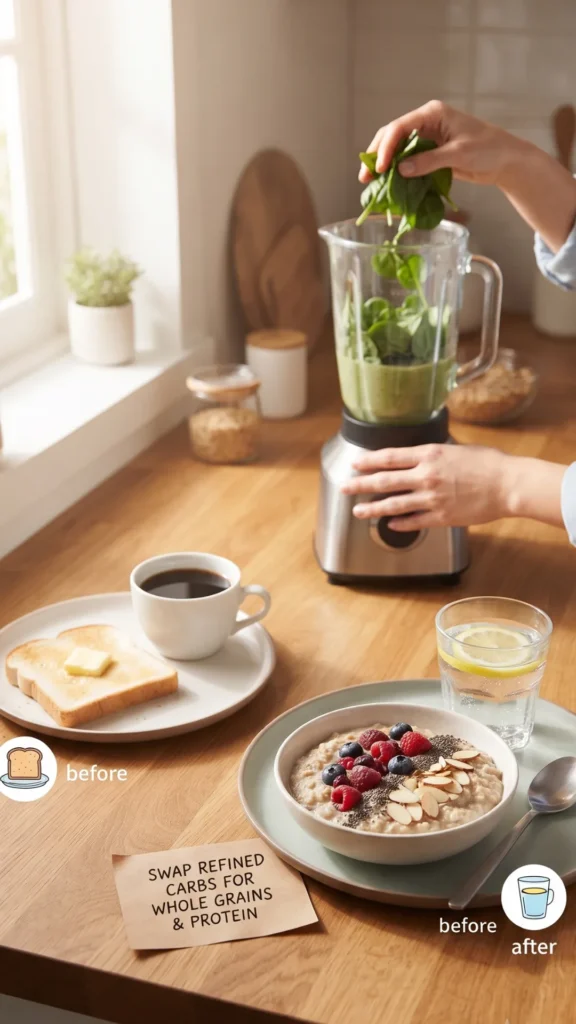
Every hunger-inducing food above can be swapped for a healthier alternative that satisfies cravings while supporting fullness:
- White bread → Whole grain sourdough or dense whole grain bread.
- White rice → Brown rice, barley, cauliflower rice.
- Sugary cereals → Rolled oats with Greek yogurt and berries.
- Soft drinks/juices → Sparkling water with fresh fruit, herbal tea, or plain water.
- Crisps/snacks → Raw vegetables with hummus or cottage cheese.
- Flavored yogurt → Plain non-fat Greek yogurt with fresh fruit.
These swaps maintain enjoyment while improving satiety and blood sugar control.
How to Build Meals That Keep Hunger Away
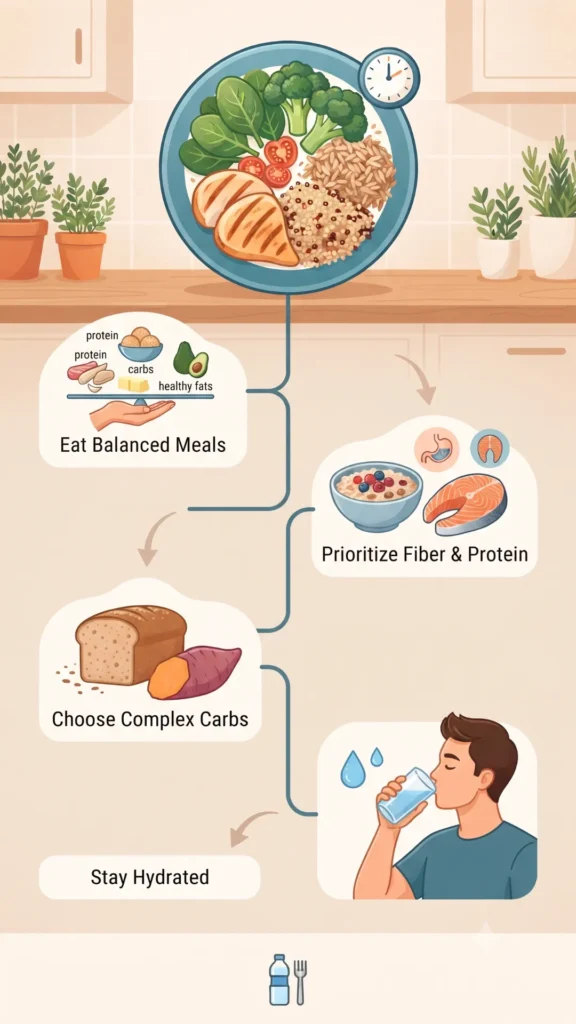
- Begin meals with low-calorie, high-volume foods like broth-based soups or leafy salads to partly fill the stomach before eating higher-calorie items.
- Include both protein and fiber in every meal to activate fullness hormones and slow digestion.
- Choose whole, unrefined carbohydrates over processed ones to ensure steady blood sugar and sustained fullness.
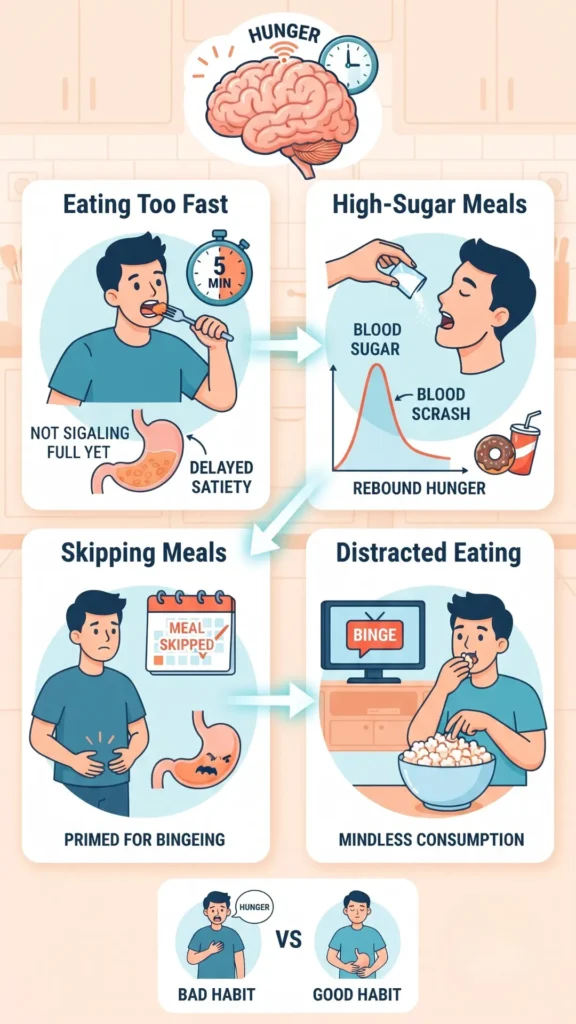
Eating Habits That Worsen Hunger
- Eating too quickly doesn’t allow fullness signals to reach the brain, leading to early hunger.
- Eating while distracted reduces sensory engagement and satisfaction.
- Skipping meals causes hunger hormone spikes, increasing the likelihood of overeating later.
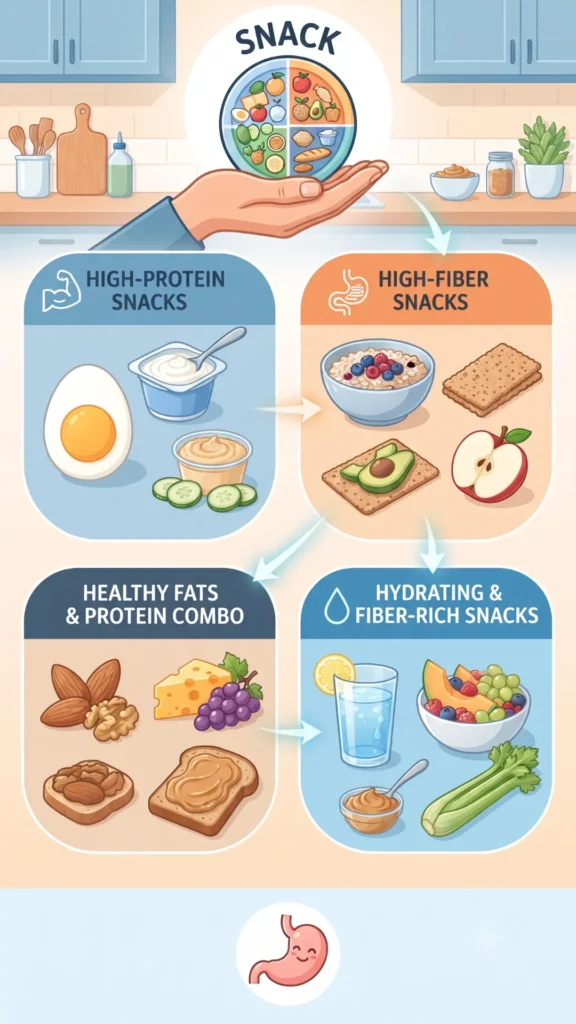
Healthy Snack Options That Halt Hunger
You mightlike this: https://volueat.com/best-low-calorie-snacks-30-filling-picks-for-weight-loss-volueat/
Swap common hunger-driving snacks for protein- and fiber-rich options:
- Instead of crisps, snack on crunchy veggies like celery and bell peppers with hummus.
- Replace chocolate bars with mixed berries and Greek yogurt.
- Choose hard-boiled eggs and whole fruit over packaged bars.
- Opt for a skimmed milk latte instead of sugary coffee drinks.
Although your palate may need 1-2 weeks to adjust, these swaps become preferred choices over time.
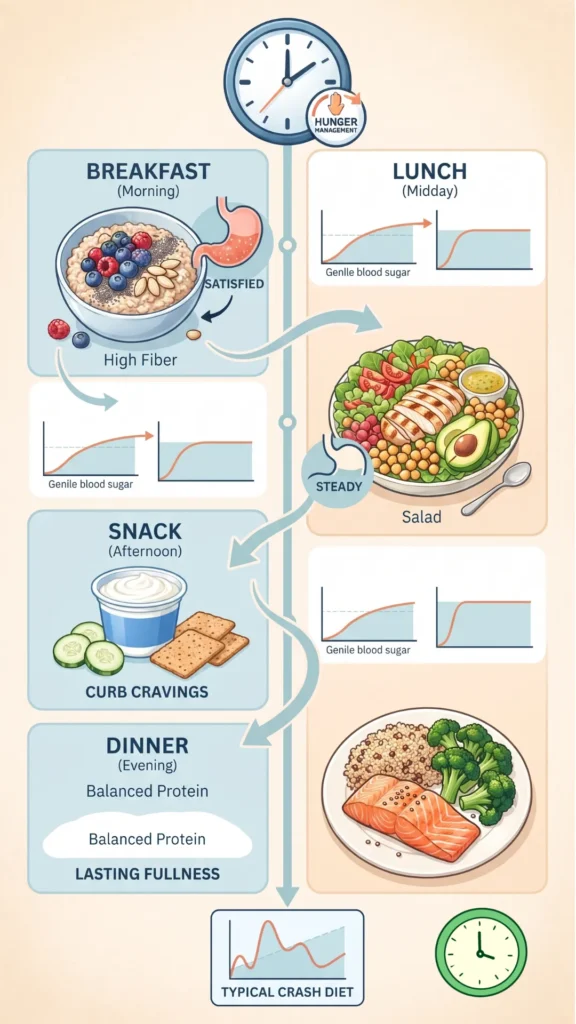
A Sample Hunger-Controlled Day of Eating
- Breakfast: Rolled oats with water, non-fat Greek yogurt, strawberries, and ground flaxseed. Black coffee or green tea. (~350-380 calories, 15g protein, 8g fiber)
- Mid-morning snack: Medium apple with skin and a small bowl of edamame. (~200 calories, 9g fiber, 6g protein)
- Lunch: Large salad with romaine, spinach, cucumber, cherry tomatoes, chickpeas, shredded cabbage, canned tuna, and lemon juice dressing. Side of vegetable broth soup. (~350-380 calories, 30g protein, 10g fiber)
- Afternoon snack: 150g non-fat Greek yogurt with raspberries. (~130 calories, 15g protein, 5g fiber)
- Dinner: Baked white fish with roasted broccoli, cauliflower, zucchini, and brown rice. Small bowl of miso soup. (~380-420 calories, 35g protein, 8g fiber)
- Evening: Herbal tea and fresh fruit like watermelon or berries if needed (~under 100 calories)
Total protein: ~100-110g; fiber: ~40-45g; calories: ~1500-1600. This plan supports steady blood sugar, manages hunger, and reduces cravings.
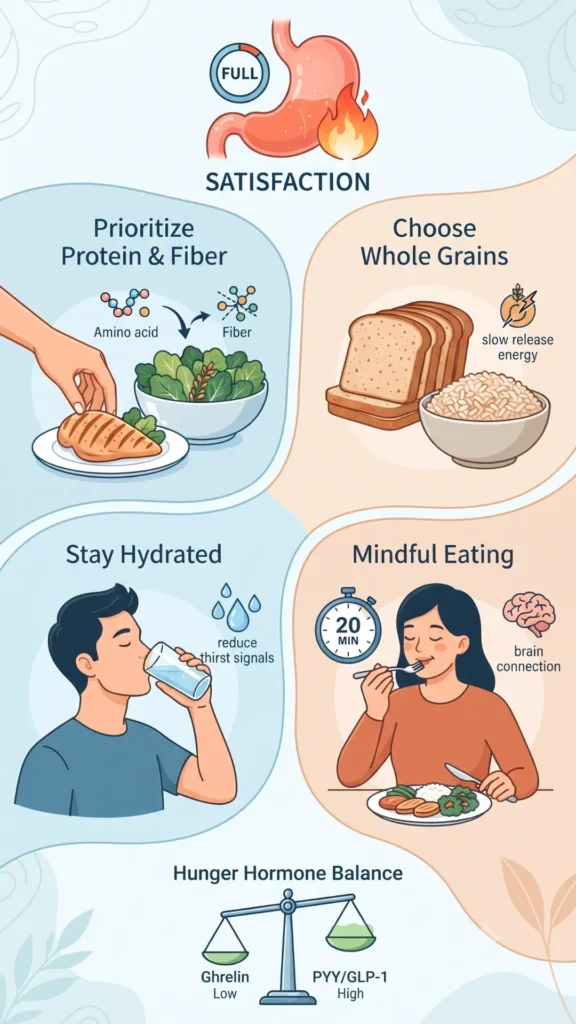
Tips for Managing Hunger Naturally
- Drink water before meals to reduce appetite, as mild dehydration can mimic hunger.
- Get 7-9 hours of quality sleep to balance hunger hormones ghrelin and leptin.
- Manage stress through activities like walking, breathing exercises, or spending time outdoors to reduce cortisol-driven cravings.
- Always prioritize a high-protein breakfast to stabilize appetite for the entire day.
Final Thoughts: Eat Foods That Support Your Body, Not Fight It
Hunger itself isn’t the enemy; hunger caused by blood sugar crashes, poor food choices, and engineered palatability is. Recognizing which foods trigger rapid hunger helps you make better choices without relying on willpower alone.
Foods that keep you full are simple, affordable, and widely recommended: vegetables, fruits, lean proteins, legumes, and whole grains. These work with your body’s natural hunger regulation and form the foundation for sustainable, healthy weight management. Save this guide as a reference for foods to limit and swaps to try, and explore meal and snack ideas that truly satisfy on Volueat.com
Disclaimer
This article is for informational purposes only and is not medical or nutritional advice. Always consult a healthcare professional before making significant changes to your diet, especially if you have existing health conditions
Table of content
Why You Often Feel Hungry Soon After Eating and How to Stop It
Why Do Some Foods Leave You Hungry Again Quickly?
The Science of Blood Sugar Spikes and Hunger Signals
Refined Carbohydrates: The Biggest Culprits in Quick Hunger Return
Sugary Foods and Drinks That Fuel Cravings
Ultra-Processed Foods: Engineered to Override Fullness
Low-Protein Meals: A Hidden Hunger Trigger
Low-Fiber Foods That Don’t Keep You Full
The Top 20 Foods That Make You Hungry Again Quickly
Smart Food Swaps to Stay Full Longer
How to Build Meals That Keep Hunger Away
Eating Habits That Worsen Hunger
Healthy Snack Options That Halt Hunger
A Sample Hunger-Controlled Day of Eating
Tips for Managing Hunger Naturally
Final Thoughts: Eat Foods That Support Your Body, Not Fight It