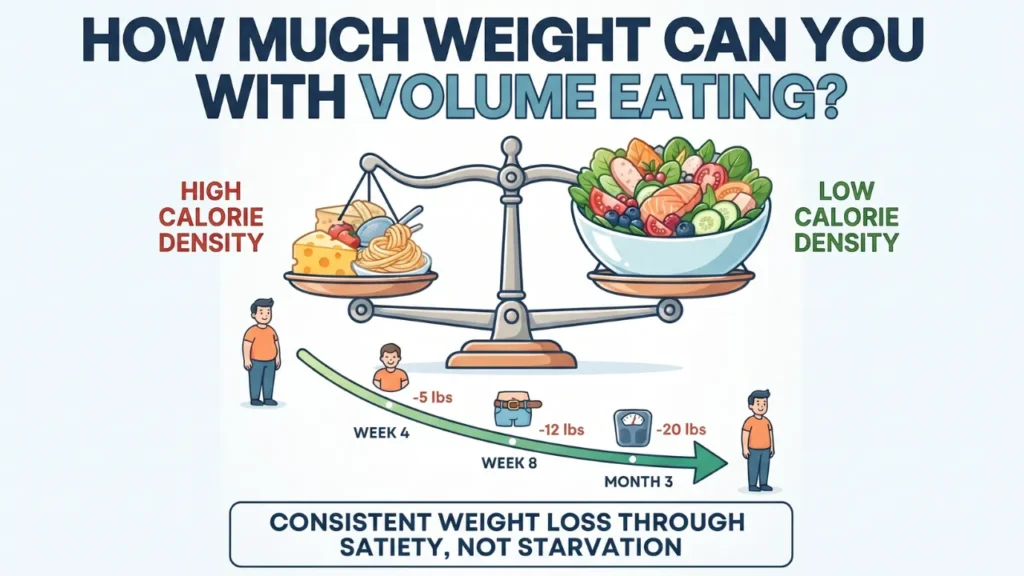
If you’ve heard about volume eating and wonder if it truly helps you lose weight while eating more, this guide will clarify everything. Volume eating is a science-supported method that promotes consistent fat loss by focusing on fullness and food quality rather than hunger or willpower. How well it works depends on how you apply it, your consistency, and your food choices. Learn about How Much Weight Can You Lose with Volume Eating?
What Is Volume Eating and Why Is It Different?
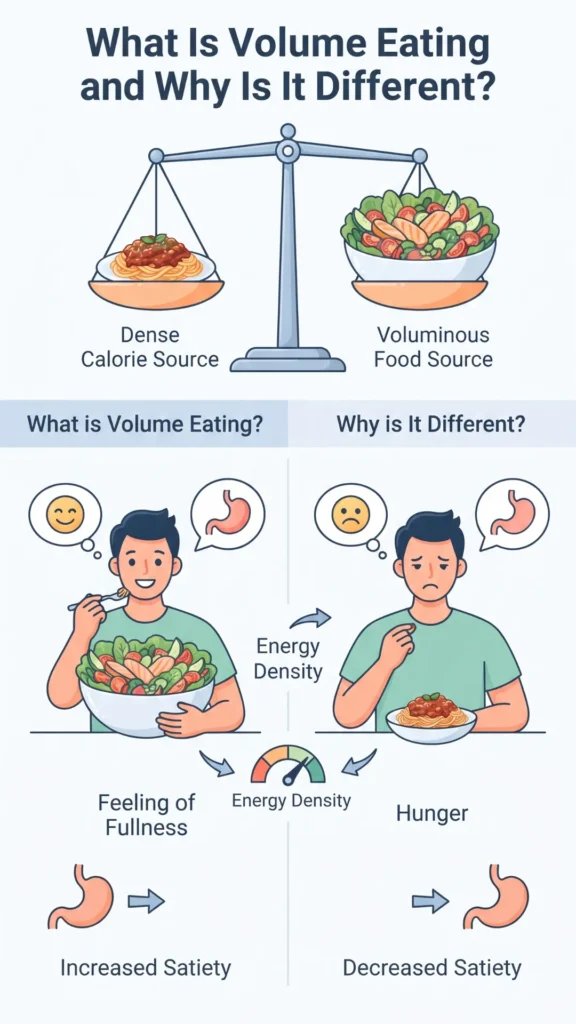
Volume eating is based on the concept of calorie density, the number of calories per gram of food. Instead of eating less, you eat larger portions of foods low in calories per gram, such as vegetables, lean proteins, legumes, whole grains, and water-rich fruits. This approach comes from Dr. Barbara Rolls’ research at Penn State University, which found that people naturally consume a consistent weight of food daily regardless of calorie content.
By choosing low-calorie-density foods (0.1 to 1.5 calories per gram) over high-calorie foods (5 to 9 calories per gram), you get satisfying, full plates with fewer calories. Unlike traditional calorie restriction, volume eating helps manage hunger through physical fullness, making it more sustainable.

How Volume Eating Supports Weight Loss
You might like this: https://volueat.com/wp-admin/post.php?post=1117&action=edit
Weight loss requires maintaining a calorie deficit, meaning consuming fewer calories than you burn. Volume eating achieves this deficit not by eating less food but by smartly substituting calorie-dense foods with low-calorie alternatives. For example, swapping white rice for cauliflower rice or replacing crisps with a large vegetable salad keeps portion size similar but cuts calories significantly.
The fullness you feel comes from:
- Water-rich vegetables stretching the stomach.
- Protein-triggering hormones that suppress appetite for hours.
- Fiber slowing digestion and stabilizing blood sugar, reducing cravings.
These factors create a calorie deficit without feeling like deprivation, leading to better long-term adherence.

Realistic Weight Loss Expectations
Volume eating does not speed up the basic fat loss rate but improves how consistently you can maintain a calorie deficit. Typically:
- A daily deficit of 500 calories leads to about 1 pound of fat loss per week.
- A 300-calorie daily deficit results in roughly 0.6 pounds per week.
Most people naturally achieve a 300 to 600 calorie deficit daily when eating volume-based meals without strict calorie counting.
In practice:
- Expect 1-2 pounds lost per week during the first month.
- After 3 months, a typical range is 8-20 pounds lost.
- After 6 months, expect 12-30 pounds lost, depending on adherence and activity.
This fat loss is sustainable, preserving muscle through adequate protein intake, and enjoyable enough to maintain long-term.

Food Choices Matter: Calorie Density Is Key
Calorie density dramatically affects satiety and weight loss. For instance:
- 200 calories of crisps (35 grams) disappear quickly and leave you hungry.
- 200 calories of vegetables (400 grams) fill your stomach and keep you satisfied longer.
Foods low in calorie density (0.1 to 1.5 calories/gram) include non-starchy vegetables, fruits, lean proteins, legumes, and whole grains. Foods over 3 calories per gram, like oils and processed snacks, quickly add calories without fullness.
Build meals mostly from low-density foods and add small amounts of higher density for flavor and nutrients.

Best High-Volume Foods for Weight Loss
- Non-starchy vegetables: Spinach, cucumber, broccoli, cauliflower, celery, mushrooms, and bell peppers are all low in calories but high in fiber and nutrients.
- Lean proteins: White fish, egg whites, skinless chicken breast, non-fat Greek yogurt, low-fat cottage cheese.
- Broth-based soups: Low calorie, fill the stomach, and help reduce meal calories.
- Legumes: Lentils, chickpeas, black beans, and edamame for protein and fiber.
- Water-rich fruits: Watermelon, strawberries, raspberries, and grapefruit for sweetness and volume with few calories.

How to Structure a Volume-Eating Meal
- Fill half your plate with non-starchy vegetables.
- Allocate one-quarter for lean protein.
- Reserve one-quarter for whole grains or legumes.
- Start meals with a broth-based soup or salad to reduce total calorie intake.
Cooking methods also matter—use broth instead of oil, measure dressings, and opt for Greek yogurt sauces to save calories without compromising taste.

Can You Do Volume Eating Without Counting Calories?
Yes! Many people find that following volume eating principles naturally keeps calorie intake in a weight-loss-friendly range without tracking. The high volume and satiety of meals make overeating harder compared to calorie-dense foods.
Tracking calories for 2-3 weeks initially helps build awareness of hidden calorie sources like oils, nuts, and dressings. After that, most can continue successfully without counting.
Common Pitfalls That Slow Progress
- Insufficient protein: Meals need 25-35 grams of lean protein to maintain fullness.
- Untracked calorie-dense additions: Excess oils, dressings, nut butters, and nuts add hidden calories.
- Impatience: Volume eating produces steady, sustainable weight loss, not rapid drops. Commit to at least 3 weeks before judging progress.
Making Volume Eating Sustainable Long-Term
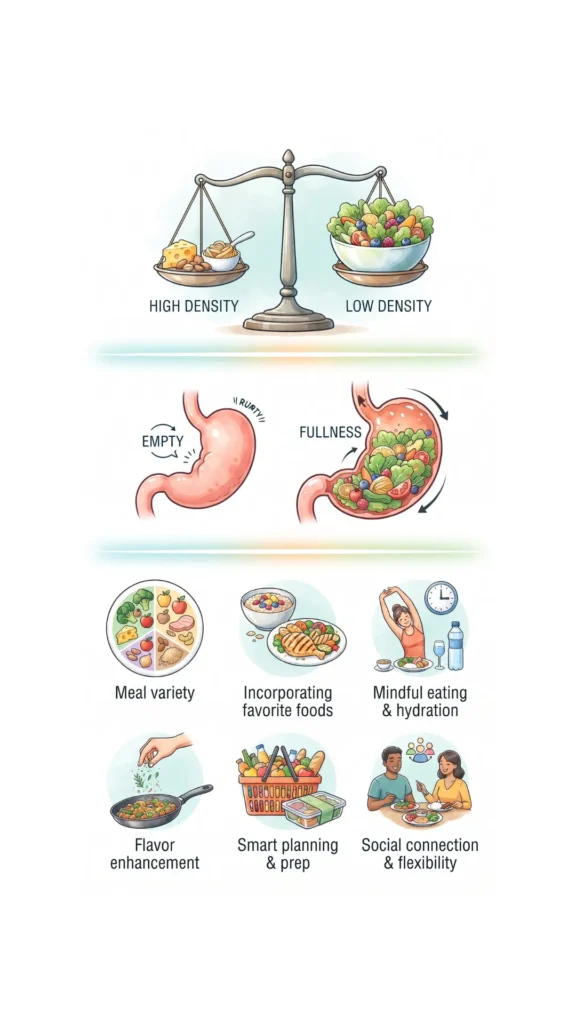
Volume eating is easier to sustain because it’s flexible, abundant, and based on food choices, not elimination. Key habits for sustainability include:
- Weekly meal prep.
- Shopping mainly on supermarket outer aisles.
- Starting every meal with broth or salad.
- Allowing flexibility for social meals without guilt.
- Rotating different vegetables, proteins, grains, and seasonings to prevent boredom.
What to Expect Over Time
- 2 weeks: Improved hunger control, steady energy, fewer cravings, and 1-3 pounds lost (some water weight).
- 1 month: 3-6 pounds of fat loss and established healthy meal habits.
- 3 months: 8-15 pounds lost, better body composition, and a positive relationship with food.
- 6+ months: 12-30 pounds lost, sustainable habits, and ongoing weight maintenance.
Start Your Volume Eating Journey Today
Every meal is a chance to practice volume eating. Simply fill half your plate with vegetables, add lean protein, and start with a broth-based soup if possible. Consistency is the key that unlocks lasting results.
For meal plans, detailed food lists, and grocery guides to help you get started, visit resources like Volueat.com and keep this guide handy for motivation.
Disclaimer
This article is for informational purposes only and is not medical or nutritional advice. Always consult a healthcare professional before making significant changes to your diet, especially if you have existing health conditions
Table of content
How Much Weight Can You Lose with Volume Eating?
What Is Volume Eating and Why Is It Different?
How Volume Eating Supports Weight Loss
Realistic Weight Loss Expectations
Food Choices Matter: Calorie Density Is Key
Best High-Volume Foods for Weight Loss
How to Structure a Volume-Eating Meal
Can You Do Volume Eating Without Counting Calories?
Common Pitfalls That Slow Progress
Making Volume Eating Sustainable Long-Term
What to Expect Over Time
Start Your Volume Eating Journey Today

