
Every weight loss journey has moments where motivation disappears entirely, not because you are doing something wrong, but because motivation is not a fixed resource that stays constant when progress feels slow or life gets complicated. Knowing how to stay motivated during weight loss is less about finding willpower and more about building the right systems, habits, and mindset that keep you moving forward even when the initial enthusiasm has faded.
This guide covers twelve specific, practical strategies that work in the real world, not just during the first two weeks when everything feels exciting but also during the difficult middle weeks when progress slows, life interrupts, and the gap between where you started and where you want to be still feels large. These are the strategies that separate people who reach their goals from those who stop just short of them. Learn about How to Stay Motivated During Weight Loss

Set Realistic Goals That Actually Keep You Going
Unrealistic weight loss goals are one of the most reliable motivation killers available. When the target is twenty pounds in six weeks, the inevitable failure to hit that target feels like personal failure rather than what it actually is, an unrealistic expectation. The goal itself becomes demotivating.
Realistic weight loss goals are specific, time-bound, and based on physiologically achievable rates. One to two pounds per week is the evidence-backed sustainable rate for most adults, fast enough to see meaningful progress over months and slow enough to protect muscle mass and metabolic rate. Setting a target of six to eight pounds in the first month, with the expectation of one to two pounds per week thereafter, creates a framework where progress can actually be achieved and celebrated rather than perpetually fallen short of.
Process goals are often more motivating than outcome goals during the journey itself. A process goal, eating a volume of dinner five nights this week, preparing three days of lunches in advance, and starting every main meal with broth soup, is entirely within your control and produces a daily sense of achievement regardless of what the scale shows. The outcome goal provides direction. Process goals provide daily wins. Both are needed.
Writing goals down and reviewing them weekly keeps them present rather than abstract. A specific, written goal reviewed regularly produces better adherence than a vague intention held loosely in mind. Take ten minutes this week to write down one outcome goal and three process goals that support it. The act of writing them is itself a commitment.

Focus on Progress Not Perfection to Stay in the Game
The all-or-nothing mindset is the single most common reason people abandon weight loss journeys that were actually working. One imperfect meal becomes evidence that the diet is ruined. One missed workout becomes the beginning of a two-week absence from the gym. One bad week on the scale becomes a reason to give up entirely. None of these responses are proportional to what actually happened.
Progress, real, meaningful, life-changing progress, is made through consistent imperfect action rather than intermittent perfect action. A person who eats well eighty percent of the time for six months achieves dramatically more than a person who eats perfectly for three weeks and then abandons the approach because of one difficult weekend.
Shifting from a perfection standard to a progress standard changes the psychological experience of the journey fundamentally. Instead of asking, “Did I follow the plan perfectly today?” ask, “Did I make better choices today than I would have six weeks ago?” That question almost always produces an honest yes, and that yes is what keeps the journey moving forward through the inevitable imperfect days.
The practical application is simple: when something goes off-plan, return to normal at the very next meal. Not tomorrow. Not Monday. The next meal. That habit, returning immediately rather than waiting for a fresh start, is the single most important consistency skill available for long-term weight loss success.
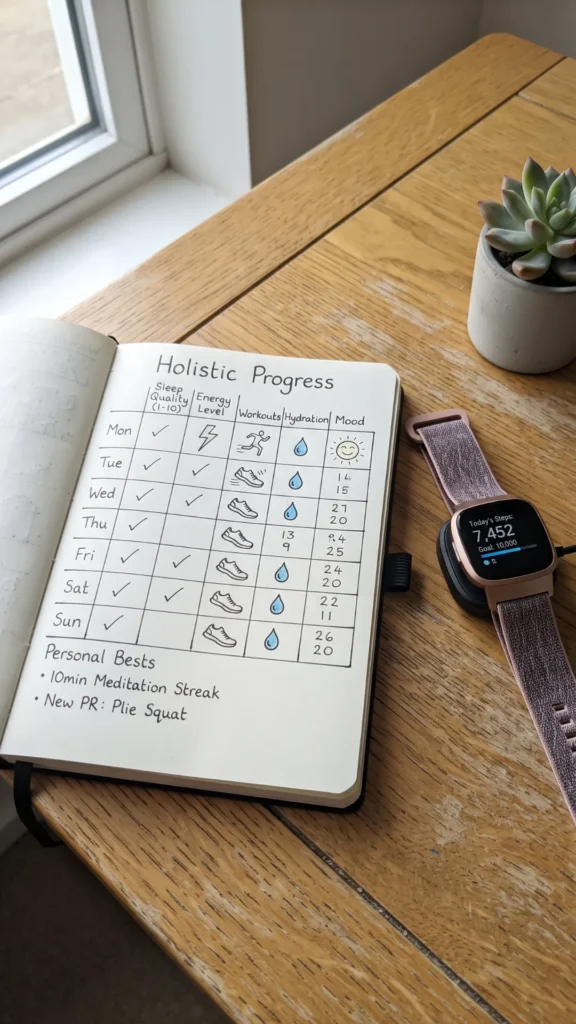
Track More Than Just the Scale for True Progress
The scale measures one thing: total body weight, which includes muscle, bone, water, food mass, and fat, all changing independently at different rates. Relying exclusively on the scale for motivation means ignoring all the other meaningful, measurable ways that the body and daily experience are improving.
Measurements, waist, hips, chest, and thighs often change when the scale does not, because muscle gain and fat loss can happen simultaneously without net weight change. Taking monthly measurements alongside weekly scale readings produces a more complete and more encouraging picture of progress.
Energy levels, sleep quality, hunger manageability, digestive health, fitness capacity, and mood are all meaningful progress indicators that change before significant weight loss is visible on the scale. If you have more energy at 3 pm than you did a month ago, if you are sleeping better, or if afternoon hunger is less urgent, these are evidence that the approach is working. The body is changing, regardless of what the scale shows on any given morning.
Progress photos taken at consistent intervals, the same time, the same lighting, and the same clothing show physical changes that the mirror misses because of the gradual nature of change. Looking at a photo from eight weeks ago compared to today often reveals changes that were impossible to notice day by day.

Build Small Habits That Compound Into Big Results
Large, ambitious habit changes fail because they require sustained willpower and disruption to existing routines. Small, specific habit changes build into new defaults because they are easy enough to do consistently even on difficult days, and consistency over time is what produces the compounding results that feel significant.
Specific small habits worth building into a weight loss routine include always starting main meals with a bowl of broth soup or a simple salad, filling half the plate with vegetables before anything else is added, drinking a full glass of water before each meal, preparing tomorrow’s lunch the night before, and going to bed at a consistent time to support appetite-regulating sleep.
Each of these habits, applied in isolation, produces modest results. Applied together consistently over weeks and months, they create a completely different daily eating and living pattern without any single dramatic change. The cumulative effect of five small daily habits maintained for three months is more significant than any bold dietary overhaul maintained for two weeks.
Building one new habit at a time, adding a second only when the first feels automatic, is more effective than attempting to change everything at once. Start with the habit that feels most achievable. Make it the default. Then add the next one.

Find Your Personal Reason That Goes Deeper Than Appearance
Wanting to look better is a valid motivation, but it is rarely sufficient to sustain a weight loss journey through the difficult middle period when results are slow and the daily effort feels significant. The motivation that carries people through plateaus and difficult weeks is almost always connected to something more personally meaningful than aesthetics.
Finding your personal why, the reason that connects weight loss to life quality, energy for the people you love, health conditions you want to avoid, activities you want to return to, or how you want to feel as you age, provides a motivational anchor that appearance goals cannot. When the scale is frustrating, and the diet feels monotonous, a deeply personal reason to continue provides a more durable reason to keep going than wanting to fit into a smaller clothing size.
Writing your reason down and placing it somewhere visible, on your phone background, on the fridge, or in your journal, keeps it present and accessible during the moments when motivation is lowest. The reason does not need to be dramatic or publicly shareable. It just needs to be true and meaningful to you.

Make Healthy Eating More Enjoyable So It Lasts
Healthy eating that feels like punishment eventually produces rebellion. Healthy eating that is genuinely enjoyable becomes self-reinforcing over time because the eating experience itself is a reward rather than a cost. Making the eating enjoyable is not a compromise with the plan; it is a fundamental requirement for the plan to last long enough to produce results.
Investing in a few good flavoring and seasoning options, quality herbs and spices, a variety of hot sauces and condiments, and interesting vinegars and citrus , transforms the same basic volume of eating ingredients into a wide variety of genuinely different eating experiences. Broccoli seasoned with garlic and smoked paprika tastes completely different from broccoli with lemon and dill. The ingredient is the same. The experience is not.
Exploring new cuisines within the volume-eating framework, apanese broth-based meals, Mediterranean vegetable dishes, South Asian spiced legume preparations, and Mexican bowl formats keep the weekly eating rotation interesting. Volume eating principles apply across every cuisine. The specific foods and flavors that carry them can vary infinitely.
Eating with other people, taking time to sit down for meals rather than eating standing over the kitchen counter, and presenting food attractively on the plate—all of these factors increase the psychological satisfaction produced by the same food, which reduces the urge to seek additional satisfaction elsewhere after the meal.

Use Volume Eating to Stay Full and keep motivation high.
One of the most common reasons weight loss motivation collapses is persistent hunger. When eating well means feeling hungry and deprived most of the time, the daily experience of the diet is genuinely unpleasant, and motivation to continue an unpleasant experience naturally degrades over time regardless of how committed the starting intention was.
Volume eating solves this problem directly. When meals are built around large quantities of non-starchy vegetables, lean protein, and fiber-rich whole foods, the physical fullness produced is genuinely substantial, and the return of hunger between meals is slow and manageable. The eating experience stops being characterized by hunger and starts being characterized by satisfaction.
The motivational benefit of not being hungry cannot be overstated. When weight loss does not feel like deprivation, there is nothing to rebel against. The resistance that builds up in restrictive dieting, the mental pressure that eventually causes abandonment, does not accumulate in the same way. Staying motivated during weight loss is dramatically easier when the daily experience of eating is satisfying rather than miserable.
If motivation is low and hunger is the reason, the first intervention is not more willpower; it is more volume eating. More vegetables, more protein, and more broth soup at the start of meals. Address the hunger, and the motivation typically recovers alongside it.

Build a Simple Exercise Routine That Supports the Journey
Exercise supports weight loss motivation in ways that go beyond its direct calorie-burning effect. Physical activity improves mood through dopamine and serotonin release, improves sleep quality, which supports appetite regulation, builds the sense of physical capability and energy that makes the weight loss journey feel positive, and provides a non-scale marker of progress that is often visible before significant weight change appears on the scale.
The most motivating exercise routine is one that is simple enough to do consistently rather than ambitious enough to be avoided. Three thirty-minute walks per week, a beginner strength training program with three sessions per week, or daily movement through activity that is genuinely enjoyable all produce meaningful results when maintained for months. and they are achievable enough to be maintained even during busy or difficult weeks.
Building exercise as a complement to volume eating rather than as a compensatory tool for overeating keeps it in the right role. Exercise supports health, mood, and body composition. Nutrition produces the calorie deficit for weight loss. Both are valuable. Neither replaces the other.

Prepare for Setbacks Before They Happen
Every weight loss journey includes setbacks, weeks where the scale goes up despite good choices, weeks where life disrupts the routine entirely, and moments where a planned eating day goes completely off-track. People who reach their weight loss goals are not people who never have setbacks. They are people who have a plan for what to do when setbacks happen.
Deciding in advance how to respond to common setbacks removes the need for decision-making in the moment when motivation is already low. If the plan for a difficult week is to maintain three good meals per day and not worry about anything else, that is achievable even under significant life pressure. If the plan for a weight stall is to review cooking oil and dressing quantities before making any other change, that is a specific action rather than a vague intention.
Viewing setbacks as information rather than failures is the mindset shift that makes recovery faster and more complete. A week where the scale goes up despite good choices is telling you something specific, usually about water retention from sodium, hormonal fluctuation, or muscle gain alongside fat loss. That information is useful. It is not a reason to stop.

Celebrate Non-Scale Victories That Prove Progress Is Happening
Non-scale victories are the evidence that weight loss is working even when the scale is not cooperative, and celebrating them actively maintains the motivation that scale dependency undermines.
A non-scale victory might be fitting into clothing that was previously too tight, completing a physical activity that was previously difficult, sleeping better than you have in months, having the energy to be present and active with family in a way that was not possible before, or simply feeling genuinely comfortable and satisfied in your body after a meal rather than uncomfortable and searching for more.
Making a list of non-scale victories, even informally in a notes app or a journal, creates evidence of progress that remains accessible during the weeks when the scale is frustrating. Looking back at a list of ten things that have improved over the past month provides context and perspective that a single scale reading cannot.
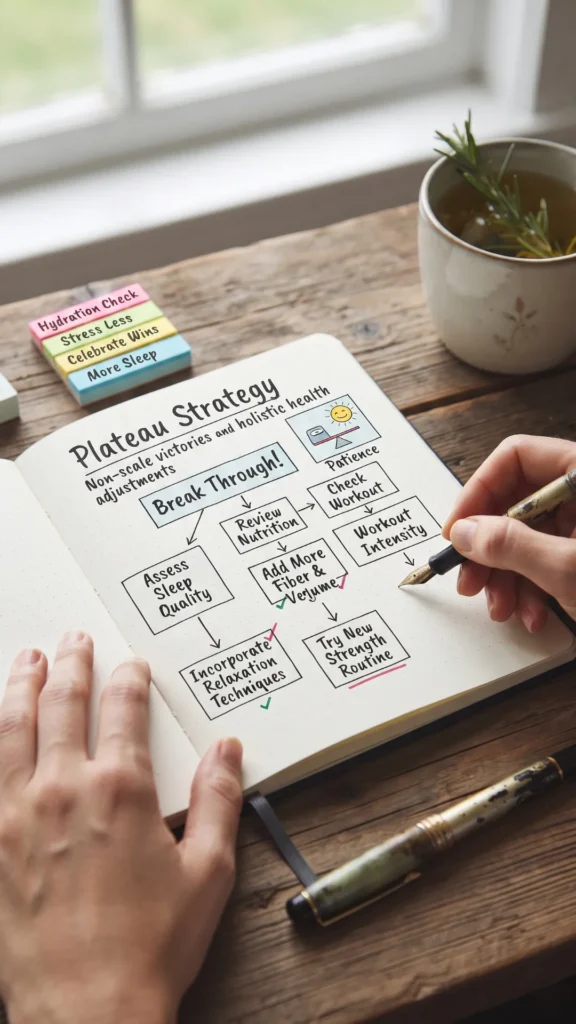
What to Do When Weight Loss Slows Down
Weight loss slows at some point for almost everyone; it is a physiological certainty as body weight decreases and the calorie deficit narrows. Knowing this in advance and having a plan for it prevents the demotivation that plateau periods typically produce.
The first response to a weight stall is a careful review of calorie-dense additions to meals, specifically cooking oils, dressings, nuts, and grain portions, which often increase gradually without awareness over several weeks of comfortable eating. Returning to measuring these specifically for one week often reveals the calorie creep that has narrowed the deficit.
Increasing vegetable portions, adding an additional protein source to main meals, or reducing liquid calorie intake are all simple adjustments that can reinstate the deficit without dramatic dietary changes. Patience is also a genuine strategy , weight loss often appears on the scale in batches rather than smoothly, with two or three weeks of apparent stalling followed by a sudden one- to two-pound drop.

Build the Long-Term Mindset That Makes Results Permanent
The final and most important motivation strategy is shifting the internal frame from “I am on a diet” to “This is how I eat.” That shift, from temporary restriction to permanent lifestyle, changes the entire experience of eating well from a sacrifice with an endpoint to a genuinely preferred way of living.
Sustainable weight loss habits are not things you do until you reach your goal weight. They are things you do because they make daily life better, because you have more energy, sleep better, feel more satisfied after meals, have fewer cravings, and generally feel better in your body than you did before. When the habits produce these daily benefits, continuing them indefinitely becomes logical rather than effortful.
How to stay motivated during weight loss ultimately comes down to building this: a way of eating and living that is genuinely preferable to the alternative, not just a means to an end. Volume eating, adequate sleep, manageable exercise, and a flexible, non-perfection mindset together create that preference, and once it is established, motivation stops being something you have to find and becomes something you no longer need.
Save this to your Pinterest board, so your complete weight loss motivation guide is always within reach when you need a reminder of what to do when things get hard. And for the full-volume eating meal plans, food lists, and practical strategies that make staying on track genuinely easy, everything you need is waiting at Volueat.com.
Disclaimer
This article is for informational purposes only and is not medical or nutritional advice. Always consult a healthcare professional before making significant changes to your diet, especially if you have existing health conditions
Table of contents
How to Stay Motivated During Weight Loss
Set Realistic Goals That Actually Keep You Going
Focus on Progress Not Perfection to Stay in the Game
Track More Than Just the Scale for True Progress
Build Small Habits That Compound Into Big Results
Find Your Personal Reason That Goes Deeper Than Appearance
Make Healthy Eating More Enjoyable So It Lasts
Use Volume Eating to Stay Full and keep motivation high.
Build a Simple Exercise Routine That Supports the Journey
Prepare for Setbacks Before They Happen
Celebrate Non-Scale Victories That Prove Progress Is Happening
What to Do When Weight Loss Slows Down
Build the Long-Term Mindset That Makes Results Permanent
You might like this: https://volueat.com/wp-admin/post.php?post=1162&action=edit

