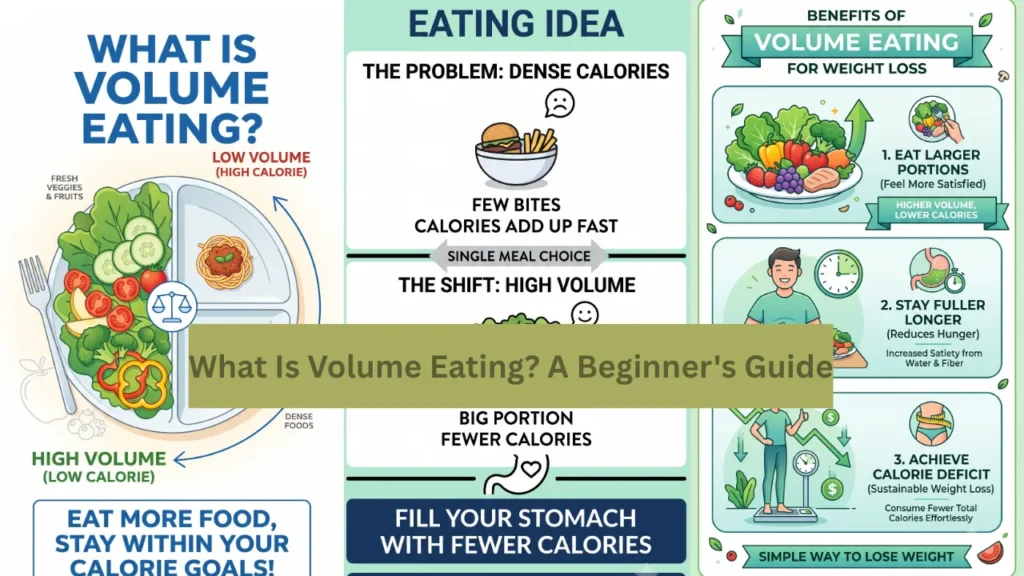
Have you ever finished a meal but still felt hungry just 30 minutes later? Even though your app said you ate the right amount of calories, your stomach disagreed. If this sounds familiar, you’re not alone, and it’s not about willpower—it’s about food volume.
Volume eating is a simple, scientifically supported weight loss method that emphasizes eating more food by choosing options that are high in volume but low in calories. The result is a full plate, a satisfied stomach, and a calorie deficit that doesn’t feel restrictive.
This guide will explain what volume eating is, how it works in your body, which foods to prioritize, what to avoid, and how to create a practical one-day meal plan. By the end, you’ll have everything you need to eat more and lose weight.
What Is Volume Eating?
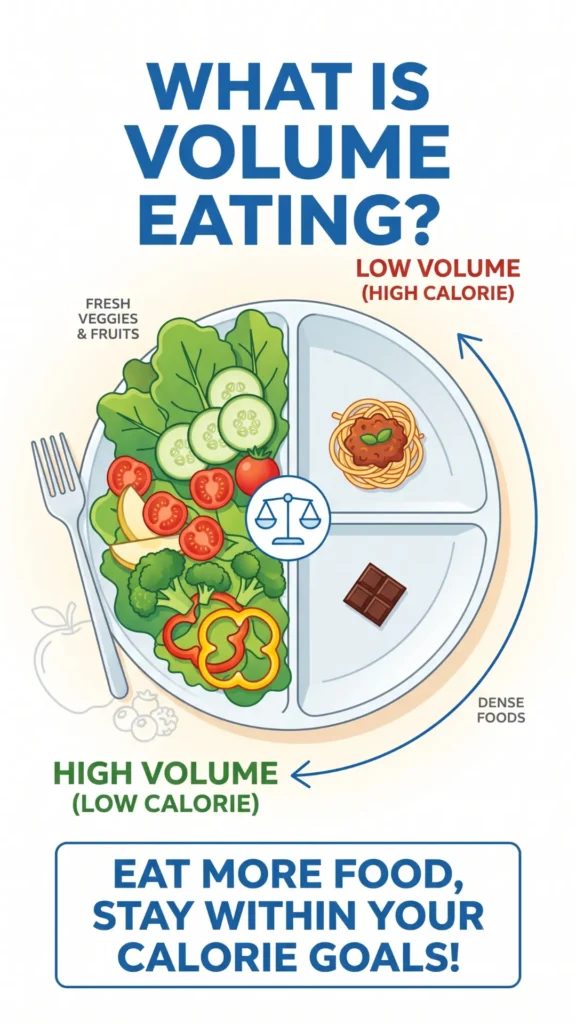
The key idea behind volume eating is that not all calories occupy the same amount of space. By selecting foods low in calorie density—meaning fewer calories per gram—you can eat larger quantities while still maintaining a calorie deficit for weight loss.
This concept is based on the Volumetrics diet by Dr. Barbara Rolls, a nutrition researcher at Penn State University. Her research found that people tend to eat a consistent weight of food daily rather than a consistent number of calories. When your plate holds more weight but fewer calories, your body feels full without excess calorie intake.
In simple terms, volume eating replaces calorie-dense foods with options rich in water and fiber, allowing you to eat larger portions while consuming the same or fewer calories. For instance, 100 calories of potato chips fit in your hand and disappear quickly, whereas 100 calories of cucumber slices can fill an entire dinner plate. Both contain the same calories, but only one helps you feel full.
Who is volume eating best for? Although it’s not a universal solution, volume eating is especially effective for:
- People who often feel hungry on traditional calorie-restricted diets
- Those who prefer large portions and find small meals discouraging
- Anyone seeking a sustainable, long-term weight loss method instead of crash diets
- Meal preppers, since volume eating suits batch cooking well
- Those wanting to improve overall diet quality while losing weight
It’s also practical for families, as most volume-eating foods—like vegetables, lean proteins, soups, and fruits—are common, affordable ingredients rather than specialty items.
Before making significant dietary changes, especially if you have medical conditions, dietary restrictions, or chronic illnesses, it’s wise to consult a healthcare professional.
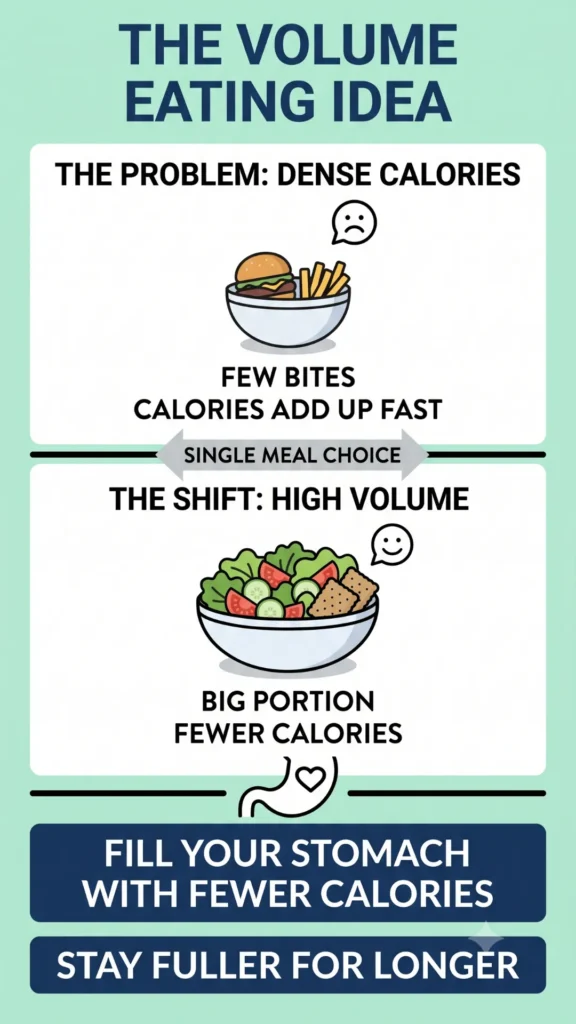
The key concept is energy density, which measures the number of calories per gram of food. Foods high in water and fiber have low energy density, while those rich in fat and refined carbs have high energy density.
Here is how different foods compare on the energy density scale:
| Food | Energy Density | Category |
| Non-starchy vegetables (e.g., spinach, cucumber) | 0.1–0.5 kcal/g | Very low |
| Fruits (e.g., strawberries, watermelon) | 0.3–0.6 kcal/g | Very low |
| Lean proteins (e.g. white fish, egg whites) | 0.7–1.2 kcal/g | Low–moderate |
| Whole grains (e.g. oats, brown rice) | 1.0–1.5 kcal/g | Moderate |
| Cheese | 3.5–4.0 kcal/g | High |
| Nuts and seeds | 5.0–6.0 kcal/g | Very high |
| Oils and butter | 8.0–9.0 kcal/g | Extremely high |
The Role of Water and Fiber
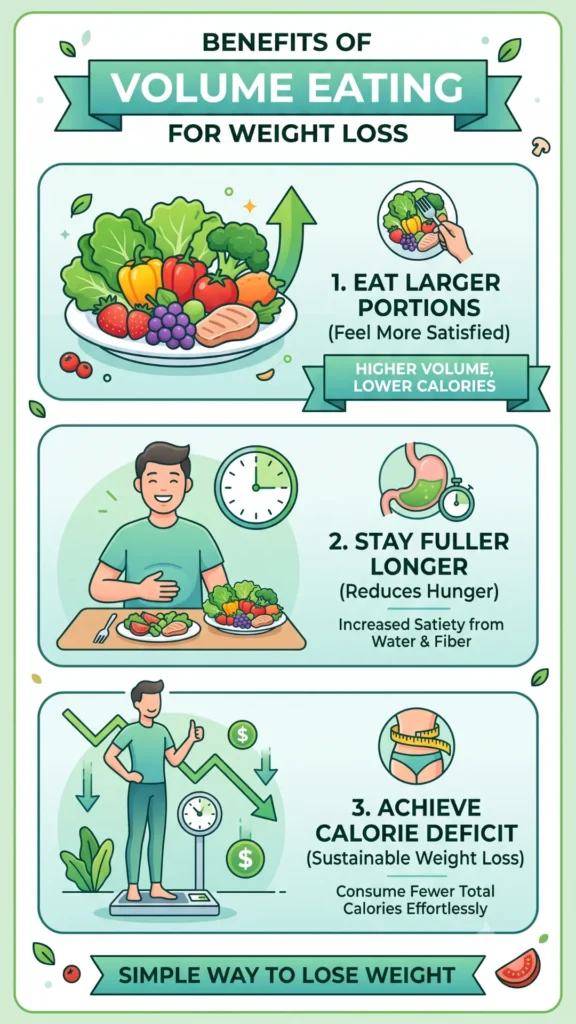
Water increases the weight and volume of food without adding calories, which explains why a bowl of vegetable soup is more satisfying than the same calories in crackers. The high water content expands the stomach, triggering feelings of fullness. Dietary fiber slows down digestion, helping you stay full longer, while also nourishing beneficial gut bacteria and stabilizing blood sugar to prevent energy dips that cause snacking.
How the Brain Registers Fullness
Fullness is signaled to the brain through two main ways: stretch receptors in the stomach detecting volume and hormones released during nutrient absorption. Volume eating leverages stomach stretch receptors by filling the stomach with low-calorie, water-rich foods before hunger from calorie-dense foods sets in. Research from the American Journal of Clinical Nutrition shows that eating a large, low-calorie salad before a meal reduces overall calorie intake without causing deprivation.
Benefits of Volume Eating for Weight Loss
- Effective Hunger Management: Hunger is a primary reason diets fail. Eating a substantial portion feels like a full meal, making it easier to maintain calorie deficits without feeling deprived.
- No Food Group Restrictions: Volume eating does not eliminate any food groups. Instead, it encourages building meals around low-density foods with smaller amounts of calorie-dense items, reducing binge eating risks from restrictive diets.
- Compatible with Any Diet: Whether plant-based, flexitarian, or omnivore, volume eating adapts to your preferences, emphasizing vegetables, legumes, fruits, lean proteins, and non-starchy vegetables.
- Promotes Gut Health: A fiber-rich, plant-heavy diet supports healthy gut bacteria, benefiting digestion, immune function, mood, and weight regulation. Volume eating naturally supports gut health.
- Fosters a Healthy Relationship with Food: Unlike restrictive diets, volume eating focuses on eating more of the right foods rather than less of everything, helping reduce anxiety around eating.
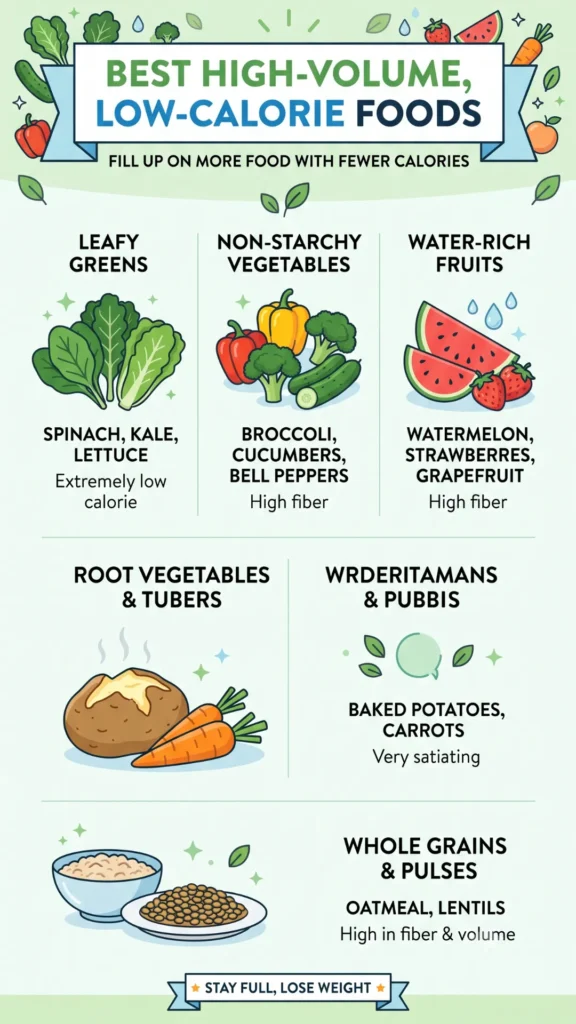
Best High-Volume, Low-Calorie Foods
Non-starchy vegetables are key to volume eating. They are very low in calories, high in fiber and water, and versatile for many meals.
| Vegetable | Approx. Calories | Best Uses |
| Cucumber | ~15 kcal/100g | Salads, sliced snacks, infused water |
| Zucchini (courgette) | ~17 kcal/100g | Roasted, spiralised, stir-fries |
| Spinach | ~23 kcal/100g | Salads, sautéed, smoothies |
| Romaine lettuce | ~17 kcal/100g | Salads, wraps, tacos |
| Broccoli | ~34 kcal/100g | Roasted, steamed, stir-fries |
| Cauliflower | ~25 kcal/100g | Cauliflower rice, roasted, soups |
| Celery | ~16 kcal/100g | Snacking, soups, salads |
| Bell peppers | ~31 kcal/100g | Raw, roasted, stuffed |
| Mushrooms | ~22 kcal/100g | Sautéed, soups, burger substitute |
Fruits
Fruits are naturally sweet and packed with water, making them a great way to satisfy sweet cravings without consuming too many calories. Examples include:
- Watermelon: around 30 kcal per 100g
- Strawberries: 32 kcal per 100g
- Grapefruit: 42 kcal per 100g
- Cantaloupe melon: 34 kcal per 100g
- Raspberries: 52 kcal per 100g
- Blueberries: 57 kcal per 100g
Lean Proteins
Protein plays a crucial role in volume eating by helping preserve muscle while promoting fullness, as it is the most filling nutrient per calorie. Consider these options:
- Egg whites: 52 kcal and 11g protein per 100g
- White fish (such as cod, tilapia, pollock): 70–80 kcal per 100g
- Shrimp or prawns: 85 kcal per 100g
- Skinless chicken breast: 110 kcal per 100g
- Non-fat Greek yogurt: 59 kcal and 10g protein per 100g
- Low-fat cottage cheese: 72 kcal per 100g
Broths and Soups
Soups based on broth are highly effective in volume eating. A large bowl of vegetable or chicken broth soup can be very filling while containing as few as 50–100 calories. Research shows that starting meals with soup helps reduce overall calorie intake.
Whole Grains (Use Moderately)
While grains like oats, brown rice, barley, and quinoa have more calories than vegetables, their high fiber content makes them more satisfying than refined carbs. Use them as a moderate base rather than the main focus of meals.
Foods to Use Sparingly
Volume eating doesn’t require cutting out any foods completely, but some are very calorie-dense—meaning they pack many calories in small amounts—taking up valuable space on your plate. Use these with caution:
- Oils and Fats: With about 800–900 kcal per 100g, oils are the most calorie-packed foods. A tablespoon of olive oil adds roughly 120 calories. Avoid overusing oil in cooking by measuring carefully or using alternatives like broth.
- Nuts and Nut Butters: Containing around 550–650 kcal per 100g, nuts are nutrient-rich but calorie-dense. A small handful can have 200 calories, and almond butter can easily exceed 300 calories in just a few spoonfuls. Portion control is key.
- Cheese and Full-Fat Dairy: These have around 350–420 kcal per 100g. A few slices of cheese may add 200 calories. Opt for lighter varieties, use smaller amounts, or choose flavorful cheeses to minimize the quantity needed.
- Processed Snacks and Refined Carbs: Items like crisps, biscuits, crackers, white bread, and pastries are low in fiber and water, high in calories, and tend to cause blood sugar spikes that increase hunger faster. These are best replaced with high-volume, nutrient-dense alternatives.
- Liquid Calories: Drinks such as juices, smoothies, coffee drinks with milk, alcohol, and sugary sodas supply calories that don’t satisfy hunger as well as solid foods. For example, a glass of orange juice (around 110 calories) is less filling than eating two whole oranges with the same calories.
Sample One-Day Volume Eating Meal Plan
This plan offers about 1,400–1,600 calories with a focus on high food volume. Adjust portions according to your calorie needs and activity level.
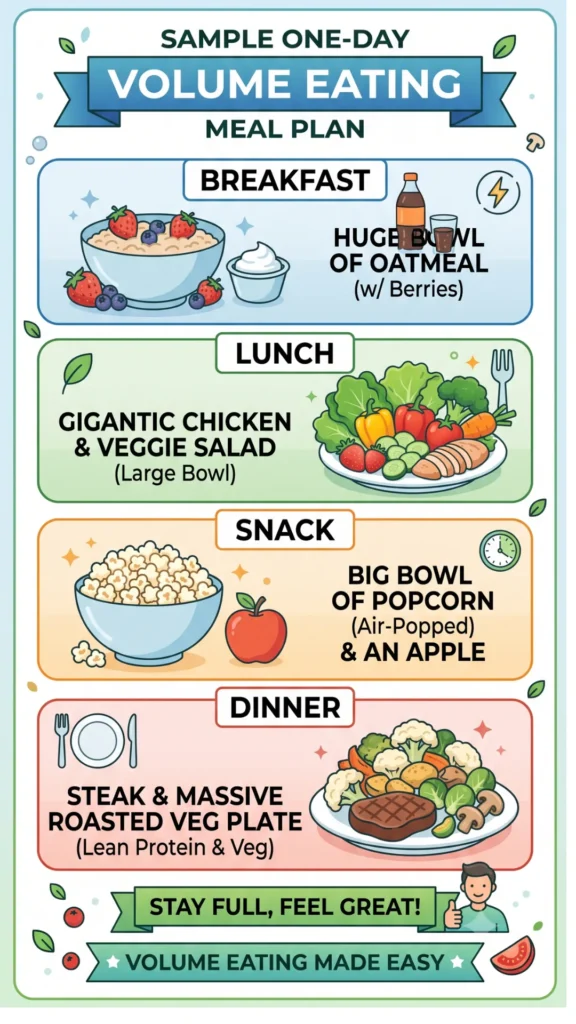
- Breakfast – Veggie Egg White Scramble with Oats (~380 kcal)
- 4 egg whites scrambled with 1 whole egg (~120 kcal)
- Large handful of spinach, mushrooms, and bell pepper sautéed in broth (~30 kcal)
- 50g rolled oats cooked with water and topped with fresh strawberries (~180 kcal)
- Black coffee or green tea (0 kcal)
- Lunch – Large Volume Salad with Grilled Chicken (~420 kcal)
- 4 large handfuls of romaine lettuce and spinach (~20 kcal)
- Cucumber, cherry tomatoes, celery, and bell pepper (~40 kcal)
- Lunch additions:
- 120g grilled skinless chicken breast (~130 kcal)
- 100g non-fat Greek yogurt mixed with lemon juice and herbs as dressing (~60 kcal)
- 30g croutons or a small slice of whole-grain bread (~80 kcal)
- Large bowl of clear vegetable broth soup (~30 kcal)
- Afternoon snack – Fruit and yogurt (~180 kcal):
- 200g watermelon or strawberries (~60 kcal)
- 150g non-fat Greek yogurt (~90 kcal)
- Dinner – White fish with roasted vegetables and cauliflower rice (~420 kcal):
- 150g baked or steamed white fish such as cod or tilapia (~110 kcal)
- Generous serving of roasted broccoli, zucchini, and cauliflower (~80 kcal)
- 250g cauliflower rice sautéed with garlic and herbs (~60 kcal)
- Side bowl of miso or clear vegetable broth soup (~30 kcal)
- Optional evening snack – Veggie crunch plate (~80 kcal):
- Sliced cucumber, celery, and bell pepper with 2 tablespoons hummus (~80 kcal)
Total calories: Approximately 1,400–1,500 kcal with large food volumes throughout the day. Adjust portions to fit your calorie needs.
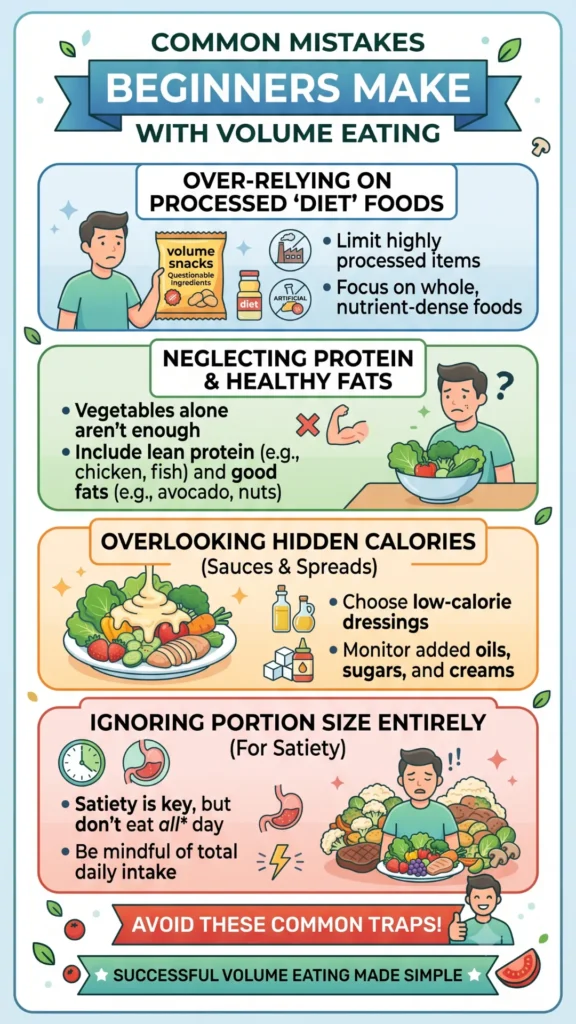
Common Mistakes Beginners Make with Volume Eating
- Eating low-calorie but not high-volume
Volume eating is about increasing the amount of food you eat per calorie, not just cutting calories. Some reduce intake but don’t increase vegetables, missing fullness. Fill half your plate with non-starchy vegetables every meal. - Adding calorie-dense toppings
Salads can jump from 200 to 700 calories with oil dressings, croutons, and cheese. Use yogurt-, lemon-, or vinegar-based dressings and measure toppings carefully. - Skipping protein
Vegetables alone won’t keep you full long. Protein is the most filling nutrient. Include lean sources like chicken, fish, egg whites, legumes, or cottage cheese at every meal. - Not drinking enough water
Water helps fill you up and is a big part of high-volume foods. Aim for at least 2 liters daily, not counting coffee or tea. - Expecting quick results and quitting
Volume eating is a long-term, sustainable method—not a quick fix. Early benefits include better energy and digestion; weight loss follows with time. Stay consistent. - Ignoring calories in liquids
Drinks like smoothies, protein shakes, oat milk lattes, and green juices can have 150–400 calories that don’t fill you. Use these sparingly and prioritize solid foods.
Frequently Asked Questions
- Can I lose weight without counting calories?
Yes, many find natural fullness from high-volume foods helps reduce calorie intake without tracking. If weight loss stalls, tracking for a week can reveal hidden calories. - Is volume eating the same as the Volumetrics diet?
They share the same science. The Volumetrics diet by Dr. Barbara Rolls is a structured program categorizing foods by calorie density. Volume eating is a broader, flexible approach based on choosing low-energy-density foods to eat more and lose weight. - Can vegans and vegetarians follow volume eating?
[Content can be provided based on your preference.] - Plant-based eaters often naturally follow volume eating principles since staples like vegetables, fruits, legumes, and tofu are low in calorie density. For vegans, maintaining adequate protein is important, so including foods like legumes, tofu, tempeh, or edamame in every meal helps keep you full.
- How many calories should I eat on a volume eating plan?
Calorie needs vary based on individual factors such as height, weight, age, activity, and personal goals. A common recommendation for moderate weight loss is to consume 300–500 fewer calories than your Total Daily Energy Expenditure (TDEE). You can calculate your TDEE using free online tools, then apply volume eating principles within that calorie target. - Will eating this much food stretch my stomach?
Your stomach is flexible and adapts over time to regular meal sizes. If you’re used to smaller portions, eating bigger, low-calorie meals may feel unusual at first, but your stomach won’t permanently expand. Your body will adjust to this new eating pattern. - Can volume eating be combined with intermittent fasting?
Absolutely. Many people combine the two effectively. Intermittent fasting limits your eating window, while volume eating helps maximize fullness during that time. Eating nutrient-dense, high-volume meals within a 6–8 hour window can reduce hunger and prevent overeating
Volume eating aligns with your body’s natural biology rather than relying on willpower to fight hunger. It provides the fullness your body needs while keeping calorie intake controlled.
- One of the best features of this approach is its simplicity. You don’t need special meal plans, expensive products, or complicated tracking systems. Just focus on foods that give you the most volume for the calories and build your meals around them.
- If you’re new to volume eating, start with one meal. For example, at your next lunch, fill half your plate with non-starchy vegetables, a quarter with lean protein, and a quarter with whole grains. Notice how satisfied you feel, then build from there.
- For more inspiration, visit Volueat.com’s BigEatsLowCal meal ideas and high-volume recipe guides to see how these principles come to life on an actual plate—with real, delicious meals.
- Disclaimer:
- This article is for informational purposes only and is not medical or nutritional advice. Always consult a healthcare professional before making significant changes to your diet, especially if you have existing health conditions.
Table of content
What Is Volume Eating?
How does volume eating work?
Benefits of Volume Eating for Weight Loss
Best High-Volume, Low-Calorie Foods
Foods to Use Sparingly
Sample One-Day Volume Eating Meal Plan
Common Mistakes Beginners Make with Volume Eating
Frequently Asked Questions
Final thoughts
Go ahead and save your favorite.