
Imagine eating generous, satisfying meals every day for a whole week and still making progress toward your weight loss goals. That’s the core idea behind the 7-day volume eating challenge. This approach isn’t about starving yourself or following a complicated diet plan. Instead, it focuses on eating high-volume, low-calorie foods that fill your stomach, curb hunger, and keep your calories in the ideal range for fat loss.

What is the 7-Day Volume Eating Challenge?
This challenge is built on the principle of calorie density, choosing foods that are large in volume, rich in water and fiber, but low in calories per gram. This allows you to enjoy plenty of food every day while maintaining a calorie deficit necessary for weight loss.
It’s not about eating less overall but eating differently. Foods that physically fill your stomach send strong signals of fullness to your brain, which helps suppress hunger. The challenge provides a clear daily meal plan, eliminating decision fatigue, so you can focus on sticking to the program and seeing results.
Each day includes:
- Three main meals and two snacks
- Focus on non-starchy vegetables, lean proteins, whole grains, legumes, and water-rich fruits
- Daily calories between 1,300 and 1,500 (adjustable based on your needs and activity level)

How Volume Eating Supports Weight Loss
Your stomach signals fullness based on physical volume, not just calorie content. Foods high in water and fiber stretch your stomach and activate fullness signals without the calorie load of dense foods.
Protein is key in this plan, included in every meal to promote lasting fullness by triggering hormones that suppress hunger for 2-4 hours post-meal. Fiber slows digestion and stabilizes blood sugar, preventing energy crashes and urgent cravings.
After just seven days, many people experience a reset in baseline hunger levels and find weight loss easier to manage.

Why Seven Days?
You might like this:https://volueat.com/wp-admin/post.php?post=1034&action=edit
Seven days is enough to adjust to new eating habits and meal sizes. The first few days are an adjustment period; by day four, hunger management improves and old eating habits become less appealing.
The defined time frame builds commitment and momentum, and by the end, you’ll understand why this method works. Typical results include reduced bloating, steadier energy, lowered hunger, and 2-4 pounds of weight loss, depending on your starting point and adherence.

Essential Foods to Stock
Preparing your kitchen before starting removes barriers and makes meal prep quick and easy.
Proteins: Chicken breast, white fish, canned tuna, eggs, non-fat Greek yogurt, low-fat cottage cheese, red lentils, chickpeas, frozen shrimp
Vegetables: Spinach, romaine, broccoli, cauliflower, zucchini, cucumber, celery, bell peppers, cherry tomatoes, mushrooms, cabbage, bok choy, asparagus, frozen mixed vegetables
Fruits: Frozen berries, strawberries, watermelon, cantaloupe, apples, kiwis, blueberries
Grains & Pantry: Rolled oats, brown rice, quinoa, canned tomatoes, vegetable broth, miso paste, low-sodium soy sauce, lemon juice, apple cider vinegar, chia seeds, ground flaxseed, herbs, spices, hummus

Helpful Kitchen Tools
Efficiency is key. Consider:
- Meal prep containers (various sizes)
- Large roasting trays
- Big pot for soups and grains
- Non-stick pan for broth cooking
- Sharp chef’s knife and chopping board
- Rice cooker
- Jars for overnight oats
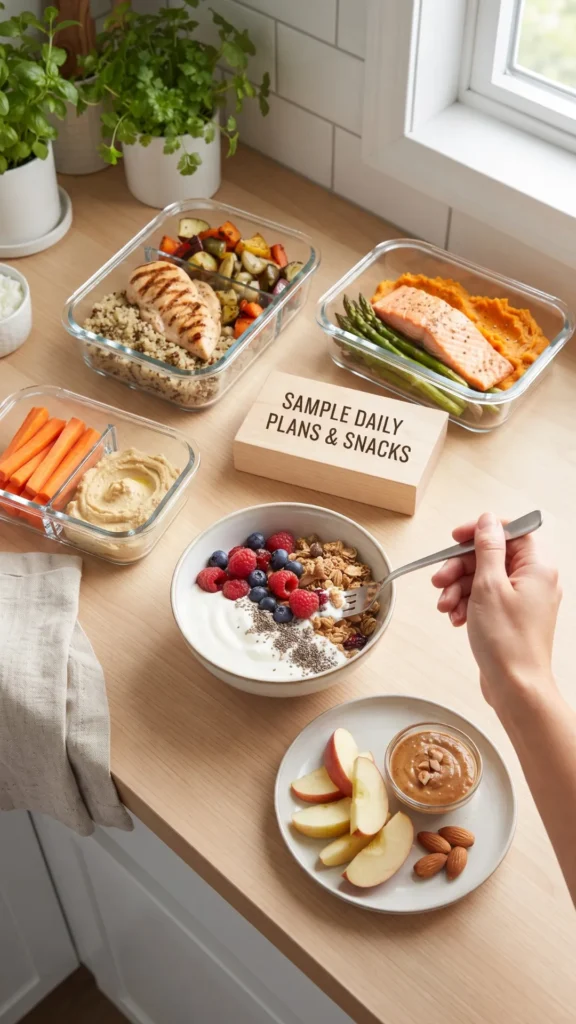
Sample Daily Meal Plans & Snacks
Day 1: Overnight oats with Greek yogurt and berries; tuna salad with leafy greens; baked cod with roasted veggies; snacks of Greek yogurt with raspberries and raw veggies with hummus.
Day 2: Egg white scramble with vegetables; lentil soup; chicken stir-fry with cauliflower rice; snacks of hard-boiled eggs and cottage cheese with berries.
Variety, plant-based options, and high-protein days follow to keep meals exciting and effective.
Snacks to Keep on Hand: Greek yogurt with berries, hard-boiled eggs with veggies, cottage cheese with cucumber and tomatoes, raw vegetables with hummus, watermelon, edamame, miso soup, and air-popped popcorn.

Meal Prep Tips
Spend 90-120 minutes prepping before the week begins:
- Batch cook proteins like chicken and lentils
- Roast vegetables
- Prepare soups and grains
- Portion snacks
This prep turns daily meal assembly into a quick, simple task, making the challenge sustainable.
Common Mistakes to Avoid
- Skimping on vegetable volume (eat large portions!)
- Skipping pre-meal soups or salads
- Using excessive oil (cook with broth when possible)
- Expecting instant dramatic results (commit fully for seven days)
What to Expect After a Week
- Improved hunger control and satisfaction
- More stable energy throughout the day
- Noticeable weight loss (2-4 pounds typical)
- Reduced bloating and better digestion

Continuing Beyond the Challenge
The habits built during these seven days are designed for lasting change. Weekly meal prep focusing on proteins, grains, vegetables, and snacks keeps volume eating manageable long-term. Introducing new recipes prevents boredom while maintaining the principles of volume eating.
The 7-day volume eating challenge offers a sustainable way to eat more of the right foods and less of the wrong ones, reshaping your relationship with food. After just a week, generous, satisfying meals become your new normal, setting the stage for ongoing success.
Save this plan for easy access whenever you’re ready to start or want to reset. For full grocery lists, meal prep guides, and more resources, visit Volueat.com.
Disclaimer
This article is for informational purposes only and is not medical or nutritional advice. Always consult a healthcare professional before making significant changes to your diet, especially if you have existing health conditions
Table of content
7-Day Volume Eating Challenge: Eat More, Feel Full, and Lose Weight
What is the 7-Day Volume Eating Challenge?
How Volume Eating Supports Weight Loss
Why Seven Days?
Essential Foods to Stock
Helpful Kitchen Tools
Sample Daily Meal Plans & Snacks
Meal Prep Tips
Common Mistakes to Avoid
What to Expect After a Week
Continuing Beyond the Challenge

