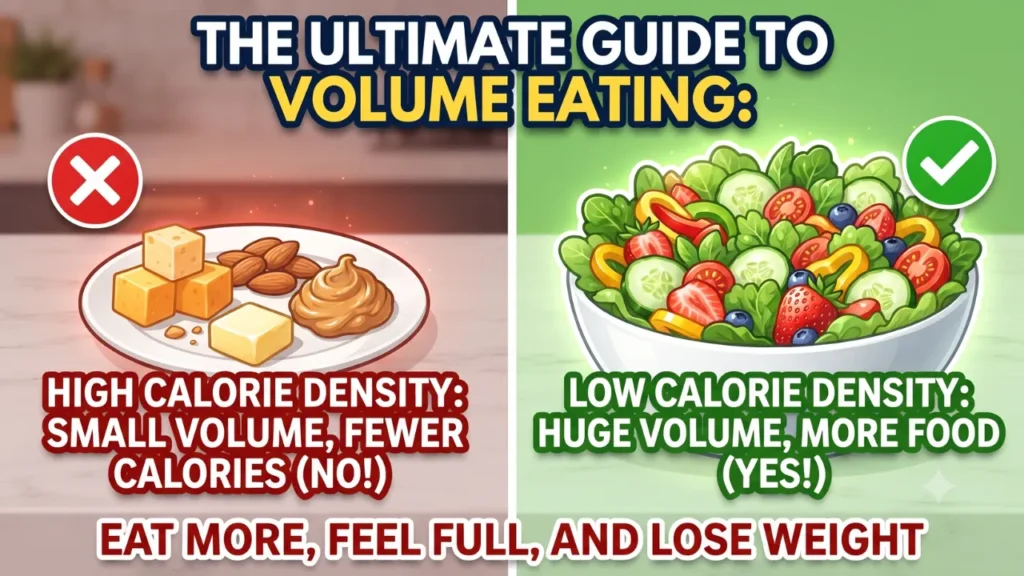
If you’re new to volume eating and wondering where to begin, the key is having a reliable list of volume-friendly foods, not a complicated diet or strict rules. Volume eating focuses on filling your plate with foods that satisfy hunger, keep calories in check, and help you lose weight sustainably. Once you identify which foods provide the most fullness with fewer calories, building meals becomes effortless.
What Is Volume Eating?
Volume eating is a simple approach based on the principle that not all calories occupy the same space in your stomach. Some foods are calorie-dense, meaning small portions contain many calories. Others are volume-dense—they take up more space, are filling, and contain fewer calories per bite.
Instead of eating less and feeling hungry, volume eating encourages you to consume larger servings of foods rich in water and fiber, which create fullness without excess calories. This method was developed from research at Penn State University under Dr. Barbara Rolls, demonstrating that people tend to eat a consistent weight of food daily, regardless of calorie content. By choosing foods that weigh the same but contain fewer calories, you naturally reduce calorie intake without feeling deprived.
Why Volume Eating Supports Weight Loss
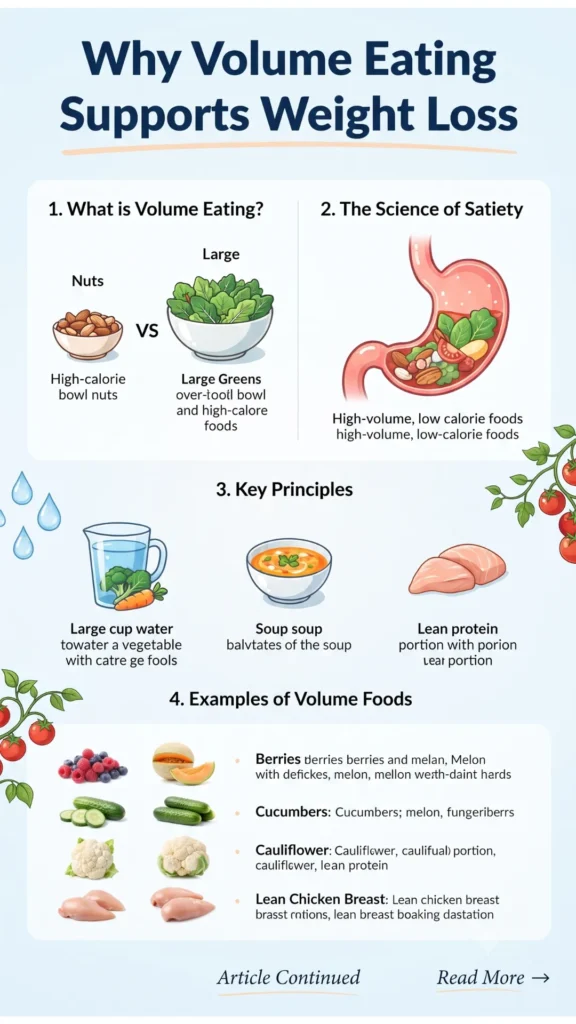
Volume eating works because it activates the stomach’s stretch receptors that signal fullness to your brain when the stomach expands. Foods high in volume but low in calories fill the stomach and help you feel satisfied.
Additionally, high-fiber and protein-rich foods slow digestion and stimulate hormones that suppress appetite for hours. This stabilizes blood sugar levels, reducing cravings and energy dips common in many diets.
Psychologically, eating a generous, colorful plate of food feels more satisfying than eating small portions. This approach reduces the mental strain of dieting and promotes long-term adherence, making weight loss sustainable.
Understanding Calorie Density: The Core Concept
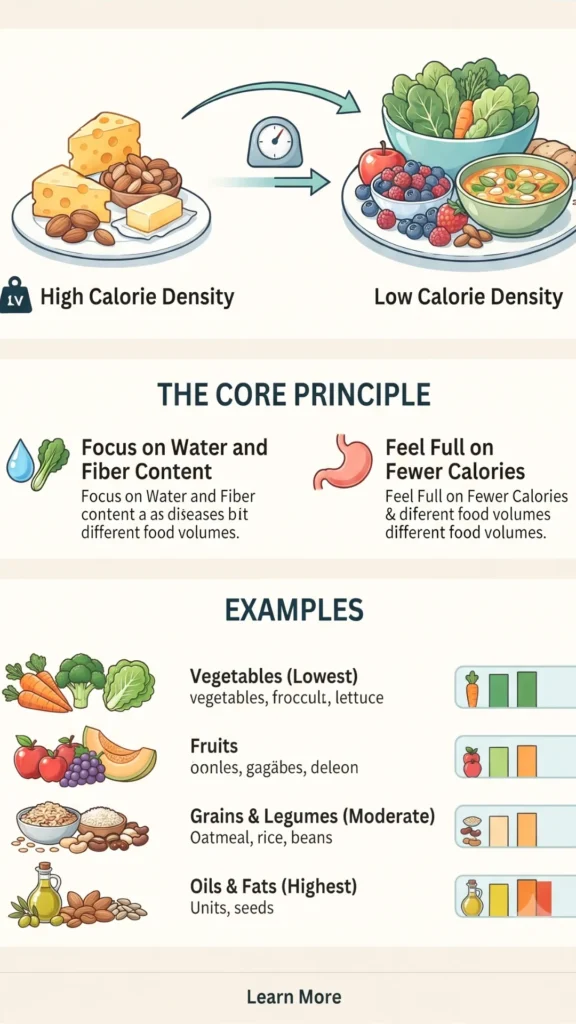
Calorie density measures how many calories are in a gram of food. Low-calorie-density foods, like most fruits and non-starchy vegetables, have fewer than 0.6 calories per gram, meaning you can eat large portions for few calories. For example, 200 grams of cucumber has about 30 calories, while the same amount of almonds has roughly 1,200 calories.
Moderate calorie-density foods, such as lean proteins, legumes, and whole grains, range from 0.7 to 1.5 calories per gram. These provide satiety through protein and fiber and form the backbone of volume-eating meals.
High-calorie-density foods, including oils, nuts, cheese, and processed snacks, pack 5 to 9 calories per gram. These should be used sparingly as flavor enhancers rather than meal foundations.
How to Create a Volume-Eating Grocery List
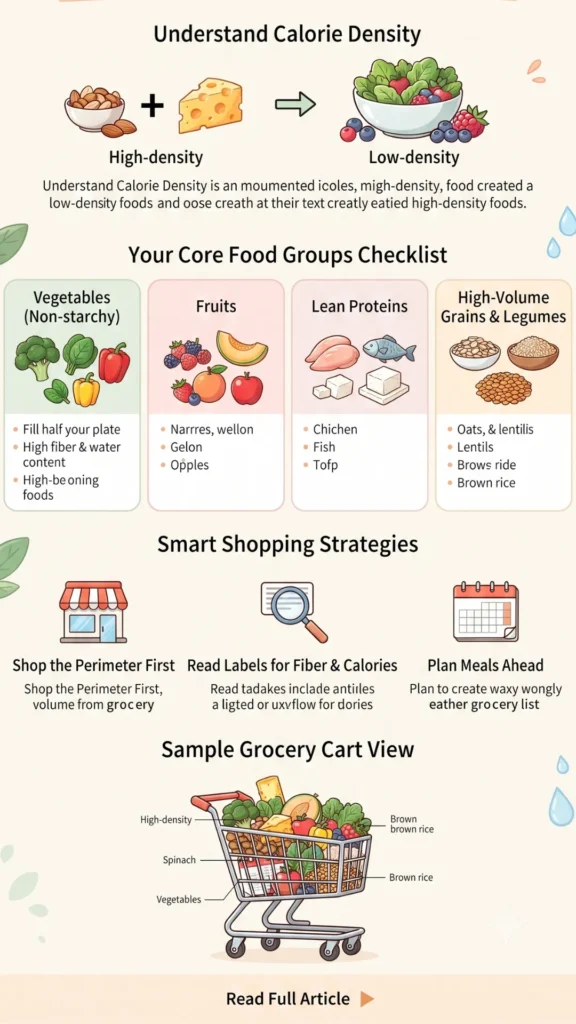
Start with a variety of non-starchy vegetables; aim for five or more types weekly. Add fruits for snacks and breakfasts, select two to three lean proteins, and include whole grains or legumes. Enhance meals with herbs, spices, broth, and small amounts of healthy fats.
Shop mainly in the grocery store’s outer aisles, where produce, meat, fish, and dairy are usually lower in calorie density than processed center-aisle foods. Buying frozen vegetables and canned legumes is cost-effective and reduces waste. Prepare meals ahead by chopping vegetables, cooking grains and proteins, and making broth-based soups to simplify daily cooking.
Best Vegetables for Volume Eating
Non-starchy vegetables are the foundation of volume eating:
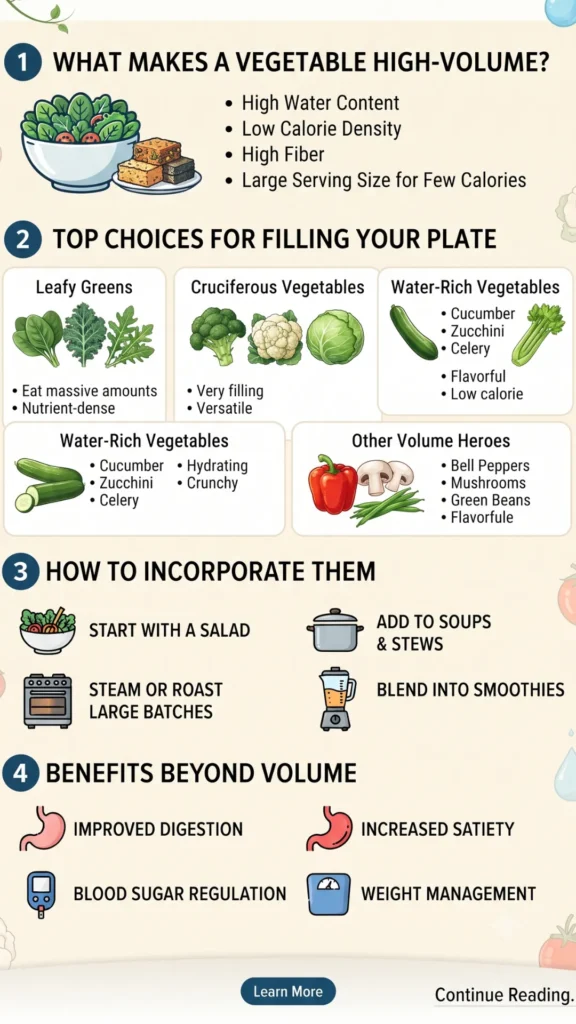
- Cucumber and zucchini: Very low in calories (~15-17 per 100g) and over 90% water.
- Leafy greens like spinach and romaine lettuce: Nutrient-rich and filling.
- Broccoli, cauliflower, cabbage: Versatile and low in calories.
- Others: Celery, mushrooms, bell peppers, asparagus, and tomatoes are all under 35 calories per 100 grams.
Top Fruits for Volume Eating
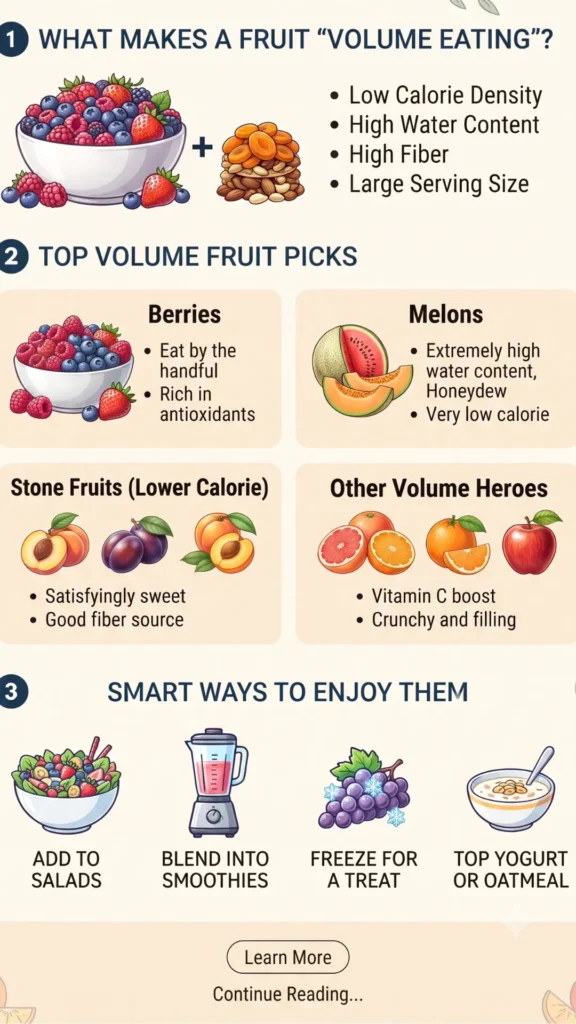
Fruits are often underestimated due to natural sugars but are water-rich and fiber-packed:
- Watermelon: ~30 calories per 100g, highly hydrating and filling.
- Berries (strawberries, raspberries, blueberries): Low-calorie and high in fiber.
- Apples, pears, grapefruit, cantaloupe, and peaches: Great for snacks and dessert alternatives.
High-Protein Foods That Satisfy Hunger
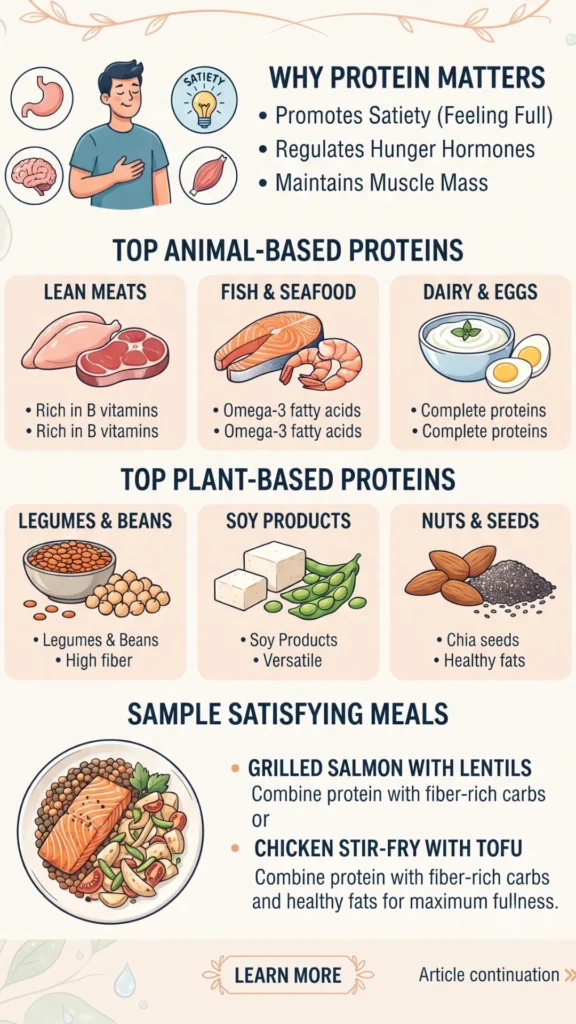
Protein is crucial for fullness and hunger control:
- Egg whites: Low calorie, high protein.
- White fish (cod, tilapia, pollock): Lean and filling.
- Shrimp: Excellent for stir-fries.
- Non-fat Greek yogurt, low-fat cottage cheese: Versatile and satiating.
- Skinless chicken breast, canned tuna, firm tofu, turkey breast: Add variety and protein.
Fiber-Rich Foods to Prolong Fullness
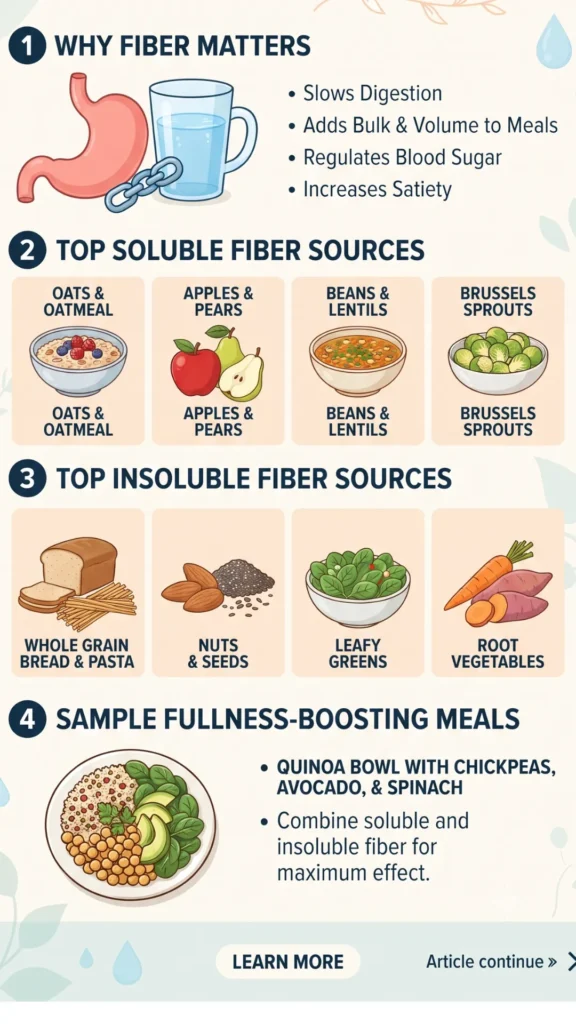
Fiber slows digestion and signals fullness:
- Oats: Great for breakfast, keeping hunger away for hours.
- Chia and flaxseeds: Expand in the stomach to add volume.
- Lentils, chickpeas, black beans, kidney beans: Combine fiber and protein for lasting satiety.
Low-Calorie Carbohydrates That Keep You Energized
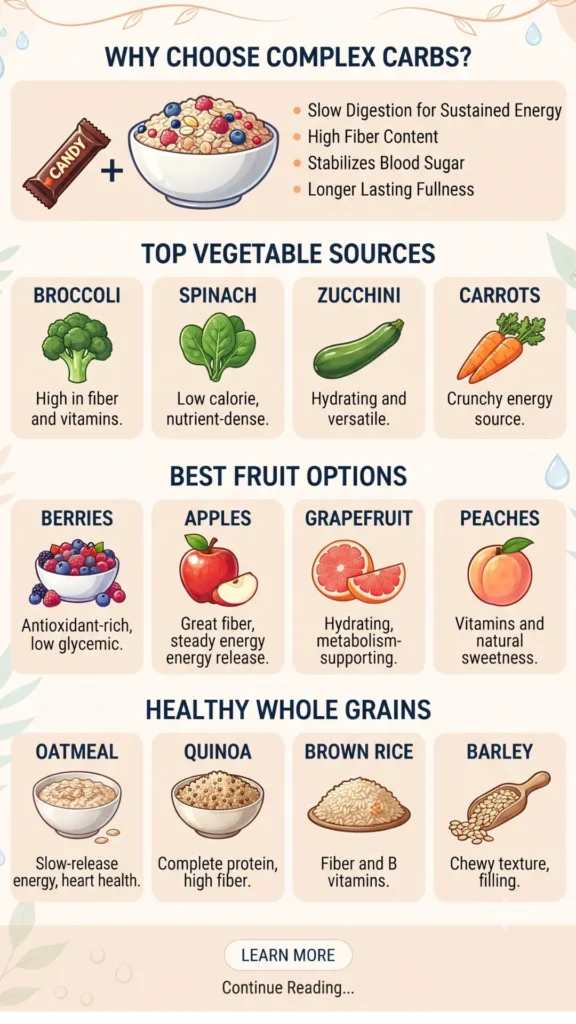
Choose whole-food carbs over refined ones:
- Sweet potatoes: High fiber and water content.
- Brown rice, quinoa, barley: Whole grains with protein and fiber.
- Whole grain bread: Provides more fiber and fullness than white bread.
Healthy Snacks for Volume Eaters
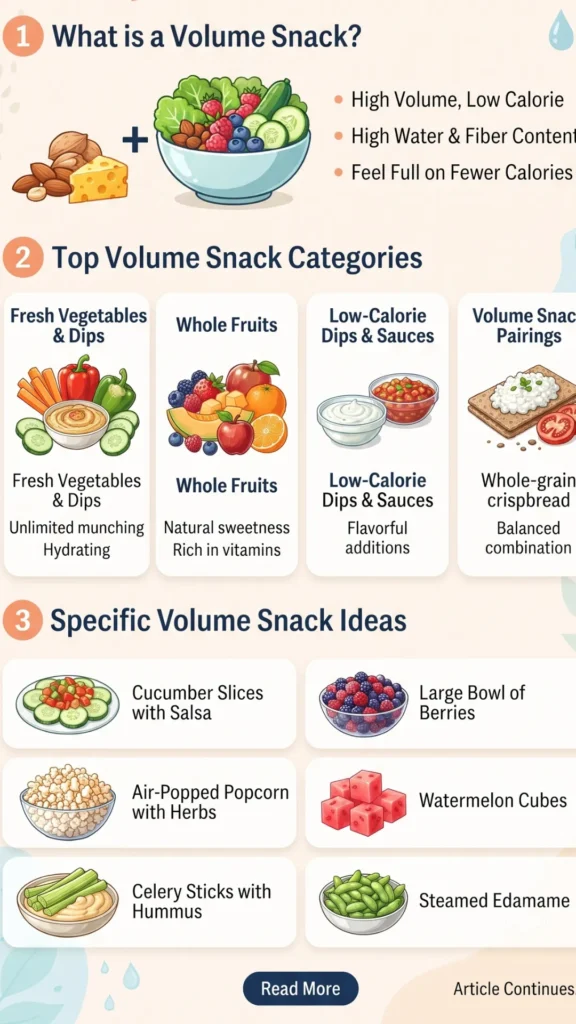
Avoid calorie-dense, low-nutrient snacks. Opt for:
- Raw vegetables with hummus.
- Greek yogurt with berries.
- Hard-boiled eggs.
- Air-popped popcorn.
- Fresh fruit portions.
- Broth-based soups between meals.
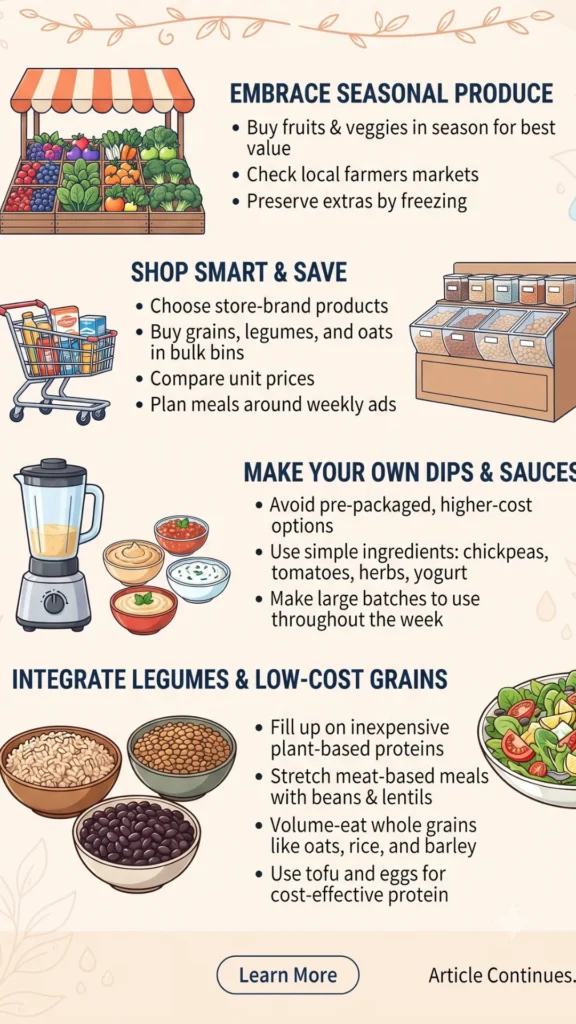
Budget-Friendly Volume Eating Tips
Affordable staples include dried lentils, canned beans, frozen vegetables, eggs, canned tuna, and store-brand yogurt. Buying in bulk and choosing seasonal fruits further reduce costs.
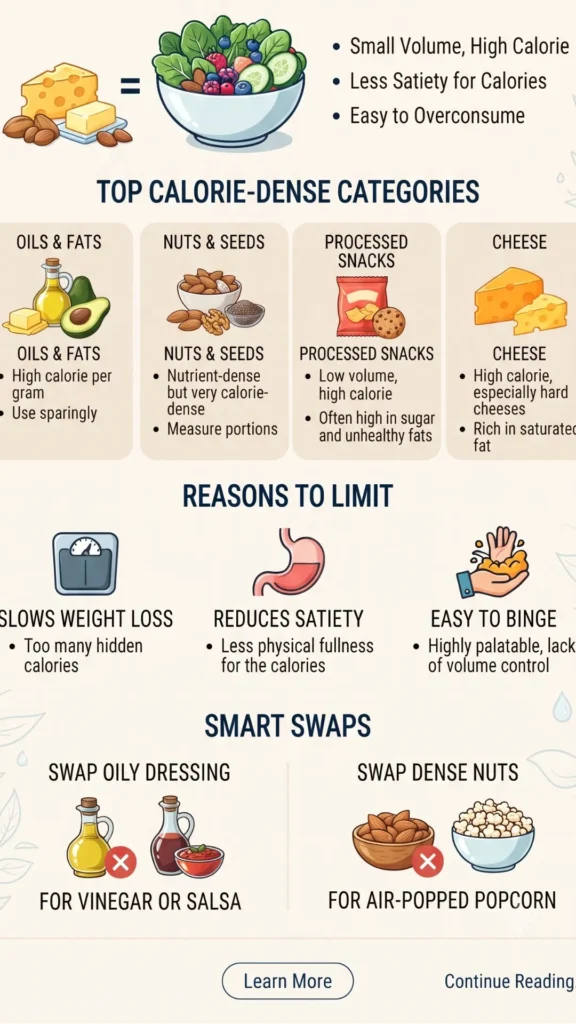
Foods to Limit on Volume Eating
Limit calorie-dense foods that contribute little volume:
- Cooking oils: Use sparingly or replace with broth.
- Nuts and nut butters: High in calories; enjoy in small portions.
- Full-fat cheeses, processed snacks, sugary drinks, alcohol: Use occasionally.
Easy Volume Eating Meal Ideas for Beginners
- Breakfast: Scrambled egg whites with spinach and mushrooms cooked in broth; oats with strawberries and Greek yogurt.
- Lunch: Large salad with leafy greens, cucumber, tomatoes, cabbage, and bell pepper, topped with canned tuna and lemon dressing.
- Dinner: Red lentil soup with spinach and vegetable broth, a side of roasted broccoli and cauliflower.
- Snacks: Greek yogurt with berries, raw veggies with hummus, watermelon, air-popped popcorn.
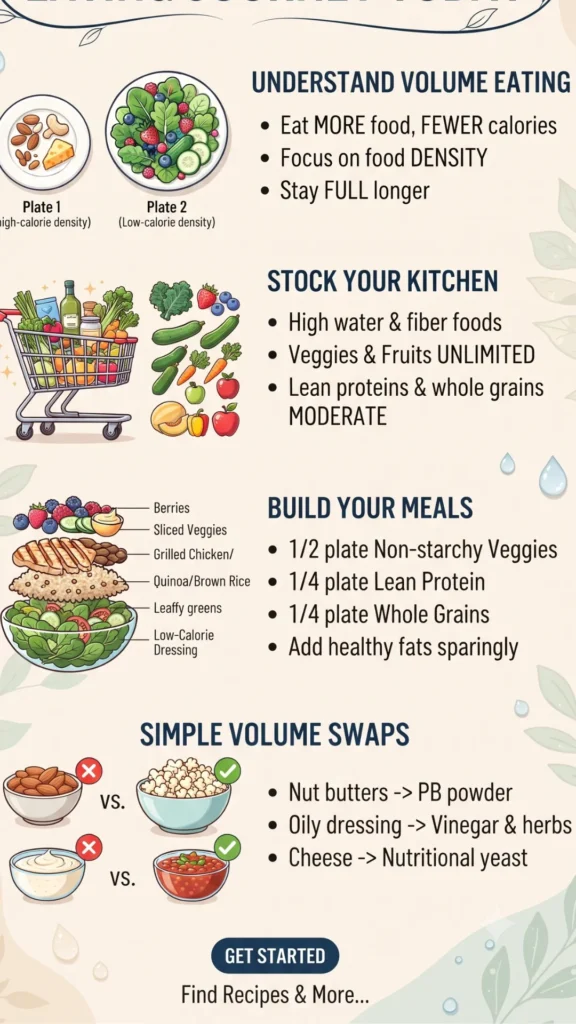
Start Your Volume Eating Journey Today
Begin by selecting five vegetables, two fruits, two proteins, and one legume for your next grocery trip. Use this simple framework to build meals that fill you up without excess calories. Volume eating is a sustainable, enjoyable way to lose weight and improve your relationship with food.
By focusing on low-calorie, high-volume foods, this approach delivers fullness, nutrition, and steady weight loss without feeling like a diet. Use this guide as your roadmap to healthier eating that lasts.
Disclaimer
This article is for informational purposes only and is not medical or nutritional advice. Always consult a healthcare professional before making significant changes to your diet, especially if you have existing health conditions
Table of content
What Is Volume Eating?
Why Volume Eating Supports Weight Loss
Understanding Calorie Density: The Core Concept
How to Create a Volume-Eating Grocery List
Best Vegetables for Volume Eating
Top Fruits for Volume Eating
High-Protein Foods That Satisfy Hunger
Fiber-Rich Foods to Prolong Fullness
Low-Calorie Carbohydrates That Keep You Energized
Healthy Snacks for Volume Eaters
Budget-Friendly Volume Eating Tips
Foods to Limit on Volume Eating
Easy Volume Eating Meal Ideas for Beginners
Start Your Volume Eating Journey Today
You might like this: https://volueat.com/the-ultimate-guide-to-low-calorie-foods-that-keep-you-full-for-weight-loss/