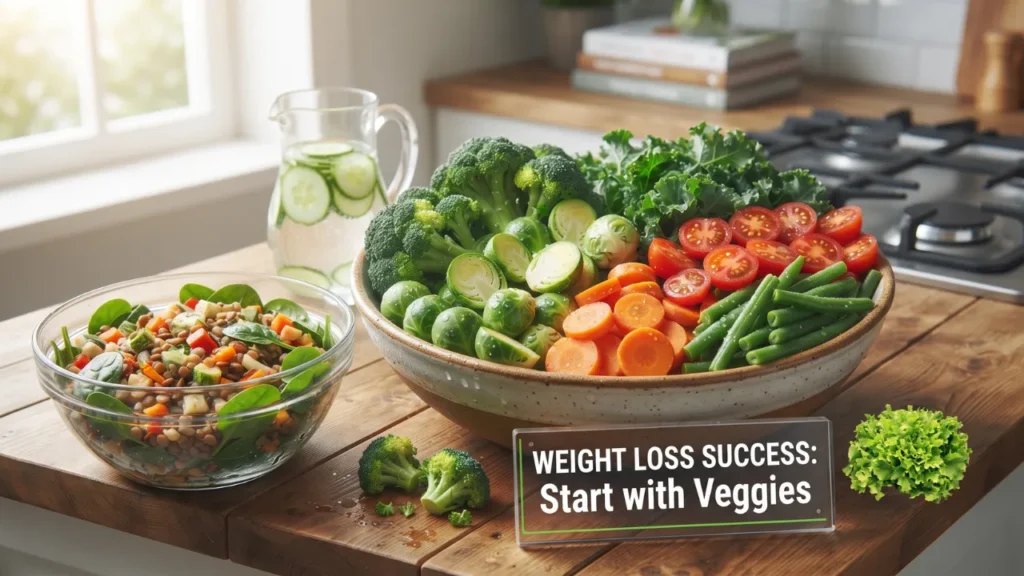
When embarking on a weight loss journey, the importance of vegetables cannot be overstated. They are unique among all food groups because they allow you to consume large, colorful, and satisfying meals with minimal calorie intake. This remarkable combination of volume, fiber, and essential nutrients creates the foundation for a diet that not only promotes weight loss but also feels fulfilling and sustainable.
This comprehensive guide will explore why vegetables are crucial for weight loss, identify the best options to include in your diet, explain calorie variations among different vegetables, and provide practical advice for incorporating them into your meals effortlessly. By the end, you’ll be equipped with all the knowledge needed to make vegetables the cornerstone of your weight loss plan.
Why Vegetables Are Fundamental to Weight Loss Success
Vegetables are much more than just low-calorie fillers. They are powerhouses of nutrition, rich in water, fiber, vitamins, minerals, and antioxidants. These components work synergistically to support weight management while improving overall health.
One of the primary benefits of vegetables is their high fiber content. Fiber slows down the digestion process, which stabilizes blood sugar levels and extends the time between meals by delaying hunger signals. Individuals who consume fiber-rich vegetables regularly report reduced appetite and cravings, not due to willpower but because fiber biologically suppresses hunger.
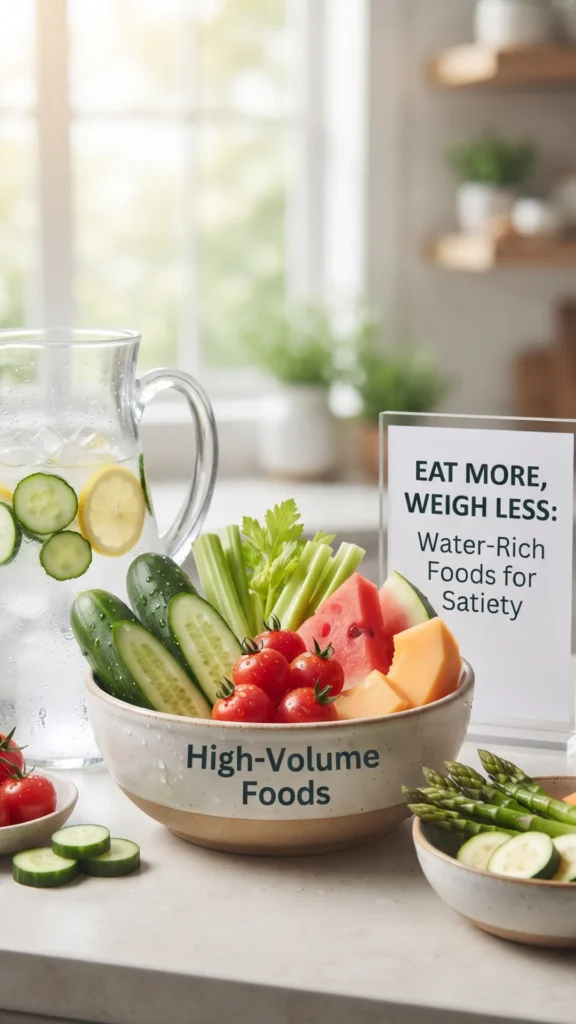
Water content in vegetables also plays a crucial role by adding bulk to your meals without adding calories. This physical fullness activates stretch receptors in the stomach that communicate satiety to the brain. Thus, eating large servings of water-rich vegetables helps you feel full sooner and stay satisfied longer.
Beyond supporting fullness, vegetables promote sustainable weight loss by enhancing gut health, lowering inflammation, and improving blood sugar control. These health benefits boost energy levels and make the process of losing weight feel less like a struggle.
Characteristics That Make Vegetables Ideal for Weight Loss
While most vegetables offer health benefits, those best suited for weight loss share several key characteristics:
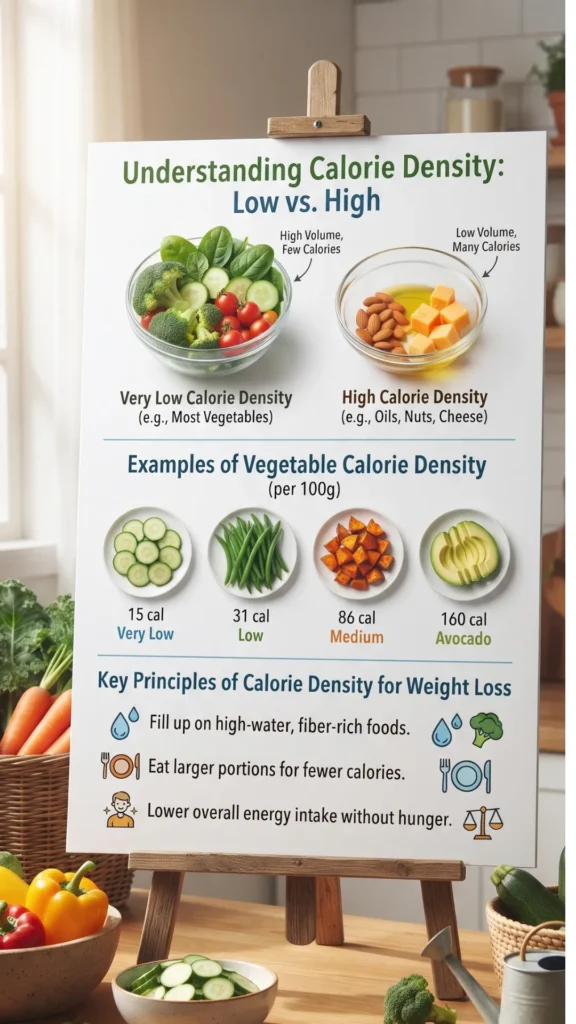
Low Calorie Density: Vegetables low in calories per gram enable you to eat substantial portions without exceeding your calorie budget. Non-starchy vegetables typically contain between 0.1 and 0.4 calories per gram.
High Fiber Levels: Fiber-rich vegetables slow gastric emptying, prolonging the sensation of fullness. They also nourish gut bacteria that produce compounds signaling satiety to the brain.
High Water Content: Vegetables composed mostly of water (over 90%), such as cucumbers, lettuce, and zucchini, add volume to meals by physically filling the stomach without adding calories.
Nutrient Richness: Vegetables packed with vitamins, minerals, and antioxidants provide your body with essential nutrients, reducing the drive to eat more to fulfill nutritional needs.
Understanding Calorie Density in Vegetables
Knowing the calorie density of vegetables helps you plan meals that maximize fullness while minimizing calorie intake:
Non-Starchy Vegetables: Examples include spinach, cucumbers, celery, lettuce, zucchini, and mushrooms. These have the lowest calorie density, typically 10–25 calories per 100 grams, and can be eaten in large quantities with minimal calorie impact.
Moderate-Calorie Vegetables: Broccoli, cauliflower, bell peppers, green beans, and tomatoes fall into this category, with 25–45 calories per 100 grams. They provide moderate calories along with excellent nutrition and volume.
Starchy Vegetables: Corn, peas, parsnips, and sweet potatoes contain higher calorie concentrations, from 70 to 130 calories per 100 grams. These should be consumed in moderation as a carbohydrate source in meals.
By starting your meal with the lowest-calorie vegetables and adding small amounts of mid-range and starchy vegetables, you can build satisfying plates that support your weight loss goals.
Leafy Greens: Nutritional Giants for Weight Loss
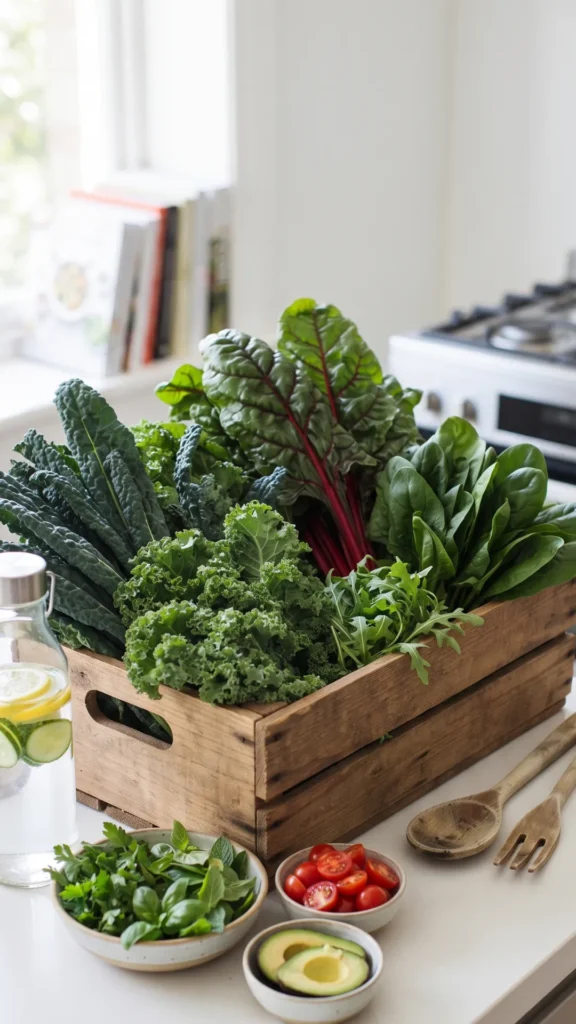
Leafy greens stand apart for their exceptional combination of low calories, high fiber, and rich nutrient content. They are among the most effective vegetables for weight loss.
Spinach is a standout, providing around 23 calories and 2.2 grams of fiber per 100 grams, along with iron, calcium, magnesium, and vitamins A, C, and K. Its versatility allows you to enjoy it raw in salads, cooked in eggs, or blended into smoothies and sauces.
Romaine and Cos Lettuce offer substantial volume with very few calories (about 17 per 100 grams) and form an excellent base for large, filling salads.
Other leafy greens like kale, arugula, watercress, and Swiss chard add variety, flavor, and nutrition. For example, watercress contains only 11 calories per 100 grams, the lowest among vegetables, and kale boasts significant fiber and vitamin K.
Incorporating a variety of leafy greens multiple times a week ensures nutrient diversity and keeps meals exciting.
Cruciferous Vegetables That Help You Stay Full
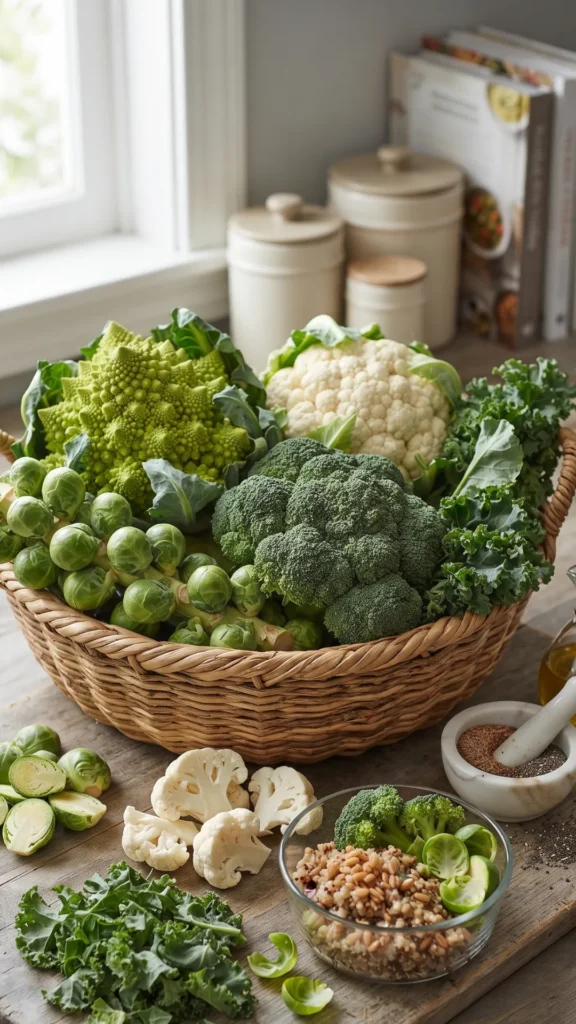
Cruciferous vegetables such as broccoli, cauliflower, Brussels sprouts, cabbage, and bok choy deserve special attention for their weight loss benefits. They combine fiber-rich content, low calories, and culinary versatility.
Broccoli contains about 34 calories and 2.6 grams of fiber per 100 grams, plus vitamins C and K, folate, and potassium. Roasting it enhances its flavor, making it a delicious, filling side.
Cauliflower has a mild taste and adaptable texture, making it an excellent substitute for higher-calorie foods like rice or mashed potatoes.
Brussels sprouts and cabbage are affordable, fiber-packed options that can be eaten raw or cooked. Roasting Brussels sprouts until crispy creates a satisfying texture and flavor.
Water-Rich Vegetables: Fullness Without Calories
Vegetables with very high water content add volume to your meals, helping to trigger fullness signals without adding calories.
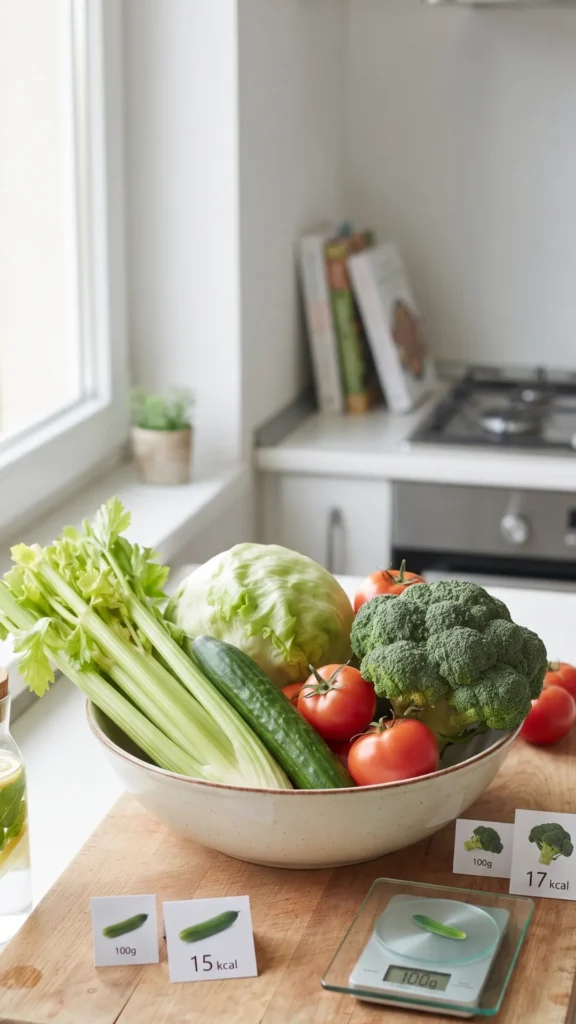
Cucumbers, with over 96% water and only 15 calories per 100 grams, are ideal as raw snacks or salad ingredients.
Zucchini, at 17 calories per 100 grams, is a mild-flavored vegetable perfect for replacing calorie-dense foods like pasta when spiralized.
Celery’s crunchy texture and low calorie content make it a popular snack, especially when paired with protein-rich dips such as hummus or cottage cheese.
Other water-rich vegetables like lettuce, tomatoes, and radishes add crunch and bulk while maintaining a low calorie count.
High-Fiber Vegetables to Suppress Appetite
Certain vegetables are especially effective at curbing hunger for hours due to their high fiber content:
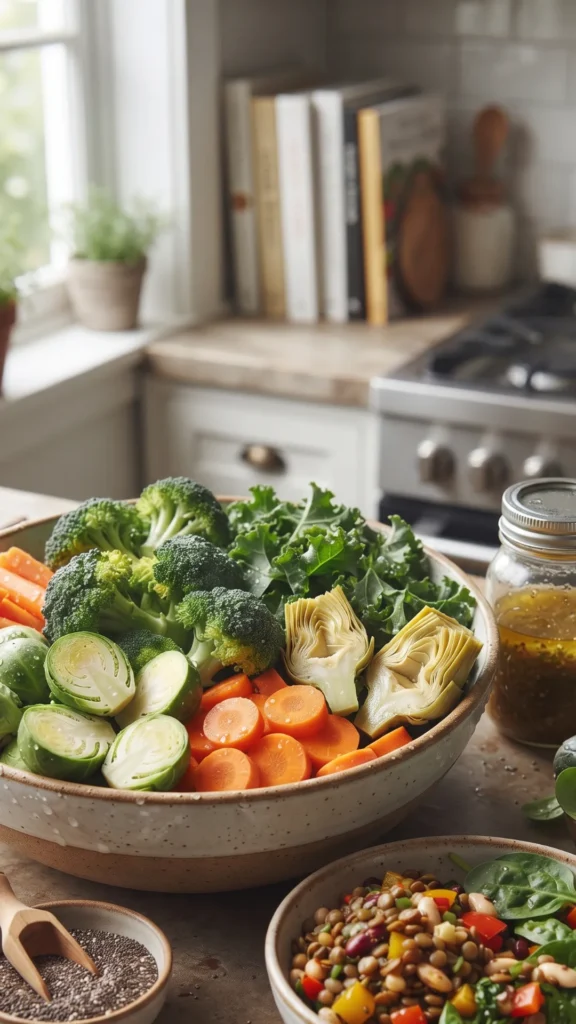
Artichokes provide an impressive 7 grams of fiber for roughly 60 calories, making them among the most satiating vegetables.
Brussels sprouts offer nearly 4 grams of fiber per 100 grams and only 43 calories.
Green peas provide about 5 grams of fiber per 100 grams, though with a slightly higher calorie count of 81.
Vegetables like broccoli, kale, spinach, and carrots contribute 2–3 grams of fiber per 100 grams and are excellent choices for sustained fullness.
Including multiple high-fiber vegetables in your meals creates a cumulative effect that stabilizes blood sugar and prolongs satiety.
The Top 20 Vegetables for Weight Loss
Here are some of the best vegetables for weight loss, along with their approximate calorie counts per 100 grams and key benefits:
Watercress (11 kcal): Very low calorie, nutrient-dense, ideal raw.
Cucumber (15 kcal): High water content, refreshing snack.
Celery (16 kcal): Crunchy, hydrating, pairs well with protein dips.
Bell peppers (31 kcal): Rich in vitamin C, sweet crunch.
Bok choy (13 kcal): High water content, great for stir-fries.
Broccoli (34 kcal): Fiber-rich and versatile.
Green beans (31 kcal): Filling and crunchy.
Kale (35 kcal): Fiber and vitamin K powerhouse.
Brussels sprouts (43 kcal): High fiber, filling.
Carrots (41 kcal): Sweet, crunchy, fiber-rich.
Vegetables with Minimal Calories per Serving
For those carefully managing calorie intake, these vegetables can be eaten in large amounts without significantly impacting your daily total:
Watercress, bok choy, cucumber, radishes, celery, and lettuce all contain fewer than 17 calories per 100 grams.
A 200-gram serving of any of these vegetables typically costs between 20 and 35 calories, making them ideal for building large, filling meals.
Using these ultra-low-calorie vegetables as the base of your meals is a smart strategy to maximize fullness and minimize calorie consumption.
Vegetables Best Suited for Volume Eating
Volume eating emphasizes filling your stomach with large amounts of low-calorie, high-water, and bulky vegetables before adding higher-calorie ingredients.
Low-volume vegetables include zucchini, cucumber, spinach, romaine lettuce, cauliflower, and cabbage. You can consume 300 to 500 grams per meal of these vegetables, keeping calories between 100 and 150.
Broth-based vegetable soups combining these vegetables are excellent for volume eating, offering fullness with minimal calories.
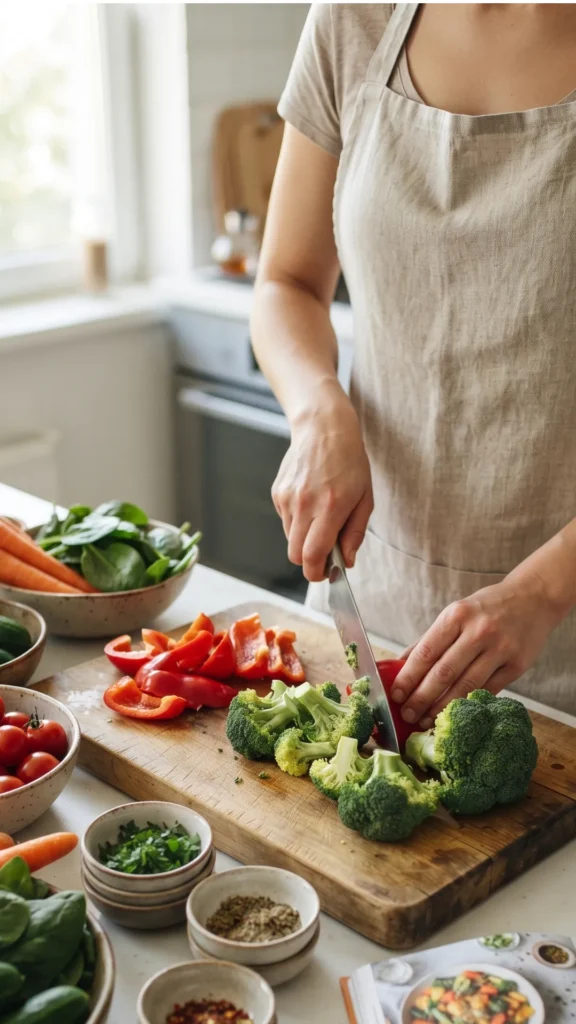
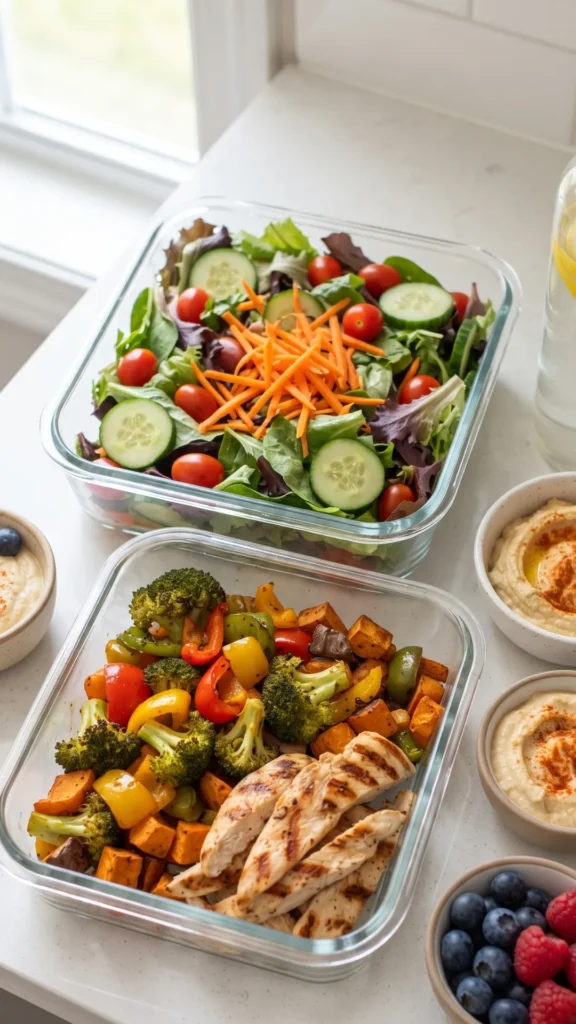
Preparing trays of roasted mixed vegetables weekly (broccoli, cauliflower, bell peppers, zucchini, and mushrooms) provides convenient volume eating options.
Fresh versus Frozen Vegetables
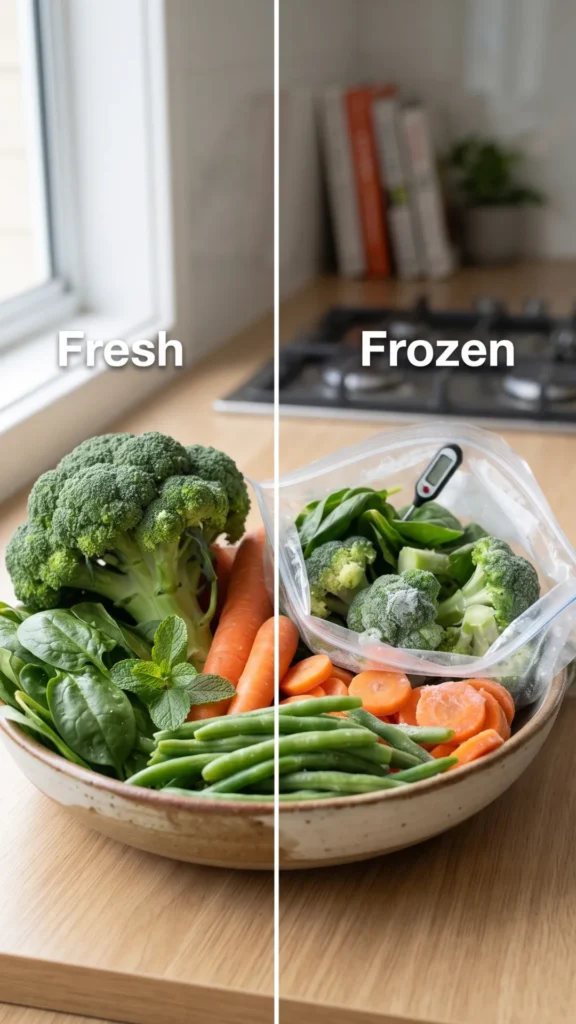
Many wonder if fresh or frozen vegetables are better for weight loss. Frozen vegetables are nutritionally comparable to fresh ones and sometimes retain nutrients better due to rapid freezing after harvest.
Frozen vegetables are available year-round, are cost-effective, have a longer shelf life, and provide convenience.
Fresh vegetables offer superior texture and are preferable for raw dishes like salads and snacks, while frozen vegetables are ideal for cooked dishes such as stir-fries, soups, and roasts.
Using both fresh and frozen vegetables strategically ensures you always have nutritious, volume-boosting options on hand.
Common Mistakes with Vegetables in Weight Loss
Weight loss efforts can be hampered by the following:
Using high-calorie oils, dressings, and toppings that negate the calorie advantage of vegetables.
Cooking vegetables in oil rather than broth, adding unnecessary calories.
Treating vegetables as small side dishes rather than the main component of meals.
Repeatedly eating the same vegetables, leading to boredom and cravings for calorie-dense foods.
Avoid these pitfalls by choosing low-calorie cooking methods, making vegetables the centerpiece of your plate, and rotating your vegetable choices.
Simple Ways to Add More Vegetables to Every Meal
Incorporating more vegetables doesn’t require advanced cooking skills:
Begin meals with a bowl of vegetable broth or a simple salad to activate fullness early.
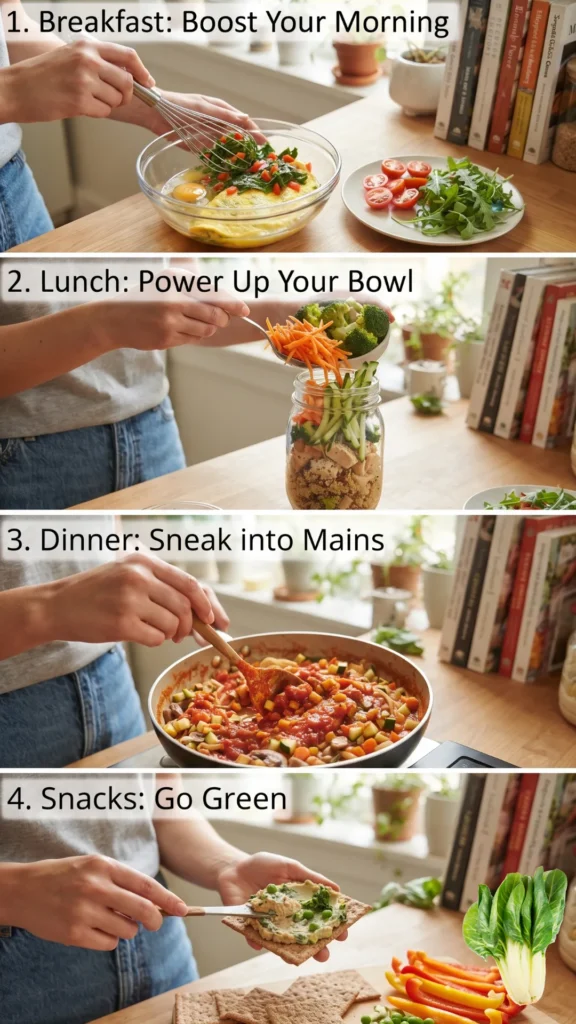
Add spinach or other greens to scrambled eggs, soups, or sauces.
Replace calorie-dense staples with vegetable alternatives like cauliflower rice or zucchini noodles.
Prepare large batches of roasted mixed vegetables to use throughout the week.
Sample Vegetable-Centered Day for Weight Loss
Breakfast: Egg whites scrambled with spinach, mushrooms, and bell pepper cooked in broth, served with oats and strawberries (~320-360 calories).
Morning Snack: Sliced cucumber, celery, and bell pepper with hummus (~110 calories).
Lunch: Large salad of romaine, spinach, cucumber, cabbage, tomatoes, and radishes, topped with tuna and lemon dressing, plus vegetable broth (~300-340 calories).
Afternoon Snack: Fresh berries or watermelon (~80-100 calories).
Dinner: Baked cod with roasted broccoli, cauliflower, zucchini, and cauliflower rice, plus vegetable broth (~320-370 calories).
Total: Approximately 1,150 to 1,280 calories, with meals that feel abundant and satisfying.
Embracing Vegetables as the Foundation of Your Diet
Making vegetables the star of your meals transforms weight loss from a restrictive challenge into a nourishing, abundant experience. Choose your favorite vegetables, commit to filling at least half your plate with them, and enjoy the fullness, nutrition, and satisfaction they provide. With consistent effort and variety, vegetables can change your relationship with food and support long-term, healthy weight loss.
Table of contents
Why Vegetables Are Essential for Weight Loss Characteristics That Make Vegetables Ideal for Weight Loss Understanding Calorie Density in Vegetables Leafy Greens: Nutritional Giants for Weight Loss Cruciferous Vegetables That Help You Stay Full Water-Rich Vegetables: Fullness Without Calories High-Fiber Vegetables to Suppress Appetite The Top 20 Vegetables for Weight Loss Vegetables with Minimal Calories per Serving Vegetables Best Suited for Volume Eating Fresh versus Frozen Vegetables Common Mistakes with Vegetables in Weight Loss Simple Ways to Add More Vegetables to Every Meal Sample Vegetable-Centered Day for Weight Loss Embracing Vegetables as the Foundation of Your Diet
Disclaimer This article is for informational purposes only and is not medical or nutritional advice. Always consult a healthcare professional before making significant changes to your diet, especially if you have existing health conditions