Fruit often sparks debate in weight loss discussions. Some experts champion it, while others avoid it because of its natural sugars. However, the truth is that certain fruits are incredibly effective allies in weight management. They are naturally sweet, rich in water and fiber, highly satiating, and affordable, making them an accessible and smart choice for many.
This guide explains which fruits are most beneficial for weight loss, why they work so well, how to incorporate them into your meals, and common pitfalls to avoid. Whether you’re just starting your journey or refining your approach, this overview will help you enjoy fruit while shedding pounds.

Why Fruit Is Essential in a Weight Loss Diet
Fruit’s advantage lies in its low calorie density. Most whole fruits contain between 30 and 60 calories per 100 grams, which is far less than processed snacks or fatty foods. This means you can eat a substantial amount without a large calorie hit, helping control hunger effectively.
Beyond calories, fruits offer a blend of water, fiber, vitamins, minerals, and antioxidants that processed low-calorie snacks can’t match. For example, a large bowl of strawberries delivers more volume, fiber, and nutrients than a small bag of rice cakes, all with a similar or lower calorie count.
Fruit also helps curb sweet cravings naturally. Its natural sugars activate reward centers in the brain like processed sweets but without causing sharp blood sugar spikes and crashes. Choosing fruit when a sweet tooth strikes is not only healthier but also smarter for appetite control.
Fiber in whole fruits slows digestion and stabilizes blood sugar, which juice cannot do. Eating a whole orange keeps you full longer than drinking orange juice made from the same oranges because fiber remains intact and chewing adds to satiety.
You Might Like This:https://volueat.com/wp-admin/post.php?post=813&action=edit
What Makes a Fruit Ideal for Weight Loss?
Not all fruits are equally effective for weight loss, though whole fruits generally beat processed options. The best fruits share these traits:
- High water content: Fruits with over 85% water are filling relative to calories, activating stomach stretch receptors that signal fullness. Watermelon, strawberries, grapefruit, and cantaloupe are prime examples.
- High fiber content: Fiber slows stomach emptying and glucose absorption, extending fullness and reducing cravings. High-fiber fruits keep hunger at bay longer than low-fiber ones.
- Low calorie density: Fruits with fewer calories per gram allow bigger portions for the same calorie budget. Watermelon has only about 30 calories per 100 grams, letting you enjoy large servings without guilt, unlike calorie-dense dried mango at 300 calories per 100 grams.
While sugar content matters, it is less concerning in whole fruit because fiber moderates sugar absorption. For those monitoring blood sugar, berries, grapefruit, kiwi, and green apples are excellent low-sugar options. Most whole fruits, eaten in moderation, fit well in weight loss plans.
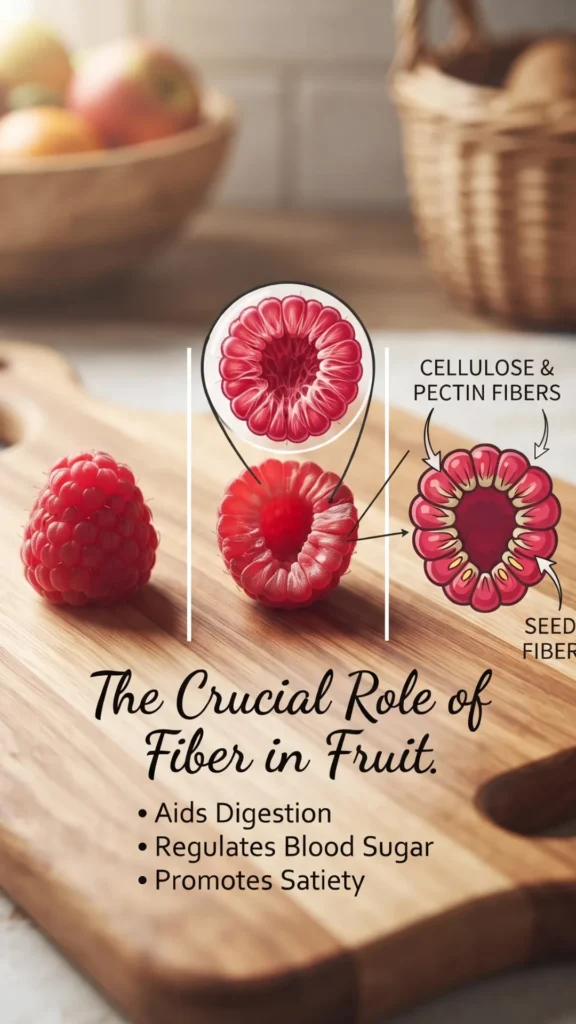
The Crucial Role of Fiber in Fruit
Dietary fiber is one of the most effective tools for managing hunger, and fruit is a delicious way to boost intake.
- Soluble fiber (found in apples, pears, citrus, and berries) dissolves in water to form a gel that slows digestion, leading to gradual nutrient absorption, stable blood sugar, and prolonged fullness.
- Insoluble fiber (in skins of apples, pears, kiwis, and berries) adds bulk, promotes gut motility, and enhances the feeling of fullness.
Together, these fibers create a lasting satiety effect. Fruits with 3 to 5 grams of fiber per serving, like raspberries, blackberries, pears, and apples, keep you full longer than low-fiber fruits of similar calories.
To maximize fiber benefits, always choose whole fruits over juice, keep the skin on when possible, and prefer fresh or frozen over dried fruits, which lose water and fiber concentration.
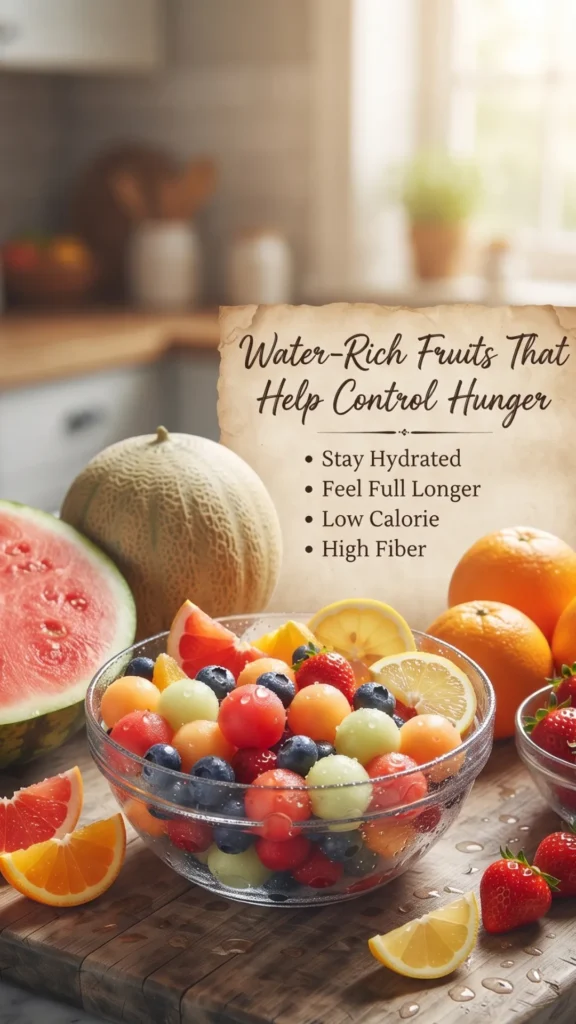
Water-Rich Fruits That Help Control Hunger
High water content means more volume per calorie, which fills your stomach without adding many calories. This supports the principle of volume eating for weight loss.
- Watermelon: About 30 calories per 100 grams and over 92% water. You can eat a large bowl for very few calories, making it a perfect snack or dessert substitute.
- Strawberries: Around 32 calories per 100 grams with over 90% water and 2 grams of fiber. Sweet and filling in large servings under 100 calories.
- Cantaloupe, grapefruit, and peaches: These fruits have high water content (over 90%) and modest calories (34-42 per 100 grams). Grapefruit, in particular, has been shown to reduce appetite when eaten before meals.
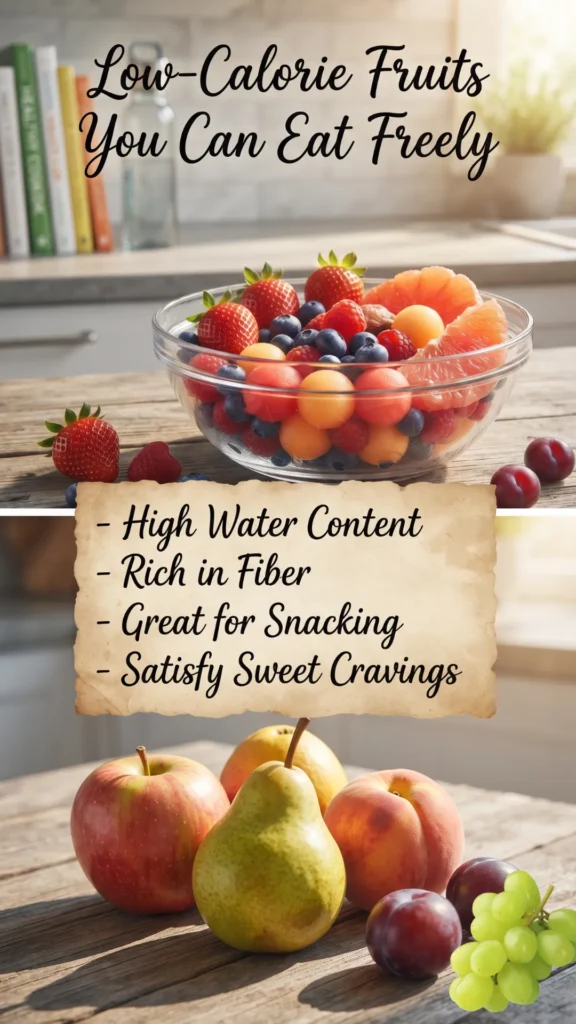
Low-Calorie Fruits You Can Eat Freely
When managing calorie intake, knowing which fruits are lowest in calories helps you snack generously without guilt.
- Watermelon, strawberries, cantaloupe, and grapefruit: 30 to 42 calories per 100 grams.
- Raspberries and blueberries: 52 to 57 calories, with raspberries offering exceptional fiber.
- Peaches and kiwi: 39 to 61 calories, with kiwi providing vitamin C and fiber.
- Oranges, clementines, plums, and apricots: 46 to 48 calories, portable, and satisfying.
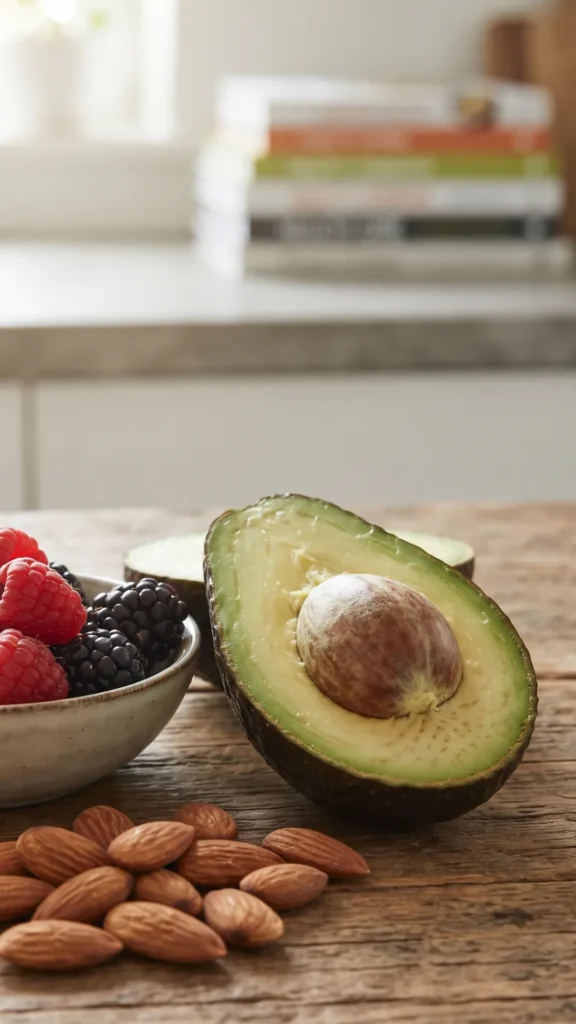
High-Fiber Fruits for Sustained Fullness
If you want to stay full for hours, prioritize high-fiber fruits:
- Raspberries: 6.5 grams fiber and 52 calories per 100 grams.
- Blackberries: 5.3 grams of fiber and 43 calories.
- Pears and apples: 2.4 to 3.1 grams of fiber, mostly in the skin.
- Avocados: Highest fiber at 6.7 grams but higher calories (160 per 100 grams); better as a fat source.
- Lesser-known options like guava, passion fruit, and pomegranate also offer high fiber and nutrients.
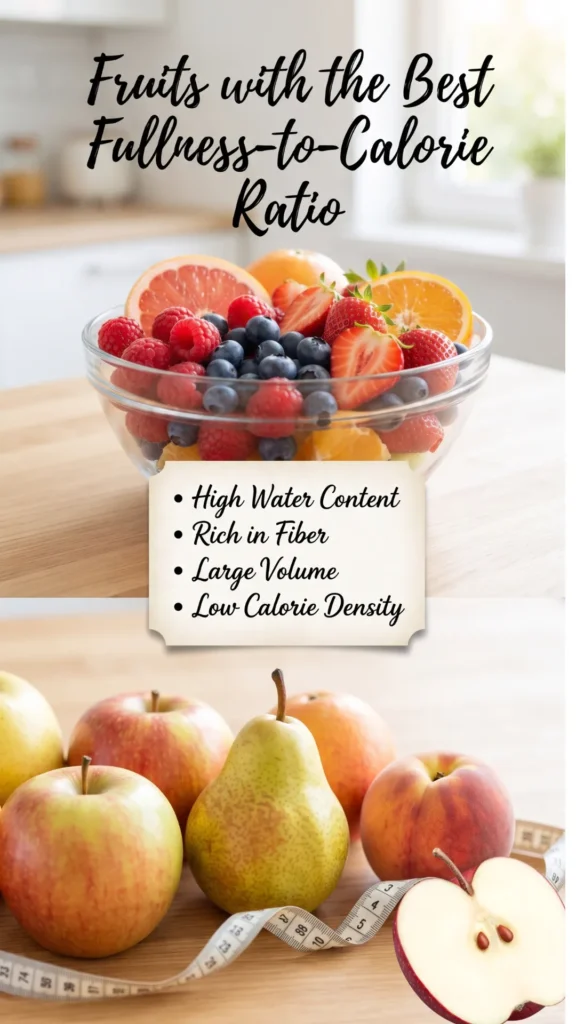
Fruits with the Best Fullness-to-Calorie Ratio
Combining water, fiber, and calorie density gives a practical measure of how filling a fruit is for its calories:
- Raspberries top the list with 6.5 grams of fiber, 87% water, and 52 calories per 100 grams.
- Strawberries and grapefruit follow closely, offering excellent volume and appetite suppression.
- Apples rank high because their firm texture requires chewing, which enhances fullness signaling.
- Other good choices include kiwi, pears, oranges, and cantaloupe.
Choosing these fruits over calorie-dense options like bananas, grapes, or dried fruits improves hunger control more efficiently.
Top 20 Fruits for Weight Loss (Calories per 100g)
- Watermelon — 30 kcal (highest water content)
- Strawberries — 32 kcal (high water, fiber)
- Cantaloupe — 34 kcal (water-rich)
- Honeydew melon — 36 kcal (water-rich)
- Peaches — 39 kcal (water and fiber)
- Grapefruit — 42 kcal (appetite suppressant)
- Blackberries — 43 kcal (high fiber)
- Papaya — 43 kcal (water and enzymes)
- Plums — 46 kcal (fiber-rich skin)
- Oranges — 47 kcal (fiber and sweetness)
- Clementines — 47 kcal (portable, sweet)
- Apricots — 48 kcal (low calorie)
- Raspberries — 52 kcal (highest fiber)
- Apples — 52 kcal (fiber in skin)
- Blueberries — 57 kcal (antioxidants)
- Pears — 57 kcal (fiber and fullness)
- Kiwi — 61 kcal (fiber, vitamin C)
- Cherries — 63 kcal (sweet, satisfying)
- Guava — 68 kcal (fiber-rich)
- Pomegranate seeds — 83 kcal (fiber, antioxidants)
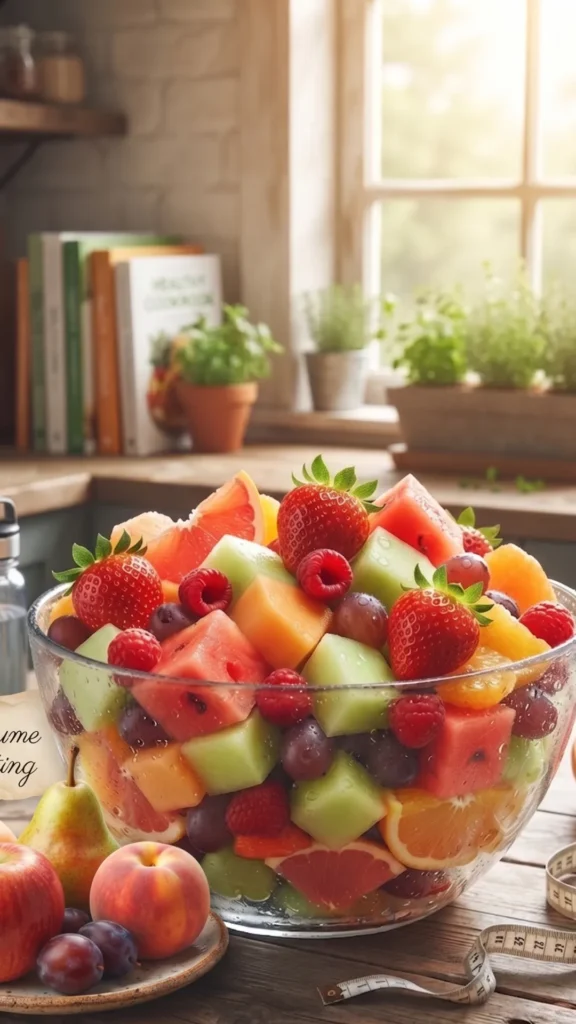
Volume Eating: Fruits That Fill You Up
Volume eating focuses on fruits that provide maximum fullness per calorie by filling the stomach:
- Watermelon, strawberries, cantaloupe, honeydew melon, and grapefruit all have fewer than 45 calories per 100 grams and high water content.
- A large bowl (400g) of watermelon is about 120 calories; the same volume of dried fruit exceeds 1000 calories.
- Frozen fruits, especially berries, are nutritious, affordable, and great for volume eating year-round.
- Adding protein, like Greek yogurt, with fruit extends fullness considerably by triggering hormonal signals alongside physical volume.
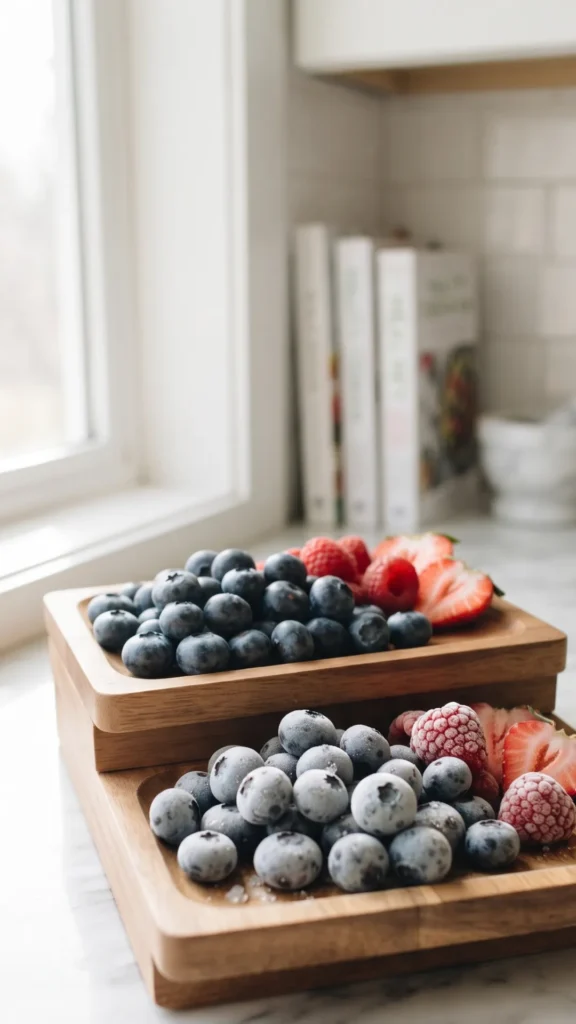
Fresh vs. Frozen Fruit for Weight Loss
Frozen fruit is nutritionally comparable to fresh and sometimes better because it’s picked at peak ripeness and frozen quickly, preserving vitamins.
- Frozen fruit is available year-round, cheaper, and stores longer.
- Fresh fruit offers better texture and eating experience, ideal for snacking and desserts.
- For smoothies, cooking, or mixing with other foods, frozen fruit works equally well and is budget-friendly.
- Having both fresh and frozen on hand gives flexibility.
Common Mistakes with Fruit and Weight Loss
- Replacing whole fruit with juice: Juice lacks fiber and spikes blood sugar quickly, leading to hunger soon after.
- Overeating dried fruit: Highly calorie-dense due to water loss; a handful packs far more calories than fresh fruit.
- Adding sugary toppings: Sweetened yogurts or syrups erase calorie savings; plain Greek yogurt pairs best with fruit.
- Ignoring fruit differences: Choosing calorie-dense fruits like bananas or dried fruit regularly over high-fiber, water-rich options limits satiety.
Best Times to Eat Fruit
- Before meals: Eating fruit 15-20 minutes before a meal reduces appetite and calorie intake.
- Morning: Fruit with protein-rich breakfast stabilizes blood sugar and energy.
- Afternoon snack: Fruit eases mid-afternoon slump with natural sugars and fiber, avoiding crashes.
- Evening: No strong evidence fruit causes weight gain at night; small portions of berries or melon can satisfy sweet cravings without excess calories.
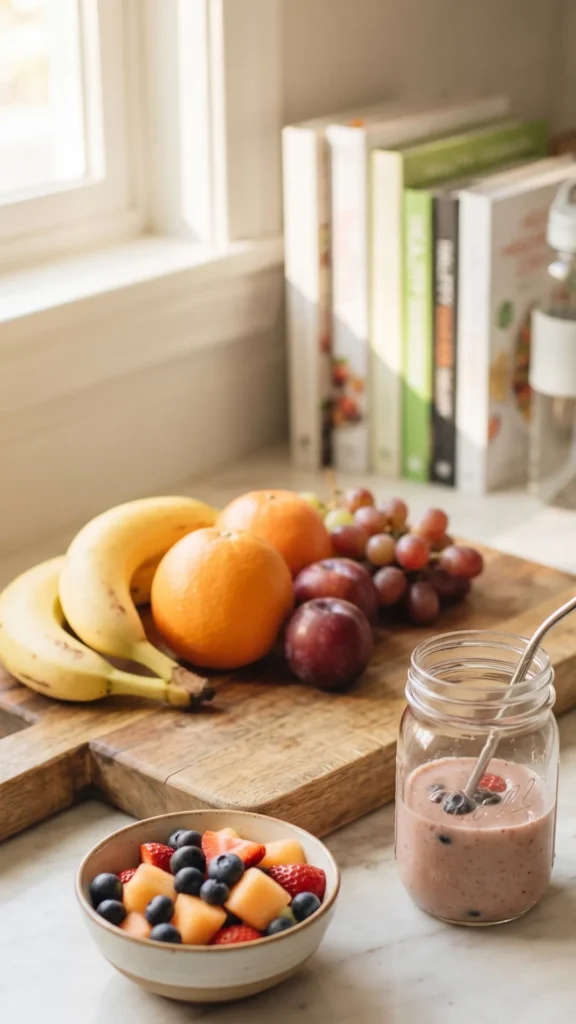
Simple Ways to Add More Fruit Daily
- Swap snacks for large bowls of berries.
- Add frozen fruit to Greek yogurt overnight for a ready-made breakfast.
- Use sliced fruit as a dessert replacement.
- Toss fruit into salads for sweetness and color.

Sample Day Featuring Weight-Loss-Friendly Fruits
- Breakfast: Oats with Greek yogurt and mixed frozen berries (300 calories).
- Morning snack: Large bowl of strawberries (70 calories).
- Pre-lunch: Half grapefruit (40 calories).
- Lunch: Salad with apple slices, greens, grilled chicken (400 calories).
- Afternoon snack: Watermelon or cantaloupe (70 calories).
- Dinner: Fish with veggies and brown rice (380 calories).
- Evening snack: Raspberries or blackberries (60 calories).
Total fruit calories: approximately 315-470, a modest investment for satiety and nutrition.
Let Fruit Satisfy Your Sweet Tooth
Fruit provides a natural, satisfying sweetness that helps curb cravings without the calorie or blood sugar consequences of processed sweets. The best fruits for weight loss are affordable, widely available, and easy to include daily. Start with your favorites from this list, build simple habits around them, and enjoy smarter hunger management.
Save this guide to keep your fruit choices on track and explore more meal ideas on Volueat.com to complement your weight loss journey with the best vegetables and proteins.
Disclaimer
This article is for informational purposes only and is not medical or nutritional advice. Always consult a healthcare professional before making significant changes to your diet, especially if you have existing health conditions
Table of content
Why Fruit Is Essential in a Weight Loss Diet
What Makes a Fruit Ideal for Weight Loss?
The Crucial Role of Fiber in Fruit
Water-Rich Fruits That Help Control Hunger
Low-Calorie Fruits You Can Eat Freely
High-Fiber Fruits for Sustained Fullness
Fruits with the Best Fullness-to-Calorie Ratio
Top 20 Fruits for Weight Loss (Calories per 100g)
Volume Eating: Fruits That Fill You Up
Fresh vs. Frozen Fruit for Weight Loss
Common Mistakes with Fruit and Weight Loss
Best Times to Eat Fruit
Simple Ways to Add More Fruit Daily
Sample Day Featuring Weight-Loss-Friendly Fruits
Let Fruit Satisfy Your Sweet Tooth