When it comes to making weight loss feel less challenging and more manageable, increasing protein consumption is one of the most effective changes you can make. Foods that are high in protein yet low in calories offer unique benefits that many traditional diet methods struggle to provide. They help keep you feeling truly satisfied for hours, preserve your muscle tissue while you lose fat, and significantly reduce the constant hunger and cravings that often make dieting feel exhausting and difficult to sustain. Best of all, achieving these benefits doesn’t require pricey supplements or complex meal planning.
This comprehensive guide will cover everything you need to know about protein’s vital role in weight loss. You’ll learn why protein is so essential, identify the best foods that provide the highest protein per calorie, discover practical tips for incorporating these foods into your everyday meals, and understand how to avoid common mistakes that often prevent people from gaining the full advantage of high-protein eating. Whether you are just starting your weight loss journey or are already eating well but want to optimize your results, this guide will support you in losing weight effectively without feeling overwhelmed.
You Might Like This:https://volueat.com/wp-admin/post.php?post=813&action=edit

Why Protein is the Most Important Macronutrient for Weight Loss Success
Out of the three macronutrients, protein, carbohydrates, and fats, protein has the greatest and most scientifically supported impact on weight loss. Understanding why protein is so powerful makes it easier to consistently prioritize it in your diet rather than treating it as an optional extra.
One key reason protein is so effective is its high thermic effect of food (TEF). This refers to the amount of energy your body uses to digest, absorb, and metabolize nutrients. Protein requires significantly more energy to process compared to carbohydrates and fats. Approximately 20 to 30 percent of the calories from protein are burned during digestion alone, whereas carbohydrates require around 5 to 10 percent, and fats only 0 to 3 percent. This means that when you consume 200 calories of protein, your body expends between 40 and 60 calories just breaking it down, resulting in fewer net calories than the food label might indicate.
Beyond boosting calorie burn, protein plays an essential role in maintaining muscle mass during weight loss a factor that is often overlooked but crucial for sustainable results. When you lose weight without adequate protein, a significant share of that loss comes from muscle rather than fat. Losing muscle reduces your resting metabolic rate, making it increasingly difficult to continue losing weight and increasing the chances of regaining weight once you stop dieting.
Perhaps the most immediately noticeable benefit of protein is its strong effect on satiety. Meals centered around substantial protein sources keep hunger suppressed far longer than meals with the same calorie amount but built around carbohydrates or fats. This prolonged feeling of fullness makes it easier to stay within a calorie deficit by relying on willpower through genuine biological satisfaction.
How Protein Helps Keep You Feeling Full Much Longer
The fullness derived from eating protein is not accidental or incidental. It stems from specific, well-understood biological processes that make protein the most effective tool for managing hunger.
When you consume protein, your body triggers the release of two key satiety hormones: peptide YY and cholecystokinin. Both are produced in the gut and communicate signals of fullness to the brain via the bloodstream and the vagus nerve. This results in a true hormone-driven sensation of satisfaction that lasts for two to four hours, much longer than the fullness experienced after carbohydrate-heavy meals with the same calorie content.
Protein also suppresses ghrelin, the primary hunger hormone, more effectively than carbohydrates or fats. Ghrelin is produced in the stomach and rises between meals to stimulate appetite. High-protein meals delay the rise of ghrelin, which means the return of significant hunger is postponed. This explains why after a high-protein breakfast, many people don’t feel hungry again for several hours; this is a measurable hormonal effect, not just perception.
Another important mechanism is protein’s ability to stabilize blood sugar levels. It slows the absorption of carbohydrates in mixed meals, causing glucose to enter the bloodstream more gradually. This helps prevent the blood sugar spikes and subsequent crashes that cause sudden cravings and hunger, which often derail diets. Because of these combined effects, consistently increasing protein intake is one of the most reliable ways to reduce daily calorie intake.
What Qualifies a Food as High-Protein and Low-Calorie?
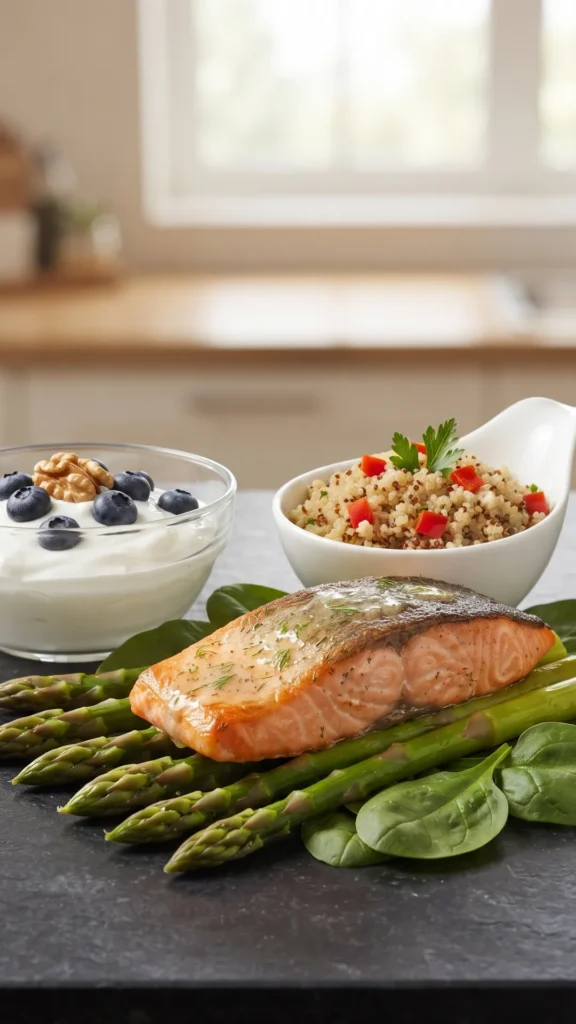
Not all protein-rich foods are equally beneficial for weight loss. Some may contain significant amounts of fat, which increases their calorie density and reduces their efficiency for fat loss. Others might have moderate protein content but remain low enough in calories to offer a favorable protein-to-calorie ratio.
A practical metric for evaluating protein efficiency is the grams of protein per 100 calories. Foods that provide about 20 grams or more of protein per 100 calories are considered highly efficient for weight loss because they deliver a substantial satiety boost for a relatively low calorie investment. Examples include white fish, egg whites, non-fat Greek yogurt, and skinless chicken breast.
Protein-rich foods that are also high in fat such as whole eggs, full-fat cheeses, fatty cuts of beef, and many processed meats are still nutritious but less calorie-efficient. These can be included moderately in a weight loss diet but work best as supplements alongside leaner protein sources rather than as the main protein foundation.
Plant-based protein sources often come paired with carbohydrates; legumes are the clearest example. Lentils, for instance, provide roughly 9 grams of protein per 100 grams cooked but also contain about 20 grams of carbohydrates. This is not a drawback because the fiber in legumes enhances fullness, and the combination of protein and fiber is particularly powerful for satiety. Understanding the full nutritional profile allows you to build meals that fit your calorie budget realistically.
Animal-Based High-Protein, Low-Calorie Foods You Should Know About
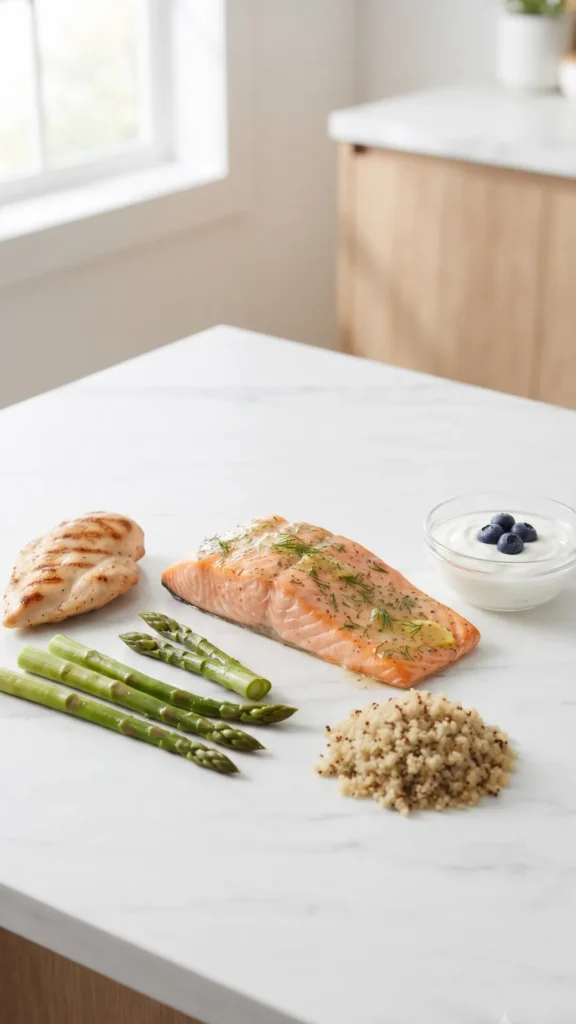
Animal proteins tend to be the most protein-dense options available, providing complete proteins that include all essential amino acids. Many lean animal protein sources also offer an excellent protein-to-calorie ratio.
White fish such as cod, tilapia, pollock, haddock, and whiting generally contain between 70 and 96 calories per 100 grams and provide 18 to 22 grams of protein. A large fillet of baked cod, for example, can provide over 30 grams of protein for about 150 calories, an outstanding return. Their mild flavor makes them adaptable to many different cuisines and cooking methods.
Shrimp and prawns have a comparable nutrient profile, offering about 85 calories and 18 to 20 grams of protein per 100 grams. They cook very quickly and can be used in stir-fries, salads, soups, or pasta dishes, adding satisfying texture and volume without many calories.
Egg whites are a volume-eating staple. One large egg white has approximately 17 calories and 3.6 grams of protein. Four egg whites deliver over 14 grams of protein for less than 70 calories, making them an excellent base for a high-protein, low-calorie breakfast when cooked with vegetables.
Skinless chicken breast contains roughly 110 calories and 23 grams of protein per 100 grams, making it one of the most versatile and practical lean proteins. Turkey breast offers a similar profile and adds variety for those who prefer an alternative to chicken. Canned tuna in water is a budget-friendly source with around 84 calories and 20 grams of protein per 100 grams, requiring no preparation.
Plant-Based High-Protein, Low-Calorie Foods That Deliver
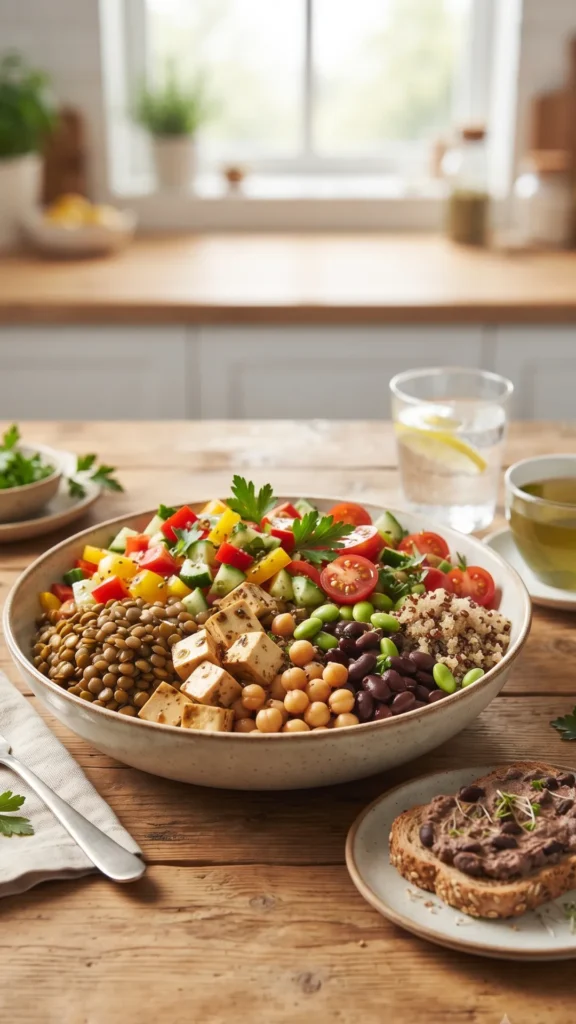
Plant-based proteins are often underestimated for their weight loss potential, but many provide impressive protein alongside substantial fiber, which enhances fullness.
Lentils are a standout plant protein for weight loss. A 100-gram cooked serving offers about 9 grams of protein and 8 grams of fiber for roughly 116 calories. This protein-plus-fiber combination produces a sustained feeling of fullness, making lentil soup one of the most satiating, low-calorie meals you can prepare inexpensively.
Chickpeas and black beans have similar profiles. Cooked chickpeas provide approximately 9 grams of protein and 7 grams of fiber per 100 grams at about 164 calories, while black beans offer 8.9 grams of protein and 8.7 grams of fiber at 132 calories per 100 grams. Both legumes can be used in soups, salads, curries, or roasted as snacks.
Edamame, or young soybeans, are the highest-protein legume available, containing about 11 grams of protein per 100 grams cooked and 122 calories. They work well as snacks, salad toppings, or stir-fry ingredients, offering one of the most satisfying protein-rich snacks at any calorie level.
Firm tofu provides roughly 8 grams of protein per 100 grams at just 76 calories, making it one of the most calorie-efficient plant proteins. Its neutral taste absorbs marinades and spices well, adapting easily to many cuisines. Tempeh, a fermented soybean product, delivers about 11 grams of protein per 100 grams and 193 calories, with the added benefit of probiotic content from fermentation.
Lean Protein Sources for Practical Everyday Meals
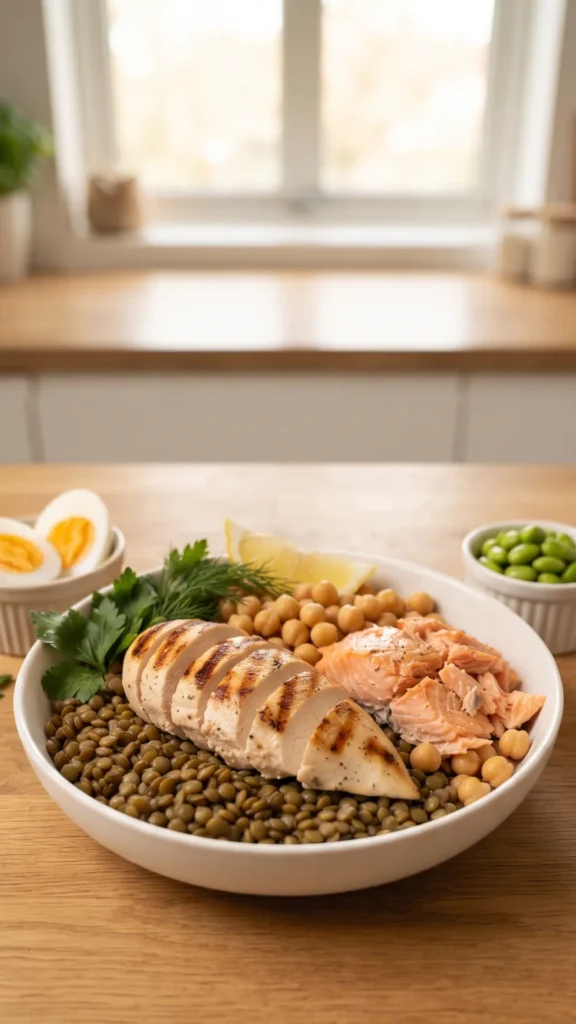
Understanding which protein foods fit well into daily cooking routines helps make maintaining a high-protein diet easier and more sustainable.
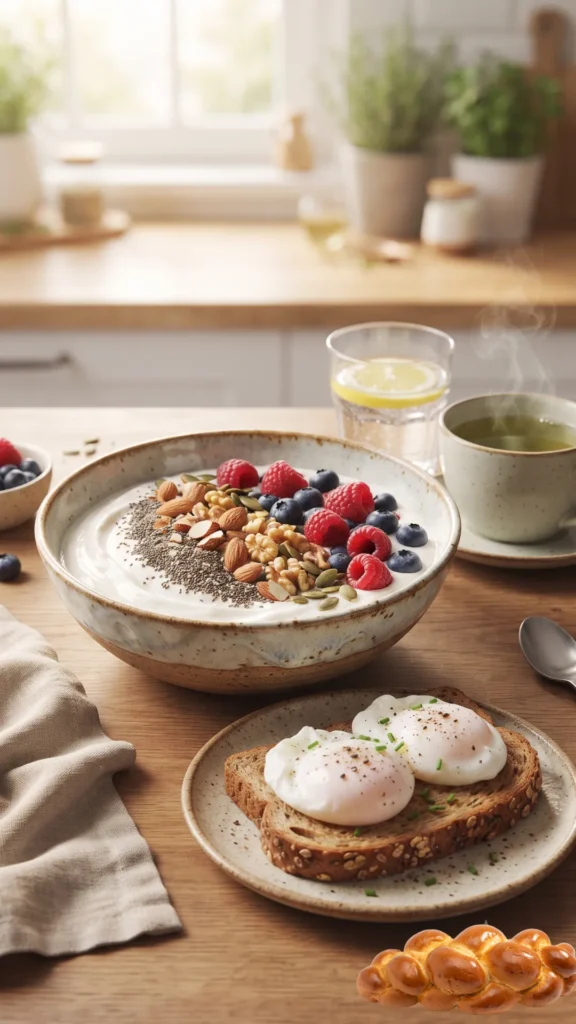
For breakfast, egg whites cooked with vegetables, non-fat Greek yogurt with berries, and low-fat cottage cheese are practical, protein-rich options requiring minimal preparation. Greek yogurt, with roughly 10 grams of protein and 59 calories per 100 grams, is especially convenient since it needs no cooking; just add fruit and oats.
At lunch, canned tuna, grilled chicken breast, and chickpeas offer convenient, lean protein options. Tuna requires no cooking and fits well in salads, wraps, or rice bowls. Grilled chicken can be batch-prepared for use throughout the week, and canned chickpeas simply need draining and rinsing.
For dinner, white fish, shrimp, and lentils are versatile proteins. White fish bakes quickly with minimal seasoning. Shrimp cooks in under five minutes and is excellent in stir-fries or salads. Red lentils cook rapidly from dried and make hearty soups and curries.
The Top 25 High-Protein, Low-Calorie Foods (Approximate Calories and Protein per 100g)
- Egg Whites: 52 kcal, 11g protein
- Cod Fillet: 82 kcal, 18g protein
- Tilapia: 96 kcal, 20g protein
- Pollock: 74 kcal, 17g protein
- Shrimp: 85 kcal, 20g protein
- Canned Tuna (water-packed): 84 kcal, 20g protein
- Skinless Chicken Breast: 110 kcal, 23g protein
- Turkey Breast: 104 kcal, 22g protein
- Non-Fat Greek Yogurt: 59 kcal, 10g protein
- Low-Fat Cottage Cheese: 72 kcal, 11g protein
- Skimmed Milk (per 100ml): 35 kcal, 3.4g protein
- Crab Meat: 83 kcal, 18g protein
- Scallops: 88 kcal, 17g protein
- Venison: 120 kcal, 26g protein
- Pork Tenderloin: 109 kcal, 22g protein
- Cooked Lentils: 116 kcal, 9 g protein
- Cooked Chickpeas: 164 kcal, 9 g protein
- Cooked Black Beans: 132 kcal, 8.9g protein
- Edamame: 122 kcal, 11g protein
- Firm Tofu: 76 kcal, 8 g protein
- Tempeh: 193 kcal, 11g protein
- Cooked Kidney Beans: 127 kcal, 8.7g protein
- Seitan: 106 kcal, 21g protein
- Nutritional Yeast: 325 kcal, 50g protein (used sparingly)
- Pumpkin Seeds: 559 kcal, 19g protein (high calorie but good in small amounts)
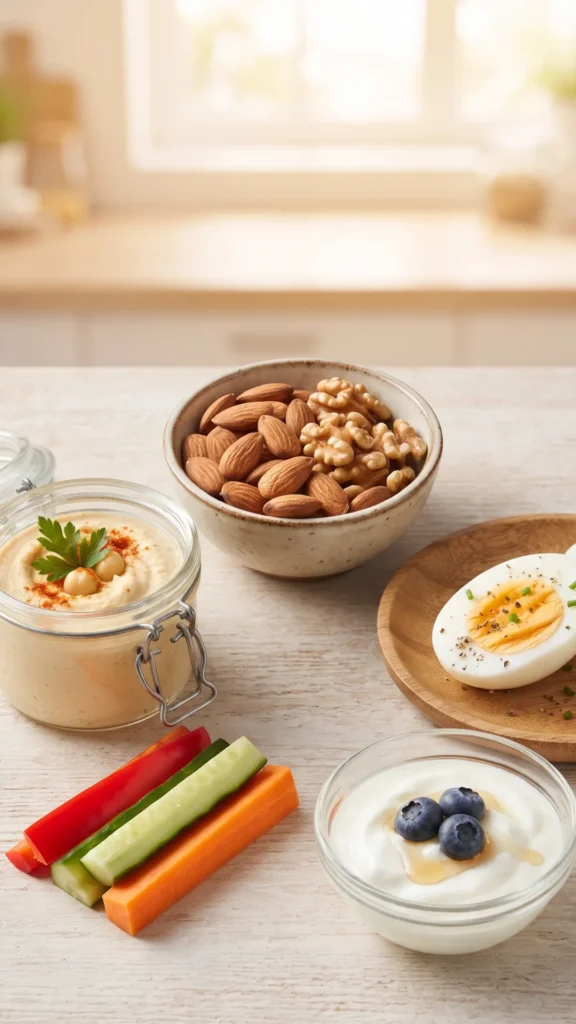
Best High-Protein Snacks That Effectively Satisfy Hunger
Snacking often undermines calorie deficits, but choosing protein-rich snacks can help control hunger and prevent overeating.
Greek yogurt with berries is one of the most practical protein snacks, providing about 15 grams of protein per 150-gram serving. It requires no preparation and satisfies both hunger and sweet cravings.
Hard-boiled eggs are portable and convenient, with two eggs delivering 12 grams of protein for around 140 calories. Preparing a batch ahead ensures you always have a ready-to-eat snack.
Low-fat cottage cheese paired with fruit or vegetables is another low-calorie, protein-packed snack option. A 150-gram serving provides 16 grams of protein for roughly 108 calories, keeping hunger at bay for hours.
Other convenient snacks include canned tuna with raw vegetables, salted edamame, roasted chickpeas, and small servings of Greek yogurt dips with vegetables.
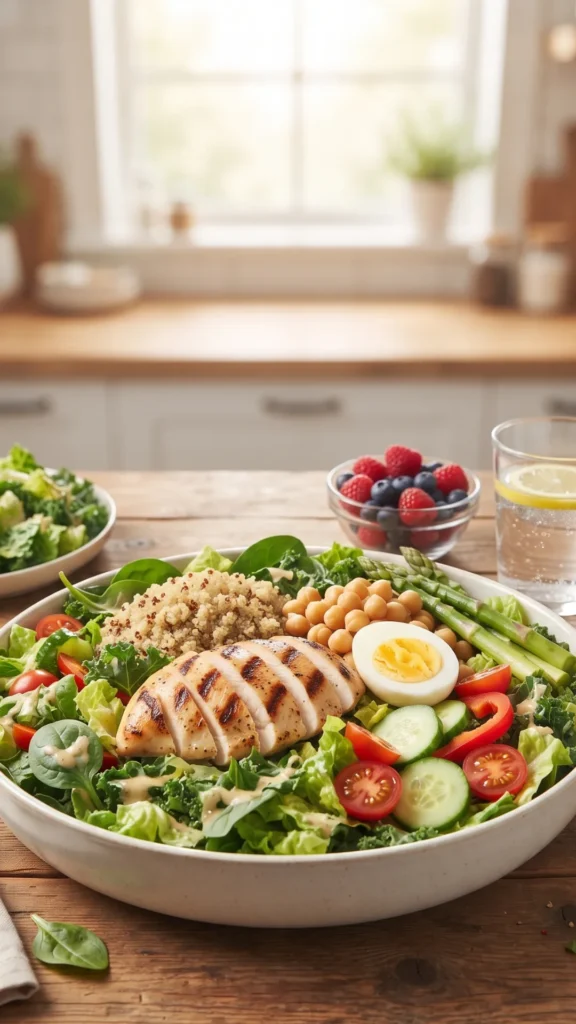
Combining Volume Eating and High Protein for Maximum Fullness
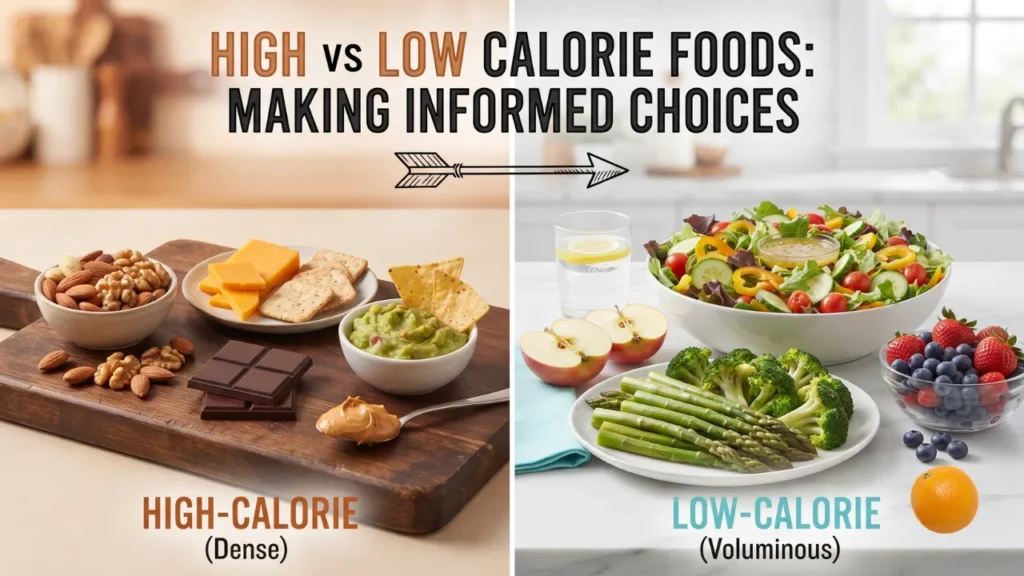
Volume eating, filling your stomach with large amounts of low-calorie foods, is a natural partner to high-protein eating. Protein provides hormonal satiety signals that complement the physical stretch receptors activated by volume eating. Together, they produce a fullness effect that is stronger and more enduring than either approach alone.
The best proteins for volume eating are high in protein and low in calorie density, allowing you to eat generous portions without exceeding your calorie budget. Egg whites, white fish, shrimp, chicken breast, non-fat Greek yogurt, and low-fat cottage cheese are excellent choices.
Typically, a volume-eating meal features half the plate filled with non-starchy vegetables to provide physical fullness. A palm-sized portion of lean protein anchors the meal, triggering satiety hormones and extending feelings of fullness for hours. This combination helps you leave the meal genuinely satisfied, avoiding premature snacking.
Broth-based soups with added protein like white fish in clear broth, lentil soup, or chicken and vegetable soup are among the best volume-eating meals. The liquid fills the stomach, protein provides satiety, and vegetables add fiber. A large bowl can provide 25 to 30 grams of protein for 300 to 400 calories, making it an efficient and satisfying option.
Common Mistakes When Increasing Protein Intake
The most common mistake is adding protein on top of existing meals without reducing other calorie sources. For example, adding a protein shake, extra cheese, or nuts to an already adequate diet adds calories without creating the necessary calorie deficit for weight loss. Protein should primarily replace less beneficial calories by swapping refined carbs for protein-rich foods or reducing grains while increasing protein portions.
Relying solely on protein supplements rather than whole foods is another frequent error. While powders and bars offer convenience, whole foods provide vitamins, minerals, and fiber that supplements cannot. Supplements should fill gaps, not replace whole food sources.
Eating most protein only at dinner is a structural mistake many beginners make. Protein’s appetite-suppressing effects are strongest when intake is spread throughout the day, including breakfast and snacks. Research consistently shows that distributing protein intake across multiple meals improves hunger management better than concentrating it in a single meal.
Choosing high-fat protein sources as primary options undermines calorie control. Foods like bacon, full-fat cheese, fatty ground meat, and processed deli meats deliver protein but are calorie-dense and leave less room for nutrient-rich vegetables and grains. Prioritizing lean proteins and using higher-fat options sparingly helps keep your diet balanced.
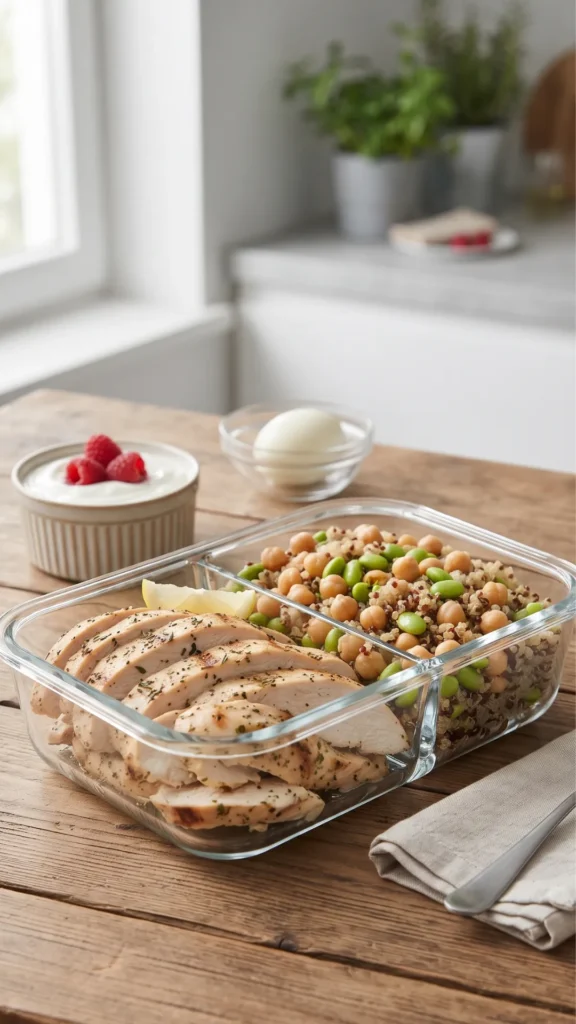
How Much Protein is Needed for Weight Loss?
Protein needs depend on factors like body weight, activity level, and weight loss goals. While general guidelines recommend 0.8 grams of protein per kilogram of body weight for sedentary adults, this amount is often insufficient for fat loss and muscle maintenance.
Most researchers suggest 1.2 to 1.6 grams of protein per kilogram of body weight daily for those actively losing weight. For example, a 70-kg person should aim for about 84 to 112 grams of protein daily, while a 90-kg person may require 108 to 144 grams.
If this seems daunting, aim for 25 to 35 grams of protein at each main meal and 15 to 20 grams at snacks. This approach typically provides adequate protein without extensive tracking.
For those doing strength training or regular exercise, which is highly recommended, protein needs are at the higher end to support muscle repair and growth.
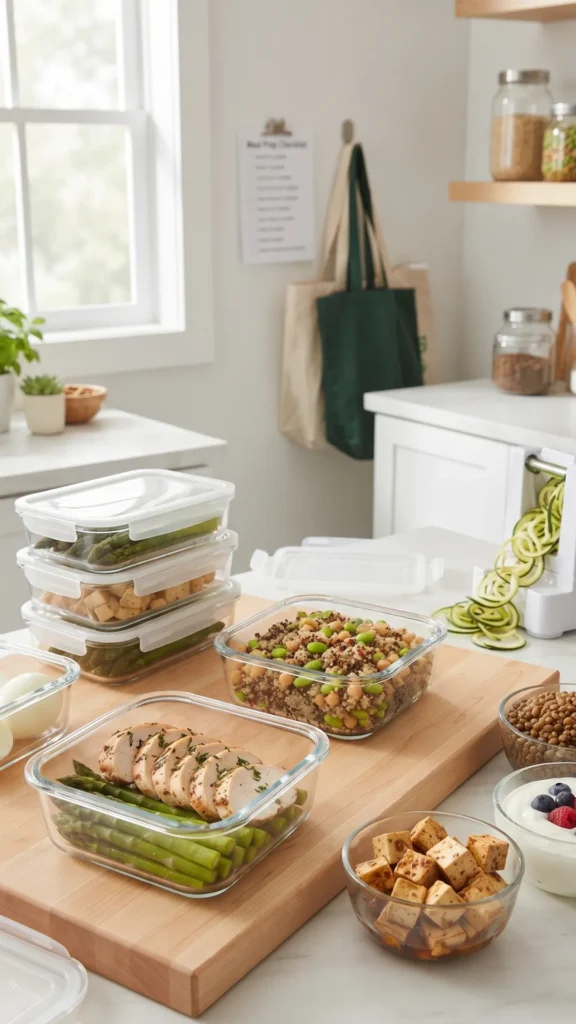
Meal Prep Strategies to Simplify High-Protein Eating
Batch cooking protein-rich foods is one of the most effective habits for sustaining a high-protein diet. Having cooked protein ready in the fridge makes meal preparation quick and convenient, reducing the temptation to choose less healthy foods.
Begin by baking several skinless chicken breasts seasoned simply with salt, pepper, garlic, and herbs at 180°C (350°F) for 25-30 minutes. Once cooled and sliced, store them in airtight containers for use in salads, wraps, soups, and grain bowls throughout the week.
Hard-boiling a dozen eggs takes about ten minutes and provides a week’s worth of portable protein snacks. Keep eggs in their shells in the fridge and peel as needed to maintain freshness.
Cooking large batches of lentils or chickpeas at the week’s start provides ready plant protein. Red lentils cook quickly without soaking and can be turned into soups or dals that keep well for several days.
Similarly, baking multiple white fish fillets at once saves time. These can be refrigerated for two to three days and eaten cold or reheated. Portioning Greek yogurt with fruit into small containers keeps breakfasts and snacks organized and accessible.
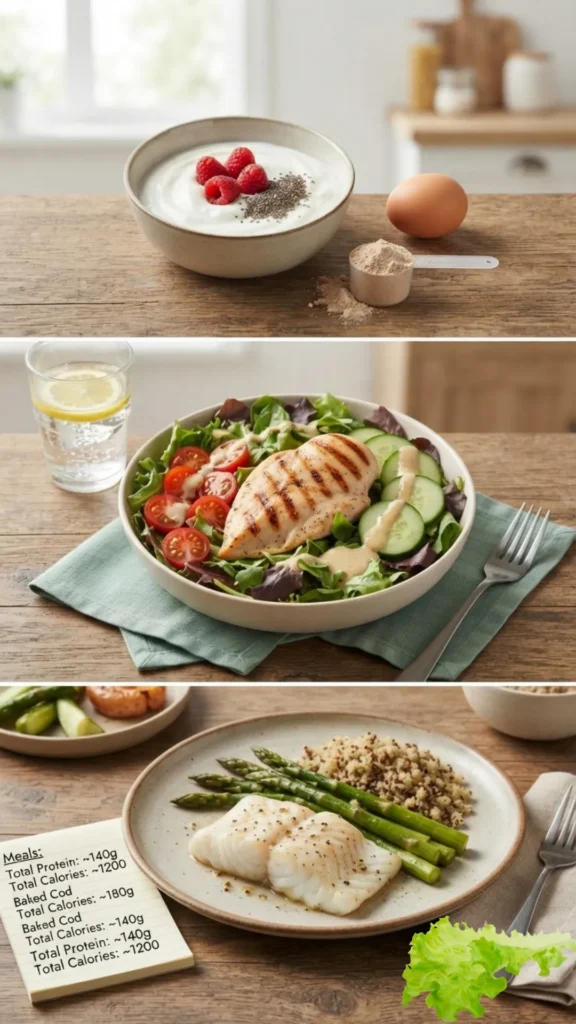
A Complete Sample Day of High-Protein, Low-Calorie Eating
Here is an example daily meal plan that illustrates how to balance protein and calories effectively:
- Breakfast: Four egg whites and one whole egg scrambled with spinach, mushrooms, and bell peppers cooked in vegetable broth. Served with 50 grams of rolled oats mixed with 100 grams of non-fat Greek yogurt and a handful of berries. Calories: 380-420; Protein: 38-42 grams.
- Morning Snack: 150 grams of low-fat cottage cheese with sliced cucumber and a pinch of black pepper. Calories: 108; Protein: 16 grams.
- Lunch: Large salad of romaine, spinach, cherry tomatoes, cucumber, and shredded cabbage topped with a small can of tuna in water, dressed with lemon juice and a teaspoon of olive oil. Served with a bowl of clear vegetable broth. Calories: 300-340; Protein: 28-32 grams.
- Afternoon Snack: Two hard-boiled eggs with carrot and celery sticks. Calories: 160-180; Protein: 14 grams.
- Dinner: Large baked cod fillet with roasted broccoli, cauliflower, and zucchini seasoned with garlic and herbs. Served with a small bowl of miso soup. Calories: 300-340; Protein: 35-38 grams.
Total daily intake: Approximately 1,250 to 1,380 calories and 131 to 142 grams of protein, providing substantial, satisfying food with excellent protein distribution across all meals, an example of sustainable, hunger-free weight loss
Table of content
Why Protein is the Most Important Macronutrient for Weight Loss Success
How Protein Helps Keep You Feeling Full Much Longer
What Qualifies a Food as High-Protein and Low-Calorie?
Animal-Based High-Protein, Low-Calorie Foods You Should Know About
Plant-Based High-Protein, Low-Calorie Foods That Deliver
Lean Protein Sources for Practical Everyday Meals
The Top 25 High-Protein, Low-Calorie Foods (Approximate Calories and Protein per 100g)
Best High-Protein Snacks That Effectively Satisfy Hunger
Combining Volume Eating and High Protein for Maximum Fullness
Common Mistakes When Increasing Protein Intake
How Much Protein is Needed for Weight Loss?
Meal Prep Strategies to Simplify High-Protein Eating
A Complete Sample Day of High-Protein, Low-Calorie Eating
Disclaimer
This article is for informational purposes only and is not medical or nutritional advice. Always consult a healthcare professional before making significant changes to your diet, especially if you have existing health conditions