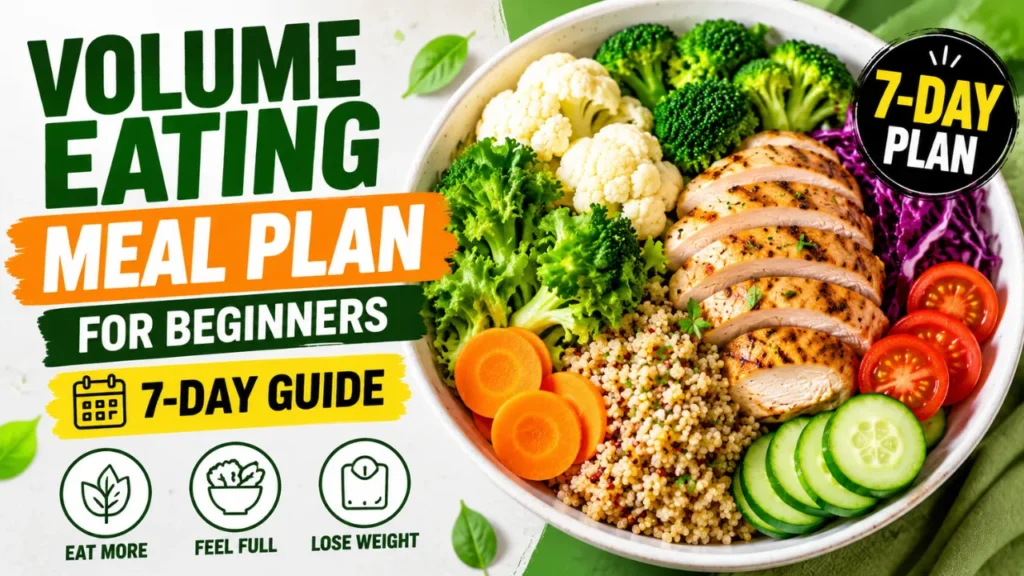
If you’re looking for a weight loss method that doesn’t leave you hungry all day, volume eating might be the answer. This approach is refreshingly straightforward: eat larger portions of foods that are low in calories but filling. The goal is to enjoy satisfying meals that help you create a calorie deficit without feeling deprived or restricted.
This comprehensive guide will walk you through everything you need to know to start volume eating from what it is and why it works to a detailed 7-day meal plan, grocery list, meal prep strategies, and answers to common beginner questions. By the end, you’ll have a practical and sustainable plan to begin your weight loss journey.
What is volume eating?
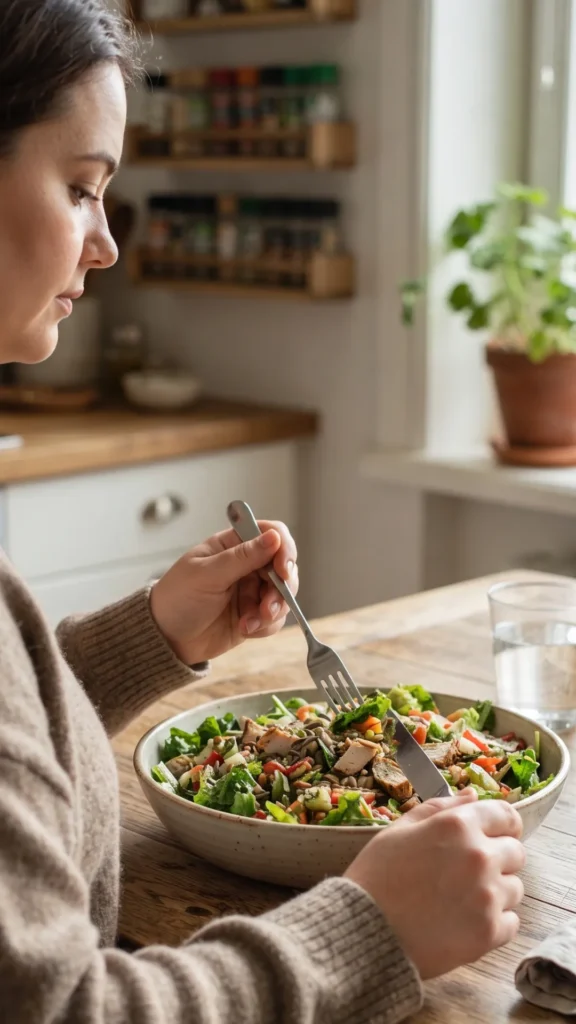
Volume eating is centered on the concept of calorie density, the number of calories per gram of food. Foods that have a low calorie density offer more volume and weight for fewer calories, meaning you can eat a larger amount and still stay within your calorie goals. Examples include non-starchy vegetables, water-rich fruits, lean proteins, legumes, and broth-based soups.
Your stomach has stretch receptors that signal fullness to your brain when it expands. Volume eating uses these signals to your advantage by filling your stomach with high-volume, low-calorie foods that trigger genuine feelings of fullness. This contrasts with eating small amounts of calorie-dense foods, which can leave you hungry and unsatisfied.
The science behind volume eating is based on research by Dr. Barbara Rolls at Penn State University, which found that people tend to eat a consistent weight of food each day regardless of calorie content. By choosing foods that weigh more but contain fewer calories, you naturally reduce calorie intake without feeling hungry or deprived. This makes volume eating one of the most sustainable weight loss strategies available.

Why Volume Eating Is Effective for Weight Loss
Volume eating works not only by reducing calories but also by addressing the biological and psychological aspects of hunger:
- Physical Fullness: A full stomach sends strong satiety signals, which help control hunger throughout the day. Large portions of low-calorie foods ensure you feel full even while eating fewer calories.
- Stable Hormones and Blood Sugar: Meals high in fiber and protein slow digestion and stabilize blood sugar levels, preventing the energy crashes and cravings often triggered by calorie restriction.
- Psychological Satisfaction: Eating large, colorful plates filled with real food helps remove the deprivation mindset common in dieting. Meals feel abundant and enjoyable, making it easier to stick to the plan over time.
Together, these factors make volume eating a holistic approach that supports weight loss without the common side effects of hunger, cravings, or mood swings.

Benefits of Following a Volume Eating Meal Plan
Starting your volume eating journey with a structured meal plan offers many advantages:
- Reduces Decision Fatigue: Having set meals eliminates the daily struggle of deciding what to eat, especially when time is tight or hunger strikes.
- Builds Intuitive Eating Skills: Following the plan helps you learn which foods and portion sizes best keep hunger at bay, skills that transfer to any eating situation.
- Simplifies Grocery Shopping: A clear list based on your meal plan saves money, reduces waste, and cuts down on impulse purchases.
- Tracks Progress Easily: If hunger is managed well and weight loss occurs, it confirms the plan works. If not, you can adjust specific meal components without guesswork.
You Might Like This:https://volueat.com/wp-admin/post.php?post=928&action=edit
Foods to Emphasize on a Volume Eating Plan
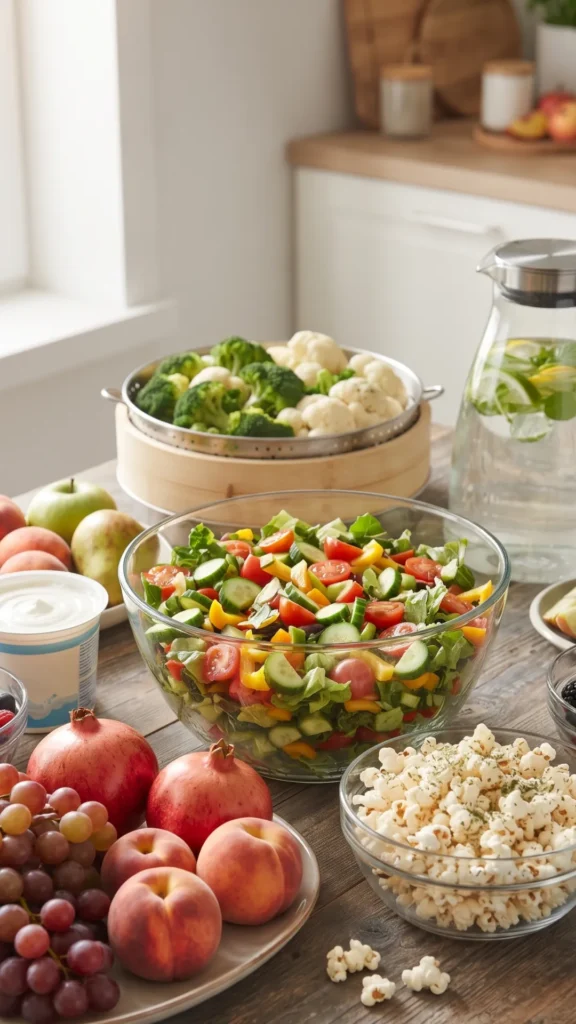
To maximize fullness while minimizing calories, focus on these food groups:
- Non-Starchy Vegetables: Spinach, cucumbers, broccoli, cauliflower, bell peppers, zucchini, romaine lettuce, mushrooms, asparagus, and tomatoes are all low-calorie, high-water, and fiber-rich. They should fill at least half your plate at each meal.
- Lean Proteins: Egg whites, skinless chicken breast, white fish (cod, tilapia), shrimp, canned tuna (in water), non-fat Greek yogurt, and low-fat cottage cheese are excellent protein sources that increase satiety and protect muscle during weight loss.
- Fruits: Watermelon, berries, grapefruit, cantaloupe, and other water-rich fruits make great low-calorie snacks with natural sweetness.
- Whole Grains and Legumes: Oats, brown rice, quinoa, lentils, chickpeas, and black beans offer fiber and sustained energy.
- Broth-Based Soups: Vegetable or bone broths are great meal starters that fill the stomach with minimal calories.

Foods to Limit or Avoid
Certain foods can undermine your volume-eating efforts by adding calories without increasing fullness:
- Cooking Oils: Oils are calorie-dense with no volume. Use broth for cooking or measure oils carefully to avoid hidden calories.
- Processed Snacks: Chips, crackers, cookies, and most packaged snacks are high-calorie and low in fiber or protein, making it easy to overeat.
- Sugary Drinks and Alcohol: These drinks add calories but don’t trigger fullness signals.
- Calorie-Dense Nuts and Dried Fruits: Healthy but best consumed in moderation due to high calorie content.

How to Build a Filling Plate Every Time
Creating a satisfying, high-volume eating plate is easy to remember:
- Fill half your plate with non-starchy vegetables raw, steamed, roasted, or stir-fried in broth. This adds bulk and fiber.
- Add one-quarter lean protein like chicken, fish, egg whites, tofu, or legumes to promote fullness.
- Fill the remaining quarter with fiber-rich carbohydrates such as brown rice, quinoa, oats, sweet potatoes, or whole-grain bread.
- Start your meal with broth-based soup or a small salad to partially fill your stomach, helping reduce overall calorie intake.
This structure keeps your meals balanced, nutritious, and satisfying.

Understanding Your Daily Calorie Needs
While volume eating isn’t strict calorie counting, knowing your approximate calorie needs helps tailor your plan. To lose about 0.5 to 1 kilogram per week, aim for a daily calorie deficit of 500 to 1,000 calories below your Total Daily Energy Expenditure (TDEE).
- Typical targets:
- Women: 1,200–1,600 calories per day
- Men: 1,400–1,900 calories per day
- These vary based on age, height, weight, and activity level.
Use a free TDEE calculator online to find your maintenance calories, then subtract 400–500 calories for a sustainable start. Adjust based on hunger and progress.
Expanded 7-Day Volume Eating Meal Plan
Each day provides 1,300 to 1,600 calories with high food volume and variety:
- Day 1:
Breakfast: Egg white scramble with spinach, mushrooms, and bell pepper cooked in broth; 50g oats with strawberries.
Lunch: Large romaine and spinach salad with cucumber, tomatoes, chickpeas, and tuna in lemon dressing; vegetable broth soup starter.
Snack: 150g Greek yogurt with raspberries.
Dinner: Baked cod with roasted broccoli, cauliflower, cauliflower rice, and miso soup. - Day 2:
Breakfast: Greek yogurt bowl with oats, blueberries, and flaxseed.
Lunch: Cabbage and carrot slaw with shredded chicken and apple cider vinegar dressing; lentil soup.
Snack: Sliced cucumber, celery, and bell pepper with hummus.
Dinner: Shrimp stir-fry with zucchini, broccoli, and mushrooms in soy-ginger broth over brown rice. - Day 3:
Breakfast: Two whole eggs and two egg whites scrambled with spinach and tomatoes; mixed berries.
Lunch: Turkey and romaine wrap in whole-grain tortilla; side salad; vegetable broth.
Snack: Hard-boiled egg and medium apple.
Dinner: Lentil and vegetable soup with whole-grain bread. - Day 4:
Breakfast: Oats cooked with water, topped with banana, cinnamon, and cottage cheese.
Lunch: Spinach salad with baked salmon flakes, cucumber, cherry tomatoes, and yogurt-lemon dressing and broth soup.
Snack: 200g watermelon and a small handful of almonds.
Dinner: Baked tilapia with roasted asparagus, bell peppers, sweet potato mash, and miso soup. - Day 5:
Breakfast: Egg white omelette with mushrooms and spinach; 50g oats with raspberries.
Lunch: Black bean and roasted vegetable bowl with cauliflower rice, a small avocado, and lime; and broth soup.
Snack: Greek yogurt with kiwi slices.
Dinner: Herb-baked chicken breast, roasted zucchini, broccoli, tomatoes, and brown rice. - Day 6:
Breakfast: Smoothie bowl with frozen berries, Greek yogurt, oats, banana, and chia seeds.
Lunch: Tuna and white bean salad on romaine with celery, cherry tomatoes, and lemon juice; vegetable soup.
Snack: Sliced apple with cottage cheese.
Dinner: Prawn and vegetable broth soup with bok choy, mushrooms, and carrots. - Day 7:
Breakfast: Overnight oats with chia seeds, almond milk, strawberries, and Greek yogurt.
Lunch: Roasted vegetable and chickpea bowl over quinoa with tahini-lemon dressing and broth.
Snack: Two hard-boiled eggs and mixed berries.
Dinner: Turkey mince and vegetable stir-fry with cabbage, bell peppers, and zucchini over cauliflower rice.

Meal Prep Tips for Success
Meal prepping saves time and keeps you on track:
- Cook large batches of soups and portion them for the week.
- Bake multiple chicken breasts or fish fillets at once.
- Pre-chop vegetables and store in containers.
- Prepare overnight oats or yogurt parfaits for quick breakfasts.
- Cook grains like brown rice or quinoa ahead and refrigerate.
These steps reduce daily cooking effort and help avoid unhealthy choices when busy.
Common Beginner Mistakes to Avoid
- Not eating enough vegetables: Half your plate should be veggies to trigger fullness.
- Skipping soup or salad starters: These help reduce total calories without losing satiety.
- Overusing oils: Hidden calories in oils can stall weight loss.
- Expecting instant results: Improvements in fullness and energy appear quickly; weight loss follows steadily with consistency.
Frequently Asked Questions
- Can I lose weight without counting calories? Yes, volume eating naturally lowers calorie intake through fullness.
- How soon will I see results? Hunger and energy improve within a week; weight loss usually becomes visible after two to three weeks.
- Is volume eating suitable for vegetarians or vegans? Yes, focus on plant proteins like legumes, tofu, and tempeh.
- Do I need to follow the meal plan exactly? No, use it as a flexible template and adapt to your tastes.
- Is volume eating safe for the whole family? Absolutely, portion sizes can be adjusted based on individual needs.
Final Thoughts
Volume eating is a practical, sustainable way to lose weight without hunger or deprivation. By focusing on large portions of low-calorie, nutrient-dense foods structured into balanced meals, you can enjoy satisfying plates, steady energy, and consistent weight loss.
Start by filling half your plate with vegetables, adding lean protein, and including fiber-rich carbs. Use broth-based soups or salads to begin meals. Plan and prep ahead to stay on track effortlessly. With patience and consistency, volume eating can transform your relationship with food and your body.
Disclaimer
This article is for informational purposes only and is not medical or nutritional advice. Always consult a healthcare professional before making significant changes to your diet, especially if you have existing health conditions
Table of Contents
What is volume eating?
Why Volume Eating Is Effective for Weight Loss
Benefits of Following a Volume Eating Meal Plan
Foods to Emphasize on a Volume Eating Plan
Foods to Limit or Avoid
How to Build a Filling Plate Every Time
Understanding Your Daily Calorie Needs
Expanded 7-Day Volume Eating Meal Plan
Meal Prep Tips for Success
Common Beginner Mistakes to Avoid
Frequently Asked Questions
Final Thoughts
Save this guide and start your volume eating journey today for a healthier, happier lifestyle!